
by Kyla Trkulja
Graphic design by Andrew Janeczek
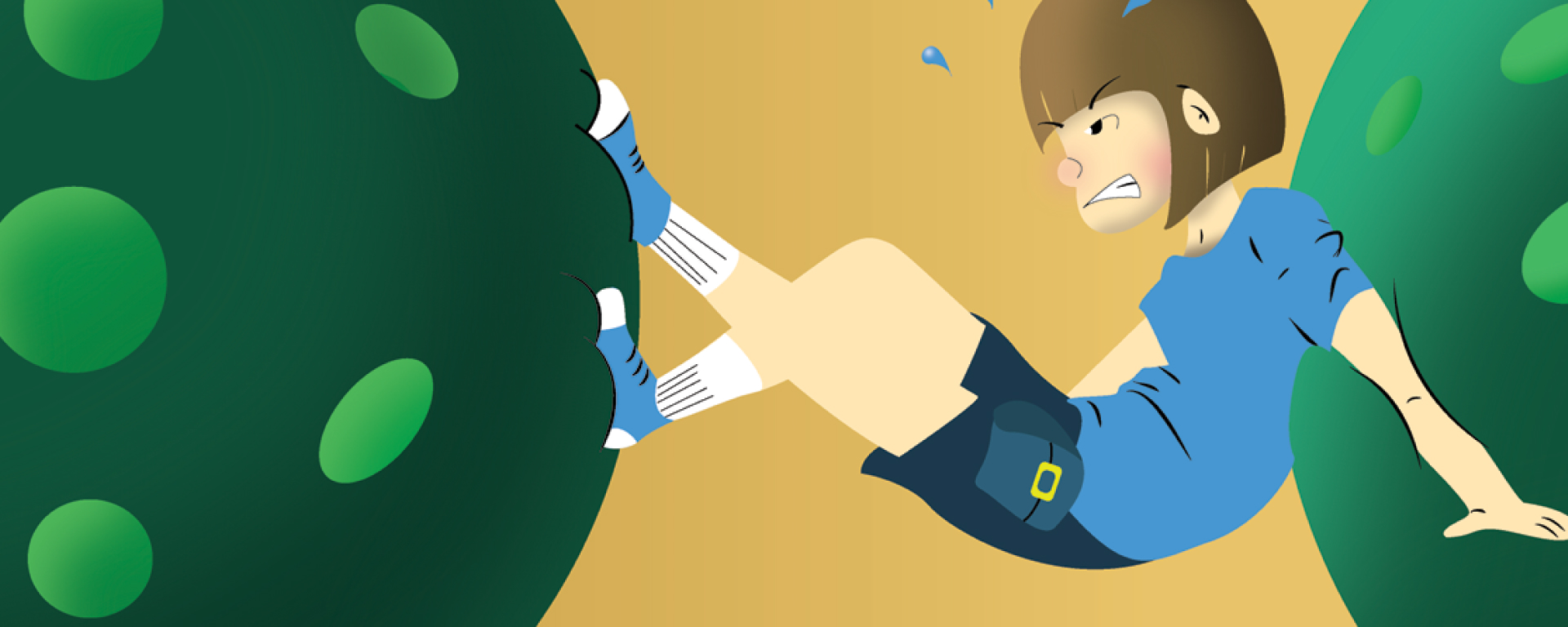
With the acute crisis of the COVID-19 pandemic mostly behind us, it’s easy to feel as though the pandemic is over. However, for those who experience long-term symptoms after COVID-19, going back to normal is much more difficult. Long-COVID, or Post-COVID Condition (PCC), is a challenge that remains troublesome around the world, as an estimated 17% of adults experience long-term symptoms including fatigue, shortness of breath, and difficulty concentrating or thinking.1 These symptoms persist for a year or longer in 47% of these individuals, and 21% of them say that their daily activities are limited as a result.1 PCC remains such a significant challenge because the biological basis for these complex symptoms are still largely unknown, hindering diagnosis and care.1 As a result, there is no standardized practice for diagnosing and treating PCC.2
“Long COVID Web, an integrative network of over 400 researchers, clinicians, and patient partners with lived experiences of COVID-19”
-Dr. Angela Cheung
Dr. Angela Cheung is a clinician-scientist at Toronto General Hospital working to accelerate research and standardize practices to improve outcomes for those with PCC. Her undergraduate education in physics, medical education at Johns Hopkins University, and PhD training at Harvard University has equipped her with a diverse toolkit that has allowed her to branch out in her work and interests. Although she is a general internist by training, she has worn many different hats during her career, being involved in projects related to stroke, breast cancer, and osteoporosis, establishing the Center of Excellence in Skeletal Health Assessment at the University of Toronto and the Osteoporosis Program at the University Health Network.
During the onset of the pandemic in March 2020, Dr. Cheung was working in acute care and noticed the influx of patients into hospitals. “There were so many people so unwell, we can certainly do something about that,” she thought, and together with a colleague, Dr. Margaret Herridge, obtained funding from the University of Toronto to start the Ontario COVID-19 Prospective Cohort Study. The goal of this project was to develop a dataset providing detailed outcomes on patient follow-ups one-year after COVID-19 infection, and use interconnected networks of scientists, clinicians, rehabilitation specialists, and health services researchers to improve care for patients and facilitate their recovery. They then got funding from the Canadian Institutes of Health Research to expand the project, now called CANCOV, across the country, with 18 participating sites across five provinces.
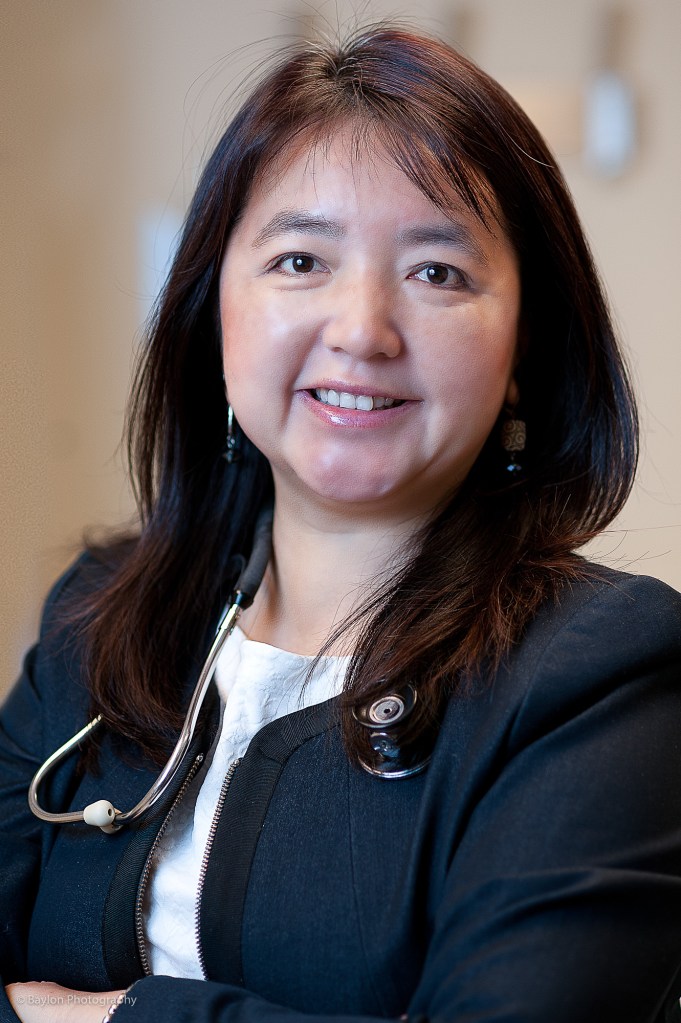
Chair of Integrative Medicine at University of Toronto
Senior Physician Scientist at University Health Network
Canada Research Chair (Tier 1) in Musculoskeletal and Postmenopausal Health
Long COVID Web Lead
Photo provided by Dr. Cheung
As CANCOV was progressing, Dr. Cheung noticed the large proportion of individuals that had lingering symptoms after COVID-19 infection and started the REcovering from COVID-19 Lingering Symptoms Adaptive Integrative Medicine (RECLAIM) trial to find ways to improve outcomes. The goal of the trial is to scientifically test different treatments for PCC, looking at anything that may work, “whether it’s vitamins or supplements or acupuncture, as long as it helps patients”. Due to the innovative adaptive nature of the trial, treatment arms can be dropped if they are not found to be effective, or added if new research emerges. The trial, which is currently recruiting participants, will provide high-quality evidence on how to effectively cure long COVID, which will help standardize and deliver effective care to those who need it.
To further accelerate this research, Dr. Cheung seized an opportunity to establish a PCC research network across Canada, where the government would provide the network $20 million in funding over five years. She is now the lead for Long COVID Web, an integrative network of over 400 researchers, clinicians, and patient partners with lived experiences of COVID-19 that work together to accelerate the discovery of Canadian science on PCC. The network is comprised of four pillars of science–biomedical, clinical, health services research, and population health–that are interconnected through patients, clinicians, and researchers that share knowledge amongst each other to comprise holistic solutions to patient-focused questions.
“The vision of the network is to have Canada without long COVID,” Dr. Cheung explained, as accelerating the discovery of Canadian science on PCC will develop accurate diagnostics, treatments, and rehabilitation regimens and identify the best therapeutics, practices, and strategies for equitable access to PCC care. To reach this endpoint, the interdisciplinary pillars of the Web are investigating mechanisms, biomarkers, therapeutic targets, and novel therapies for PCC, as well as inequities among those affected by the condition and optimal solutions for accessible care and recovery. The end goal is to activate a “learning health system”, where anything learned from the network is fed back to the clinical system so they can effectively address the needs of those with PCC.
Another key feature of the Web is their adaptability to focus on what is most critical as time evolves. The project started in March 2023, and the team already had a prioritization meeting in June 2023 to identify which questions should be most focused on for the foreseeable future. Dr. Cheung described how the network will evolve, as they “want to prioritize what we have an advantage on from a global perspective, where the expertise is and what we can do.”
“Everyone has a short attention span, most people think COVID is over,” Dr. Cheung said when describing the importance of the research. “But it’s not over, and as long as COVID is not over, there’s a risk of long COVID, which affects employment, the labour force, and our economy. It goes beyond health … I think we will learn from this from the science perspective as well, and I’m certainly hoping that we learn about the response as well so that we can do better the next time we have a pandemic.”
The multidisciplinary team that Dr. Cheung is overseeing as part of the Web fits with her quality as a generalist, as she describes herself as someone who likes to know a little bit of everything. “That’s why I got into general internal medicine,” she explained, “I like to know what to do with someone with lupus, or HIV, or whatever it is.”
The natural curiosity and desire to branch out is not uncommon among budding academics, who want to broaden their skill set and explore the different fields around them. To them, Dr. Cheung says to practice thinking outside the box, but take advantage of your specific training as well. “You need to master something,” she says. “That’s how you establish yourself in your future career … but once you have experience in a certain area, you should keep an open mind and try to learn from other things … I think those sorts of things sometimes will help you take a different view and to take a more holistic view of the problem and find more holistic solutions as well.”
If you’re interested in learning more about Dr. Cheung’s Canada-wide projects, visit the sites below. The RECLAIM trial is actively recruiting, so if you or someone you know has PCC and would like to participate in the research please email reclaim@uhn.ca.
CANCOV: https://cancov.org/
RECLAIM Trial: https://www.clinicaltrials.gov/study/NCT05513560, https://www.reclaimtrial.ca/
Long COVID Web: https://www.longcovidweb.ca/
References
- Public Health Agency of Canada. Covid-19: Longer-term symptoms among Canadian adults – highlights [Internet]. 2023. Available from: https://health-infobase.canada.ca/covid-19/post-covid-condition/
- Government of Canada. Post-COVID-19 Condition in Canada: What we know, what we don’t know, and a framework for action [Internet]. 2023 [cited 2023 Aug 2]. Available from: https://science.gc.ca/site/science/en/office-chief-science-advisor/initiatives-covid-19/post-covid-19-condition-canada-what-we-know-what-we-dont-know-and-framework-action
 IMS Magazine
You must be logged in to post a comment.