

by Kevan Clifford
Graphic design Jo Choi
For those of us in neuroscience-based mental health research, the Society of Biological Psychiatry (SOBP) annual meeting is a cornerstone in the conference circuit. With COVID-19 thwarting our plans last year, the opportunity to experience cutting-edge research at my first international conference was all too welcome. The chance to explore the southernmost coast of California was, of course, also quite welcome. After a cold and hectic winter semester, it was finally time to slow things down with a sunny stint in San Diego.
After a five-hour flight, my fellow students and I arrived at the Hilton San Diego Bayfront Hotel, which, true to its name, hugs the boardwalk along beautiful San Diego Bay. We basked in four days of lavishness, far beyond what our graduate stipends normally afford us. The conference was held within the hotel, and our packed days consisted of early breakfasts, plenary talks, lunches, oral presentations, symposiums, and bustling poster sessions. The theme of SOBP 2023 was ‘Healing the Brain with Neuroscience and Technology’, with the most prominent topic being psychedelic drugs in psychiatric research. This included the opening plenary talk from eminent researcher Dr. David Nutt, ‘Psychedelic Medicine: From Brain Science to Clinical Trials’. Another popular topic was combining neuroimaging with transcranial magnetic stimulation, to find precise targets for brain stimulation used in mood disorder treatment. Personally, I most enjoyed the themed symposium presentations, particularly one exploring transcriptomic changes underlying bipolar disorder.
Outside of the compelling science at SOBP, San Diego was brimming with tourist-friendly activities. The Hilton was a short walk from the Gaslamp Quarter district, an exceedingly quaint downtown area full of shops and restaurants, many of which reflect San Diego’s close proximity to the Mexican border. Its weekly market (held on Sundays) was a perfect chance to browse locally made goods. While quite idyllic, the self-contained Gaslamp Quarter did not reflect the city’s struggles with homelessness, which we encountered only several blocks away.
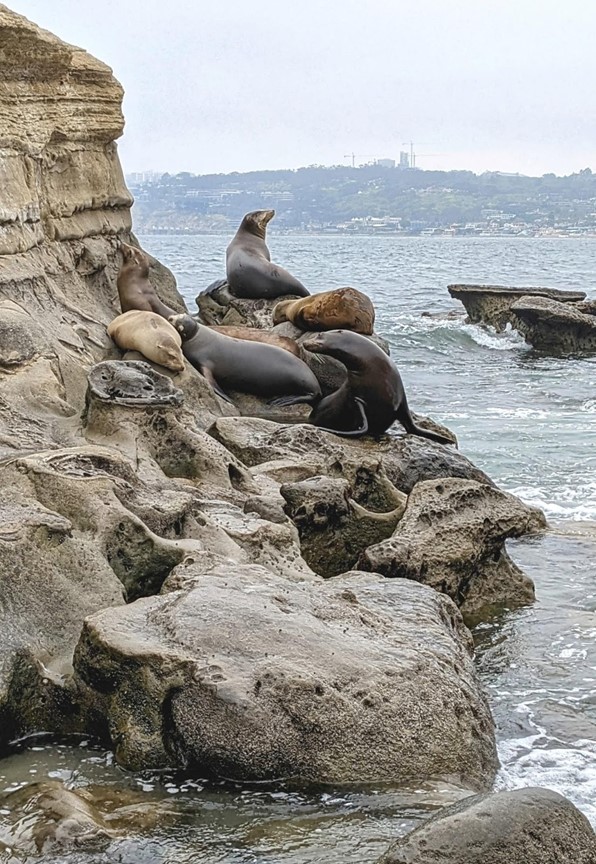
San Diego is most known for the San Diego Zoo, located in Balboa Park, which ranks among the top in the world. Balboa Park also includes the House of Pacific Relations International Cottages. Each of these 32 cottages display the culture of a country that has influenced San Diego’s history. We also enjoyed exploring La Joya Cove, which boasts picturesque beaches at the bottom of sheer cliffs. Tourists flock to these beaches (perhaps in excessive numbers) for pictures of the candid sea lions that occupy the coves.
As the conference came to an end, two poster presentations and endless socializing left me exhausted. Still, as a trail runner, I had been longingly eying up the surrounding mountains throughout the trip. Mustering up my remaining energy, I travelled to Paradise Mountain (located in the diametrically named ‘Hellhole Canyon’). The mountain was nestled among several others, with sprawling views of bright vegetation contrasted by red clay paths. I ran despite mountain lions being native to California mountains, after learning proper safety etiquette and of their tendency to rarely interact with humans.
Filled to the brim with neuroscience and San Diego lore, I was quite happy to board my flight back to Toronto, where much-needed sleep awaited me. My first international conference left me feeling rejuvenated in my day-to-day scientific pursuits, and eagerly awaiting the next opportunity to blend scientific curiosity with adventure.
 IMS Magazine
You must be logged in to post a comment.