

by Rachel Yang
Graphic design by Anne McGrath
Lung cancer continues to be the leading cause of cancer-related deaths in Canada.1 Despite this, health professionals, including physicians and surgeons must adhere to established standards of care even if there are instances where current technology or techniques fall short in delivering the optimal care and outcomes for patients. This underscores the need for continuous efforts aimed at researching and establishing new standards, to ensure an ongoing progression in improving care for patients affected by this prevalent and challenging disease.
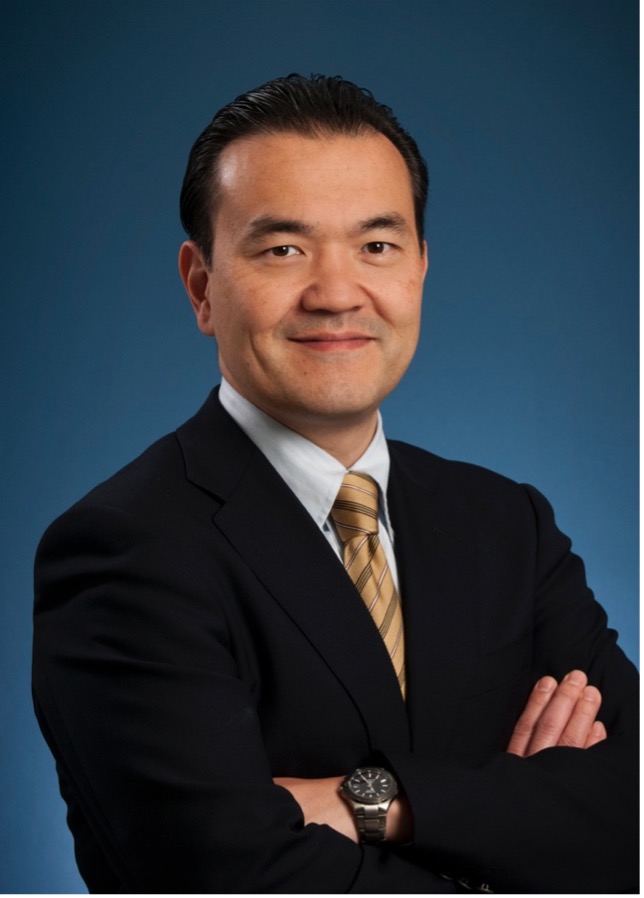
Photo provided by Dr. Yasufuku
Dr. Kazuhiro Yasufuku, the Head of Thoracic Surgery at Toronto General Hospital (TGH), goes beyond the confines of direct patient care. Engaged in both clinical practice and research, he seeks to extend his impact outside of the operating room. Driven by a commitment to make a broad impact, he aims to “make a difference for many more patients than what [he] can actually do as only a surgeon.” Dr. Yasufuku is also a senior scientist at the Latner Thoracic Surgery Research Laboratory, Professor of Surgery at the University of Toronto, Director of Endoscopy and Director of the Interventional Thoracic Surgery Program at the University Health Network (UHN). After completing his medical education at Japan’s Chiba University School of Medicine in 1992, he continued practicing medicine and conducting research at TGH and has become a pioneer and leader in the field of minimally invasive diagnostics and therapeutics for thoracic malignancy.
One key focus of Dr. Yasufuku’s research involves advancing image-guided diagnosis and surgical approaches for lung cancer patients. When he initially began practicing medicine, “minimally invasive thoracic surgery was still in its infancy; we weren’t using thoracoscopes, we weren’t using minimally invasive approaches,” Dr. Yasufuku recalls. Traditionally, clinicians used a thin, flexible tube, called a bronchoscope, inserted through the nose or mouth and down the throat, to visualize the airways in the lungs. However, these bronchoscopes only allowed visualization of what was directly in the airway, and sometimes the airways themselves were normal; as a result of these limitations, it was reported that only 29% of carcinoma in situ and 69% of microinvasive tumors were detectable using these white light bronchoscopes.2 A tremendous advancement in the field of lung cancer diagnosis and staging came with the introduction of the Endobronchial Ultrasound-Guided Transbronchial Needle Aspiration (EBUS-TBNA), co-developed by Dr. Yasufuku and the biotechnology company Olympus in 2002.3 Explaining how EBUS-TBNA came to be, Dr. Yasufuku says that he drew from personal experience: “as a surgeon, you’re seeing patients, and you understand what the issues are and what current technology does not provide.” It encouraged him to design a tool that could serve as an effective diagnosing instrument that had yet to be discovered. EBUS-TBNA involves a very small ultrasound probe tethered at the end of a bronchoscope; it enters the airway in a minimally invasive fashion, and instead of only seeing the airways, it enables the visualization of important structures under the airways, including potentially abnormal lymph nodes and large vessels.3 Once lymph nodes are identified, a needle can be inserted into the bronchoscope, piercing through the airway and directly into the lymph node to collect a sample. This sample is then examined by a pathologist to determine whether the lymph node is involved in cancer – critical to the decisions that will be made in creating treatment plans for patients.
One of Dr. Yasufuku’s ongoing projects includes utilizing micro-samples collected from EBUS-TBNA for diagnosis and staging, as well as genetic profiling to assess if patients are suitable for specific molecular-targeted agents in the treatment of lung cancer. For instance, EBUS-TBNA samples can be used to assess for genetic variants such as in the epidermal growth factor receptor to create personalized chemotherapy treatment for patients.4 Furthermore, there are also emerging biomarkers for predictive or diagnostic purposes, such as using the concentration of cytokeratin-19 mRNA in lymph nodes as a marker for metastasis.4 With its ability to collect high-quality biopsy samples in a minimally invasive manner for histopathological and molecular analyses, EBUS-TNBA has become the standard of care for minimally invasive modality in sampling mediastinal lymph nodes and lung cancer staging.5
Dr. Yasufuku is committed to exploring the potential of employing this minimally invasive approach in lung cancer treatment. He states, “My ultimate goal for lung cancer treatment is to use a very small bronchoscope to approach nodules for a diagnosis, and subsequently, employing different energy modalities to treat and cure the cancer.” Pursuing this objective, one of his ongoing projects, in collaboration with Dr. Gang Zheng, focuses on using porphysomes, nanoparticles that preferentially accumulate and fluoresce in tumors, to guide surgeons to precise locations of tumor nodules.6 Collaborating with Techna and OK Fiber Technology, the Yasufuku lab has developed a remarkably small fiberscope capable of fluorescing tumor nodules and simultaneously performing photothermal therapy.6 This fiberscope (less than a millimeter in size) can reach much deeper in the lung compared to earlier, less flexible fiberscopes. Dr. Yasufuku is continually evaluating the use of the fiberscope in conjunction with the porphysome nanoparticle, aiming to concurrently visualize and treat lung tumors that are not discernible macroscopically. “The ultimate goal is to treat lung cancer nodules without making an incision,” says Dr. Yasufuku.
Dr. Yasufuku emphasizes, “At the end of the day, it’s all about identifying what we lack in medicine and doing our best to address these challenges.” He remains dedicated to scrutinizing current standards of care through a patient-centric lens, focusing on research that makes positive and direct impacts on patients. Through his groundbreaking work on the EBUS-TBNA, he has revolutionized the lives of lung cancer patients globally, providing an alternative to invasive surgeries. Dr. Yasufuku’s ongoing research of using micro-samples for personalized patient treatments and incorporating porphysome nanoparticles with photothermal therapy strives to offer minimally invasive treatment alternatives for lung cancer patients. He envisions a future for the field of thoracic surgery where the diagnosis and treatment of lung cancer patients can be achieved entirely in a minimally invasive manner.
References
- Public Health Agency of Canada. Government of Canada [Internet]. / Gouvernement du Canada; 2023 [cited 2024 Feb 13]. Available from: https://www.canada.ca/en/public-health/services/chronic-diseases/cancer/lung-cancer.html
- Andolfi M, Potenza R, Capozzi R, et al. The role of bronchoscopy in the diagnosis of early lung cancer: A Review. J Thorac Dis. 2016 Nov [cited 2024 Feb 13];8(11):3329–37. Available from: https://www.ncbi.nlm.nih.gov/pmc/articles/PMC5179455/ doi:10.21037/jtd.2016.11.8
- Yasufuku K, Chiyo M, Sekine Y, et al. Real-time endobronchial ultrasound-guided transbronchial needle aspiration of mediastinal and hilar lymph nodes. Chest [Internet]. 2004 Jul [cited 2024 Feb 19];126(1):122–8. Available from: https://www.sciencedirect.com/science/article/pii/S0012369215329044?via%3Dihub doi:10.1378/chest.126.1.122
- Oezkan F, Khan AM, Zarogoulidis P, et al. Efficient utilization of EBUS-TBNA samples for both diagnosis and molecular analyses. OncoTargets and Therapy [Internet]. 2014 Nov [cited 2024 Feb 19];2061. Available from: https://www.ncbi.nlm.nih.gov/pmc/articles/PMC4234164/#:~:text=Dividing%20EBUS%2DTBNA%20samples%20for,needle%20passes%20for%20molecular%20analyses. doi:10.2147/ott.s72974
- Torre M, Reda M, Musso V, et al. Diagnostic accuracy of endobronchial ultrasound-transbronchial needle aspiration (EBUS-TBNA) for mediastinal lymph node staging of lung cancer. Mediastinum. 2021 Jun 25 [cited 2024 Feb 13];5(15). Available from: https://www.ncbi.nlm.nih.gov/pmc/articles/PMC8794299/ doi:10.21037/med-21-2
- Kinoshita T, Effat A, Gregor A, et al. A novel laser fiberscope for simultaneous imaging and phototherapy of Peripheral Lung Cancer. Chest. 2019 Sept [cited 2024 Feb 13];156(3):571–8. Available from: https://pubmed.ncbi.nlm.nih.gov/31034817/ doi:10.1016/j.chest.2019.04.010
 IMS Magazine
You must be logged in to post a comment.