

by Jennifer Ma
Graphic design by Anne McGrath
Growing up during a period of tension between the Betancur and Barco administrations, guerilla insurgents, and rising Colombian drug cartels, Dr. David Gomez bore witness to high levels of violence and civil conflict throughout his home country, provoking his interest in trauma surgery.
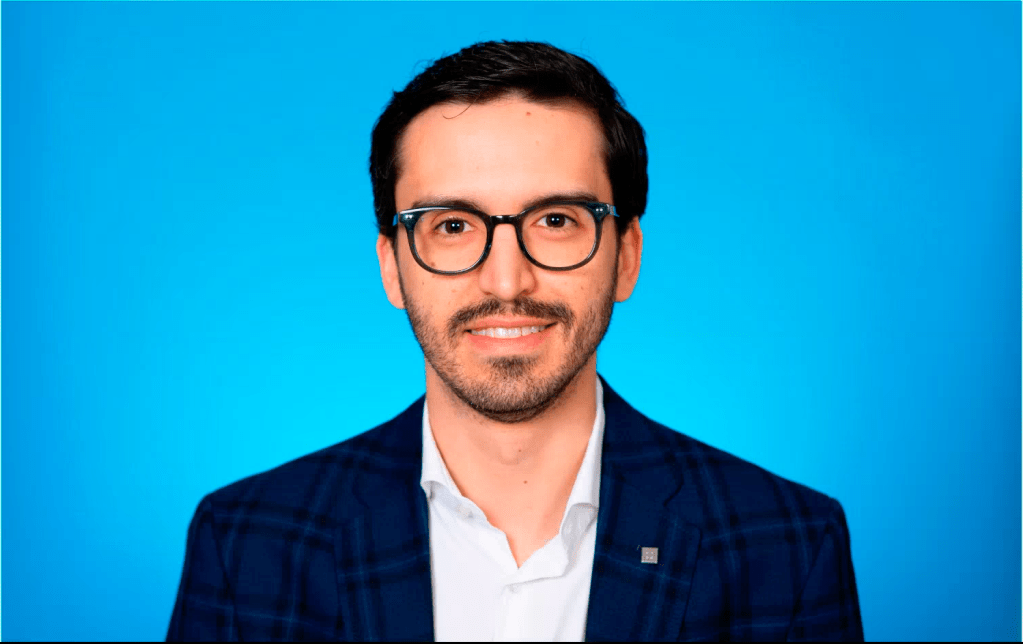
Photo provided by Dr. David Gomez
At that time, Colombia’s healthcare system had three sectors: public, social insurance, and private insurance. Pre-existing socioeconomic inequalities intersected with the mix of public and private care to create barriers in access, leaving about 15% of the population with no access to acceptable healthcare services at all.1 The subsequent gradient in access to timely and quality surgery became evident to Dr. Gomez, a medical student at the time, who was driven to examine broad aspects of surgical access in his research career. While completing his medical and research training in Sydney, Australia and Toronto, Canada respectively, he noticed the patterns he identified in Colombia were not unique.
“Even in a high-income, well-funded public healthcare system, there were still high inequalities in access,” he noted. “If you’re able to identify interventions [to the way we provide care at a systems level], you are going to have very profound impacts on large aspects of the population – for generations sometimes.”
Today, Dr. Gomez devotes approximately 65% of his time to research as an Assistant Professor in the University of Toronto Department of Surgery and Scientist at the Li Ka Shing Knowledge Institute. In his research, he is dedicated to understanding the factors that drive access from a patient perspective, striving to design systems that provide better and more equitable care. His remaining time is spent in his clinical practice, as an acute care and trauma surgeon at St. Michael’s Hospital.
As a Level I trauma centre in downtown Toronto, St. Michael’s Hospital is in the heart of need in the city. In his day-to-day as a clinician, Dr. Gomez sees many barriers in healthcare access, such as inability to pay or interpret language. However, he recognizes the limitations of his individual experiences. His collaborators help to fill in some of those gaps, coming from a range of backgrounds, such as obstetrics and gynaecology, ophthalmology, and neurology.
“Be bold, be broad,” is his advice to trainees. “Being uncomfortable, reaching across the aisle to other fields is a way to be much more impactful…and you will bear the fruit of that, because you will be a more resilient scientist, able to pivot and collaborate across fields.”
His current research examines the surgical backlog: approximately one million procedures across Canada that would have been completed if not for the COVID-19 pandemic.2 The pandemic necessitated large public health interventions, where “for the first time ever, governments told all hospitals they had to halt nonessential surgical care” – three separate times. This further weakened an already-strained system. For example, only 50% of knee replacement and 57% of hip replacement patients received surgery within the recommended time frame in 2022. This was a dramatic decrease in timely care from pre-pandemic levels, where about 70% of knee replacements and 75% of hip replacements were completed within the recommended period.2 As patients are left waiting, many will be continuously impacted by symptoms like loss of mobility or chronic pain, and some will become ineligible for surgery altogether, leading to worsened outcomes.
“We have barely been able to recover to numbers [of surgical cases] we were doing before the pandemic, but have never been able to over-perform in any significant way […] so we have never been able to catch up,” explains Dr. Gomez.
Furthermore, the pandemic’s impact was not the same throughout time and space. For example, Northern Ontario experienced lower rates of COVID-19 at the beginning, allowing surgical capacity to remain relatively resilient. However, surges from high caseloads later in the pandemic eliminated this benefit. Dr. Gomez is therefore mapping out these regional variations, to examine if “areas less impacted by COVID-19 were more resilient and [better able to] catch up on surgical care.” Indeed, urban neighbourhoods with high immigrant populations and low socioeconomic statuses experienced higher rates of COVID-19 and lower rates of vaccination. In these areas, not only is the backlog of cases larger, but the capacity to recover is smaller. The most complex cases were transported from suburban and rural regions to urban centres, further straining their hospitals, which are now operating with less staff who are less experienced. The pandemic unearthed and worsened these pre-existing inequities, and has indicated that those who will face the greatest health burden are likely also those in the greatest need.
Dr. Gomez believes that fluid and top-down public health responses will be necessary in future pandemic response, allowing “geographical areas with no impact [to continue] to provide routine care in a safe way”, and adjusting. Otherwise, the system may find itself back where it is now: with one million surgical cases left unaddressed.
“We are at a tipping point right now, particularly in Ontario, because the provincial government is proposing to open a large number of for-profit surgical centres,” he cautioned. “When driving surgical recovery will be about recouping profits, the things that will be impacted [are] quality and equity. For-profit centres will choose healthy, young patients that they can treat quickly, and complex care will be off-loaded to an already-underfunded public healthcare system; that will lead to further inequalities.”
Adamantly opposed to the expansion of for-profit clinics as a strategy to cope with the surgical backlog, he points to the evidence, emphasizing his own background working within the Colombian, Australian, and Canadian health systems. Privatized healthcare has not only been associated with lower equity, accessibility, and quality of care, but also does not improve health outcomes.3 As such, Dr. Gomez is also modelling gradients in access to private cataract centres with healthcare engineers at the University of Toronto. Together, they are taking a holistic view of recovery times by various increments of increased surgical capacity, as well as potential inequalities, with the goal of building an evidence base to further strengthen the public healthcare system and examine equitable alternatives, such as not-for-profit surgical centres.
“Part of the foundation of Canada is you should be able to access the same care as everyone else because you live, work, or study here,” he said. “The way we are heading right now [is] eliminating what we have built over decades, but there is still time.”
As Canadians re-evaluate the core values of the public healthcare system, Dr. David Gomez is identifying the gaps at a broad scale, in hopes that systemic policy changes can help patch them to improve equitable access for all – no matter who, no matter where.
References
1. Esteves RJ. The quest for equity in Latin America: a comparative analysis of the health care reforms in Brazil and Colombia. International Journal for Equity in Health. 2012 Feb 2;11(1):6.
2. Canadian Institute for Health Information. Canadian Institute for Health Information. 2023 [cited 2024 Feb 9]. Surgeries impacted by COVID-19: An update on volumes and wait times.
3. Lee SK, Rowe BH, Mahl SK. Increased Private Healthcare for Canada: Is That the Right Solution? Healthc Policy. 2021 Feb;16(3):30–42.
 IMS Magazine
You must be logged in to post a comment.