

by Bahar Golbon
Graphic design by Anne McGrath
If you are a graduate student at the Institute of Medical Science (IMS), you must have heard of Ergi Duli , a senior Ph.D. candidate. His research focuses on understanding the cellular pathways and anatomical structures involved in atypical hemolytic uremic syndrome (aHUS), a rare genetic clotting disorder that affects the kidneys. As his clinical collaborators begin promising plasma infusions in patients, Ergi’s work highlights the fascinating translation from basic science lab work to patient care. Yet, it is his passion outside the lab that has made him a pillar in the IMS community.
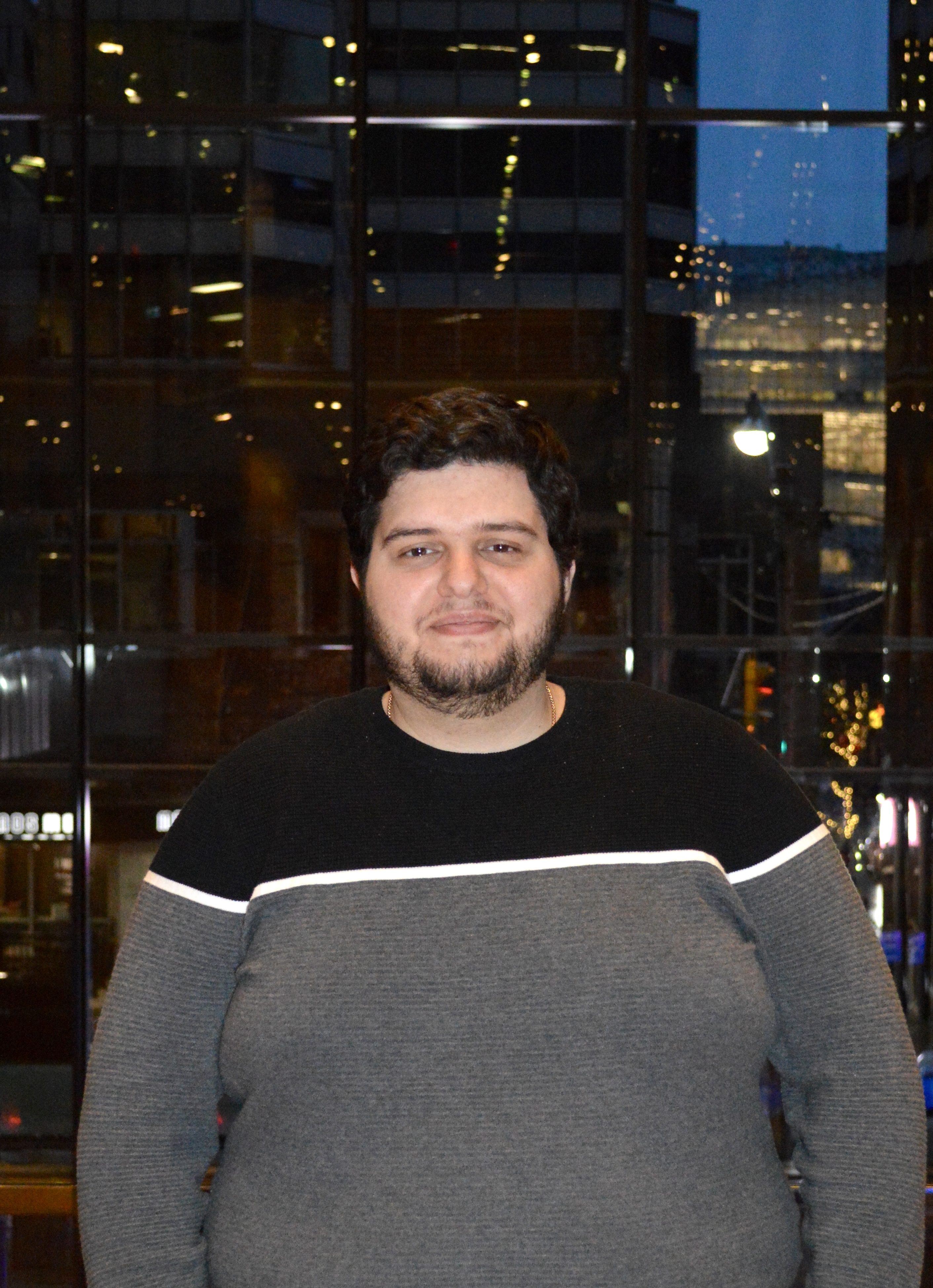
Photo taken by Kateryna Maksyutynska
Like many other graduate students, Ergi’s story is far from linear. He began his post-secondary studies in the Medical Sciences program at Western University. After graduating, he worked as a summer research student at the Peter Gilgan Centre for Research and Learning at the Hospital for Sick Children under Dr. Mathieu Lemaire, a pediatric nephrologist. Once he discovered his interest in research, Ergi entered the IMS to complete a master’s degree with Dr. Lemaire. Considering the many graduate departments at the University of Toronto, Ergi explains his decision to pick the IMS, “I find that the larger your institution, the more opportunities you have. For example, the IMS exceeds what other graduate departments offer for extracurriculars and opportunities to start your own initiatives.” However, as a new graduate student, Ergi’s mindset differed from what it is today. At the time, he believed that more hours spent in the lab equated to better and faster results. After spending nearly 12 hours a day in the lab, Ergi recalls, “I learned how slow wet lab research moves. It’s easy to get frustrated and lose sight of having some balance.” When the pandemic struck, and he encountered a roadblock in pursuing medicine, Ergi took advantage of the unique circumstances and transferred to a Ph.D. But this time around, he had a more sustainable plan in mind.
Ergi’s experience as an immigrant inspired his extracurricular involvement as he understood the difficulty in securing mentors within one’s community. “You face many problems with finding people who can help you figure out what you need to do to reach whatever goal you’ve set for yourself. I think that’s very characteristic of not just my story but many other students at IMS.” This experience encouraged Ergi to engage in various groups within the department to improve the student experience by facilitating new connections and opportunities.
Over the past two years, Ergi has been the student lead responsible for arranging the IMS event of the year, the Scientific Day. Despite limited experience in event organization, he excelled by acquiring practical experience and now urges students to venture beyond their comfort zone. “I think the more you take on and challenge yourself, the more you’ll realize how capable you are not just of what you can do now but what you can learn to do.” Ergi also acts as a mentor for new IMS students through the Peer-to-Peer (P2P) Mentorship program. The program pairs incoming students with senior IMS students to ease the transition into graduate studies and foster a sense of community. Furthermore, as the IMS Alumni Engagement Coordinator, he was recently involved with the launch of the Career Mentorship Program (CMP). While the P2P mentorship program focuses on matching new graduate students, the CMP seeks to establish connections between upper-year students and IMS alums. As graduate work comes to an end, there can be a daunting uncertainty about what to pursue next. The CMP aims to offer students the opportunity to explore their career of interest and receive individualized guidance. Ergi highlights, “There’s a lot of great options, but you’re burdened by choice.” Currently comprising of 100 mentors from academia and industry, the CMP team is actively working to enhance the diversity and representation of career options. Through all these positions, Ergi has played an integral role in assisting IMS students at various stages of their graduate careers. His significant contributions to the academic experience of graduate students have been rewarded with the 2023 Roncari Prize and the 2023 Student Contribution to Graduate Education Award. The Roncari Prize was established in 1995 after Dr. Daniel Roncari, a historical Director of the IMS, and the recipient is nominated by the leaders of the Student, Staff, Alumni and Faculty Engagement (SAFE) committee based on their notable contributions to the experience of graduate students.1
By pursuing a Ph.D., Ergi bought himself some time for introspection. He discovered that medicine is still the career that he would like to pursue despite its arduous nature. Ergi notes, “I enjoy the feedback of medicine, where you are seeing patients, coming up with a treatment plan, and you can see the effects of those treatments within a few weeks, if not the same treatment session. I think that’s very emotionally rewarding.” Although science can be intellectually fulfilling, individuals often experience extremely delayed gratification, and one’s impact may be difficult to measure. “Medicine still offers something unique compared to a pure science career. That’s why I’m not going to give up on it.” Ergi’s determined mindset is inspirational, considering the challenges of medical training and the passion required to succeed in the long-term. “A Ph.D. was more like an interesting detour than something I had set my sights on since childhood. It gave me time to work on my application and learn more about my career path. I will find creative ways to use it as I move through my future.”
Ergi, who will graduate with his doctoral degree shortly, shared some valuable insights for current and prospective IMS students. “You really want to start early, build connections, and understand the day-to-day life in a certain field. That will alleviate a lot of stress from your shoulders. Understand that everything comes at its own pace, take it step by step, have a clear idea of your goals, and avoid thinking 30 steps ahead.” He continues to encourage students to attend diverse career events to explore and broaden their networking circles. Though securing a Ph.D. was not initially in Ergi’s plan, his legacy and contribution will continue to positively impact the IMS community. Your IMS family wishes you the best of luck in your medical aspirations!
Reference
1. Institute of Medical Science. Roncari Prize [Internet]. [cited 2024 Feb 12]. Available from: https://ims.utoronto.ca/roncari-prize
 IMS Magazine
You must be logged in to post a comment.