
by Eileen (Xiao Yu) Liu
Graphic design by Josephine Choi
Recently, I interviewed Dr. Vitor Pereira, a renowned neurointerventionist currently working at St. Michael’s Hospital. Our conversation revealed the transformative journey that led him to the field of medicine. Growing up in an island in northeastern Brazil and studying computating science, Dr. Pereira shifted towards a career towards medicine as a result of his father’s illness.
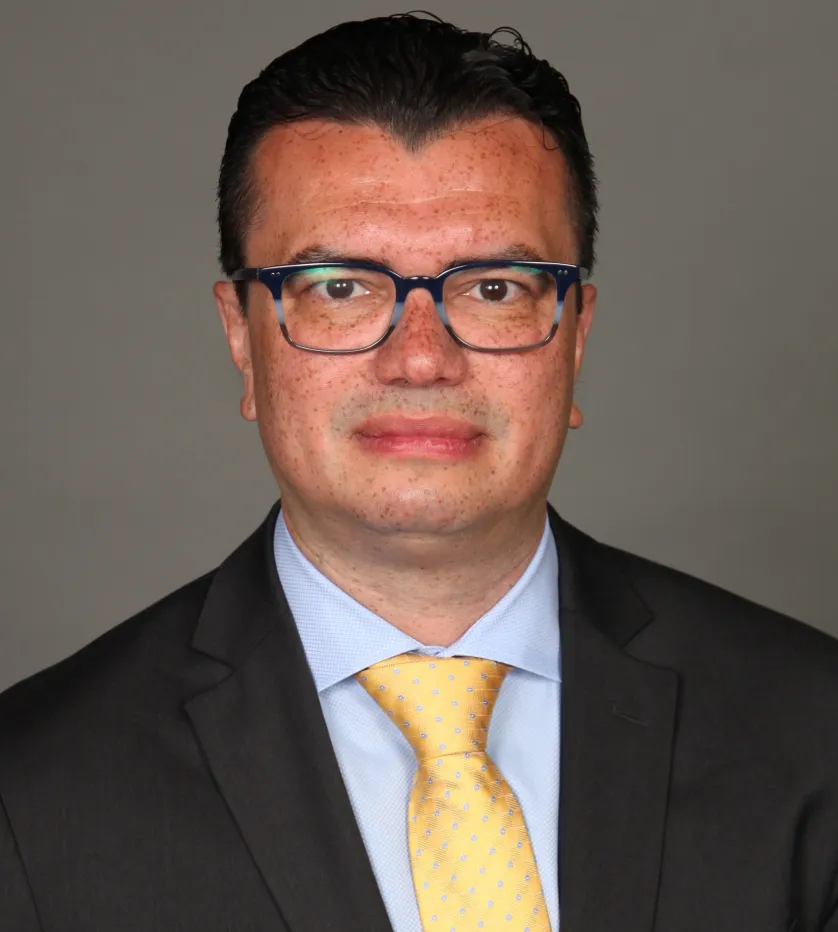
Photo provided by Dr. Vitor Pereira
As a medical student, Dr. Pereira became captivated by the neuro field and neurosurgery. He acknowledged the significant role played by Professor Pierre Lasjaunias, who emphasized the importance of neuroangiographic anatomy, embryology, disease pathomechanisms, and genetics. Professor Lasjaunias recommended a continuation of Dr. Pereira’s training under the guidance of Jacques Moret, a renowned neurointerventionist. This opportunity allowed Dr. Pereira to gain profound knowledge on the anatomy and technical skills to navigate each procedure with care and precision. To this day, he is greatful for the transformative influence that Professor Lasjaunias and Professor Moret have had on shaping not only his practice, but also the broader field of neurointervention.
In the beginning of his career, the impact of stroke lingered in his mind as there was a lack of effective treatments available for these patients. “The fact that we couldn’t do anything for our patients stroked me,” Dr. Pereira explained. “I always carried that in the back of my mind thinking that if we are developing minimally invasive treatments for brain aneurysms, we should be able to do something similar for stroke as well.”
Few years later in 2009, after his fellowship where he saw the infancy of endovascular stroke, he works in a pioneer project together with few centers in Europe to develop a transformative technology to remove clot from bain vessels, devices called stent retrievers. He also led first prospective trials as well as randomized controlled trials that, in 2015, made endovascular stroke treatment standard of care. During our discussion, Dr. Pereira brought up some of the challenges that occurred in the early phases of introducing innovative techniques, particularly in stroke treatment: “In society, not only medicine, innovation and novelty drives fear. There was quite a lot of resistance from a conservative group of academics but this was all overcome after the randomized controlled trials.
Since he started his practice in Canada 10 years ago, one of Dr. Pereira’s proudest achievements is the RADIS Lab, which waswas co-founded by him self and Ms. Nicole Cancelliere. It is dedicated to translating pioneering research and the application of cutting-edge technologies in treating neurovascular diseases. RADIS is an acronym that highlights the technologies used to tacle the clinical challenges he and his team face in the neurovascular clinic at St Michaels Hospital. It stands for Robotics, Artificial intelligence, Dynamic flow, Imaging and Simulation. as it fosters collaboration between clinicians and scientists, driving innovations in robotics, artificial intelligence, procedure simulation, and new imaging technologies. Dr. Pereira highlighted groundbreaking projects, including the world’s first robotic aneurysm treatment and contributions to the development of novel devices like the Surpass EVOLVE flow diverter and the BossStent venous stenosis treatment device. The Surpass EVOLVE flow diverter is used to treated brain aneurysms, while the BossStent is a stent being used to treat symptomatic cerebral venous diseases, including venous stenosis. Also, the RADIS lab was a pioneer in the use of OCT (optical coherence tomography) to diagnosis neurovascular diseases and to assist interventional neuroradiology procedures.
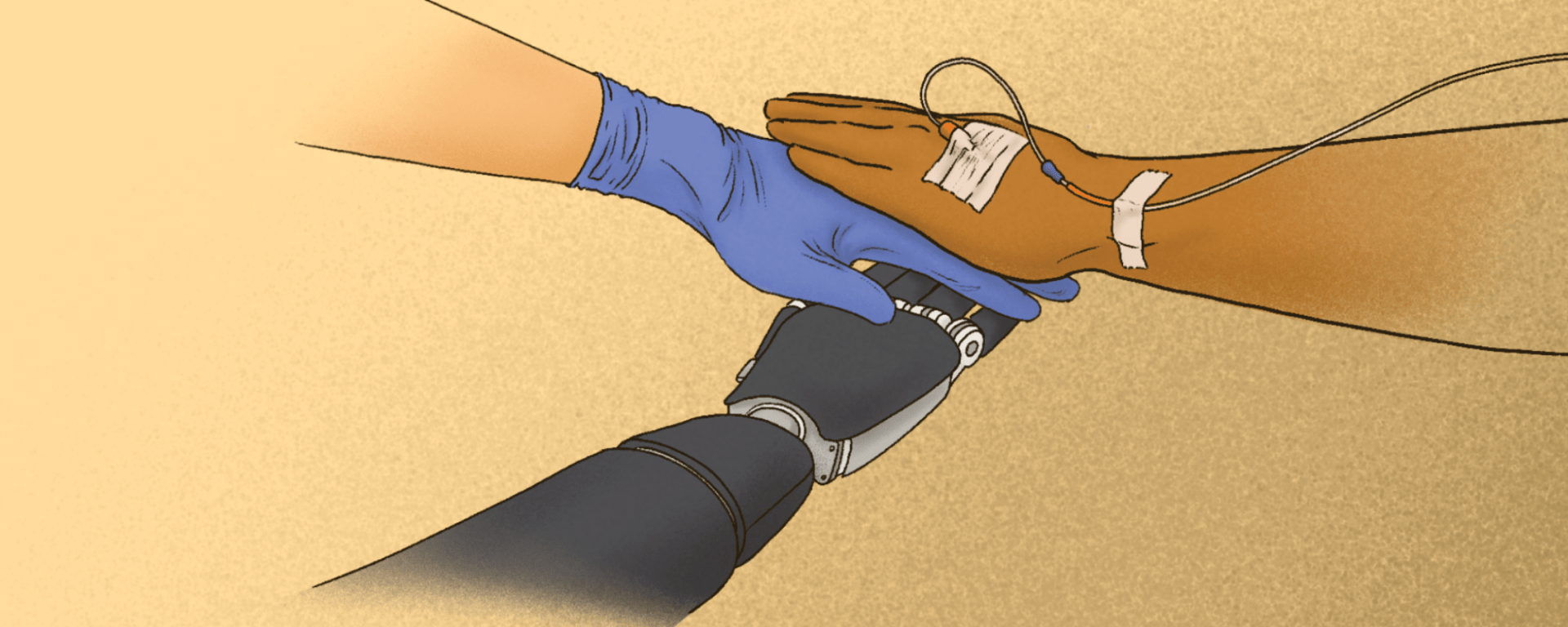
A major area of focus for Dr. Pereira and his lab is the development of remote robotics. Surgical robots are already known to enhance precision in neurointervention. In neurointervention, the use of robots to manipulate the different devices emerged over the last decade driven by goals of radiation protection and precise manipulation of the neurointerventional devices. In 2019, Dr. Pereira and his team performed the world’s first cases of brain aneurysms treatment using robotic assistance, which marked a significant milestone in the field of neurointervention. “Even with this first generation of robotic, we already saw that we can be more precise placing coils and stents for brain aneurysm treatment,” Dr. Pereira explained. Results from additional studies demonstrated the robot’s enhanced technical skills, which potentially could be a great tool for the less-experienced neurointerventionalists. Dr. Pereira foresees the integration of artificial intelligence (AI) and automation in the next generation of robotic neurointervention, further refining capabilities.
A significant benefit of remote robotics is to expand access to care to patients with acute conditions, such as stroke that require urgent care in remote locations. In vast geographical regions like Canada, the United States, China, and Russia, where access to neurointerventional expertise is limited, remote robotics may offer a solution by reducing the transfer time for patients in need of immediate treatment. Dr. Pereira believes that the use of remote robotics will have more societal impact in areas where there is a lack of material resources and human support available and accessible to patients. While the current affordability of devices remains a challenge, the ongoing development of these devices will allow them to become a more cost-effective solution. Dr. Pereira emphasizes that while robots will never replace human expertise, their cost-effectiveness and potential to function with low maintenance make them a pragmatic and impactful addition to neurointerventional practices. He hopes that this addition will help to improve accessibility and expertise in patient care.
Looking ahead to the next five to ten years, Dr. Pereira shared insights into emerging technologies within the field of neurointervention. In stroke treatment, he emphasized the potential of remote robotics as a way to improve access to care. For brain aneurysms, Dr. Pereira envisions leveraging coated devices to further reduce complication rates. Exploring new frontiers, he emphasized the use of dedicated devices for conditions like venous stenosis and idiopathic intracranial hypertension, as well as the intravascular delivery of chemothereapy or radiation for brain tumors. On the technological front, Dr. Pereira sees a growing role for MRI in interventions, with ongoing studies and device developments that will allow us to shift from using traditional angiography with X-ray to perform interventions, to instead us MRI machines. Overall, Dr. Pereira see a future where the “trend is to use more technology to better triage and help patients to make treatment decisions.” He strongly believes understanding more about the disease and ensuring the safety and reliability of treatment is crucial for improving patient outcomes and advancing medical sciences.
 IMS Magazine
You must be logged in to post a comment.