

by Niki Akbarian
Graphic design by Yu-Wen Jan
The transition into your first career post-graduation is similar to wandering through a maze without a map. Not knowing where to start the job search, how to find suitable job matches, how to effectively complete lengthy applications, and how to prepare for multiple rounds of interviews can be significantly frustrating for new graduates. The frustration that most people feel in this journey, however, does not come from incapability, but rather from a lack of knowledge and clarity about the steps that need to be taken to land the first job after graduation.
The Career Mentorship Program (CMP) at the Institute of Medical Science (IMS) has been established to address this challenge by guiding upper-year IMS students looking towards securing job positions after graduation. As Ergi Duli, a PhD candidate and the program coordinator of CMP, describes, the goal of CMP is to alleviate students from the burdens of reinventing the wheel by offering them the opportunity to learn from those who have already gone through similar paths.
Sarah Topa, the program manager, and Ergi Duli are the driving forces behind CMP as they had recognized the lack of a mentorship program geared towards aiding students in navigating the job market post-graduation. Since 2020, CMP has been run for three successful cycles. Each year, CMP welcomes approximately 20 to 25 IMS students seeking mentorship. Mentors of CMP are faculty members and IMS alumni who deeply understand the transition from IMS to professional employment, whether in academic settings or non-academic environments such as industry and not-for-profit organizations. Although Ergi likens the process of reaching out to mentors to a scavenger hunt, CMP has managed to assemble a unique pool of mentors with diverse sociodemographic backgrounds located across the globe, spanning Canada, the US, Europe, and Asia.

Despite its complexity, CMP endeavors to pair students with the most compatible mentors. To make the process more efficient, students are asked to provide a brief overview of themselves and their career aspirations. They are also encouraged to specify any sociodemographic factors, such as race, gender, or domestic versus international status, that might aid in pairing them with a mentor who shares similar life experiences. “We do our best to match students with the best mentor. But it’s not always as great as we want it to be. We don’t have an infinite pool of mentors to draw from. But we have been able to accommodate [the needs of students] with our pool of mentors,” Ergi says. Looking ahead, Ergi believes that the matching process will improve as CMP’s mentor pool grows. “This is my call to action to everyone who reads this. We are always looking for new mentors to add to our pool, and we would love to continue to hear what students do after they leave [IMS] and encourage them to become involved in CMP.”
The benefits of CMP for students are abundant. Beyond establishing mentorship relationships through regular meetings with mentors, students can leverage CMP to expand their professional network—a vital aspect of job searching. Moreover, CMP offers structured programming through networking events and exclusive workshops where students collaborate in small groups to hone essential job-seeking skills, such as crafting a LinkedIn profile, writing effective resumes and cover letters, and enhancing interview skills. For mentors, the experience is equally rewarding. Many enjoy the opportunity to teach, engage with students, and share their valuable experiences. Mentors in some professions can also spot potential candidates for available job positions in their organization among their mentees, which can provide significant benefits to their careers and the growth of their organizations.
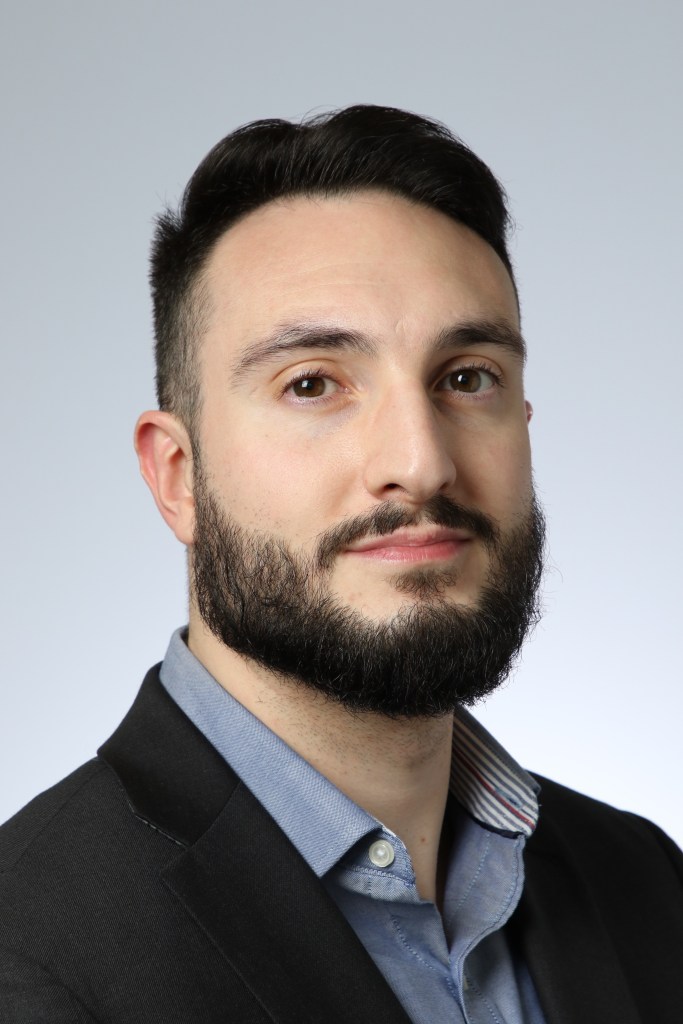
As Ergi mentions, “The ultimate goal of CMP is to help students get all the connections and information they need to secure their futures. It’s great to see students who went through the program land jobs immediately—some even had positions lined up before graduating.” One such success story is Dr. Anthony Cannavicci, who started as a mentee in the program and now serves as a mentor.
Dr. Cannavicci started his journey at IMS in 2016 as an MSc student under the supervision of Dr. Michael Kutryk at St. Michaels Hospital. He then transferred to PhD where he investigated the role of microRNA dysregulation in hereditary hemorrhagic telangiectasia (HHT), a rare vascular disease. In addition to his academic pursuits, Dr. Cannavicci was the president of HHT Canada, a nationwide charity dedicated to advocating for HHT. Concurrently, he acted as a scientific advisor for the Cure HHT Research Network, a non-profit organization.
Currently, Dr. Cannavicci serves as a Field Medical Affairs Scientist at Pfizer Canada, specializing in hemophilia and Duchenne’s muscular dystrophy. In this role, he collaborates with healthcare professionals to lead scientific discussions regarding Pfizer’s inline and pipeline therapies. As Dr. Cannavicci explains, Medical Affairs Scientists provide scientific and medical support for therapies and address physicians’ inquiries about these treatments.
Dr. Cannavicci highlights that one of the most valuable aspects of his PhD experience, which prepared him for his current role at Pfizer, was the opportunity to present his research at national and international conferences. He also emphasizes the significance of CMP in securing his current position. Dr. Cannavicci had a clear career goal of entering medical affairs, and he specifically expressed this in his application to CMP. He recalls, “CMP paired me very appropriately with someone who was basically doing what I am doing now. So, it was a very good fit. [My mentor] was very helpful and nice; we worked on resume building, cover letter building, and interview preparation.”
Presently, as a mentor, Dr. Cannavicci is aiming to incorporate activities that he found helpful during his time as a mentee at CMP into the meetings with his own mentees. “Because I had that experience prior, I was more prepared to act as a mentor as I can provide the same level of quality of service that I received,” Dr. Cannavicci says. He also emphasizes that an important aspect of being a mentor is to provide a better understanding of what the job entails for students. “You need to know what you are getting into, you need to know what day-to-day life is like, because there is only so much that you can get from descriptions. But when you talk to someone who is in it, it is a completely different lens to investigate through.”
For mentees of CMP exploring potential job positions, Dr. Cannavicci advises them to learn how to effectively market themselves. He encourages them to take pride in their background, engage in extracurricular activities that make them stand out, and actively network. Lastly, he underscores the importance of seeking as much help as possible from mentors and workshops in CMP, and learning from the experiences of those who went through the same maze of job searching previously. Indeed, CMP is dedicated to helping graduate students at IMS to build the future that they dream of.
 IMS Magazine
You must be logged in to post a comment.