

by Kowsar Teymouri
Graphic design by Anaiah Reyes
Perioperative bleeding can occur before, during, or after surgery, and depending on severity, can lead to the need for blood transfusions and increased rates of morbidity and mortality.1 Cardiac surgery, in particular, is a major consumer of blood products due to the extent of surgical trauma and influence of the cardiopulmonary bypass system on the coagulation system. Post-operative management of bleeding in cardiac surgery often involves transfusions of allogeneic blood products (blood obtained from a compatible donor), such as frozen plasma (FP), platelet concentrates, or red blood cells. Despite improvements in transfusion medicine, blood transfusions are still associated with adverse outcomes, such as mortality.2 Thus, there is a need to further mitigate postoperative bleeding in patients undergoing cardiac and other types of high-blood-loss surgeries.
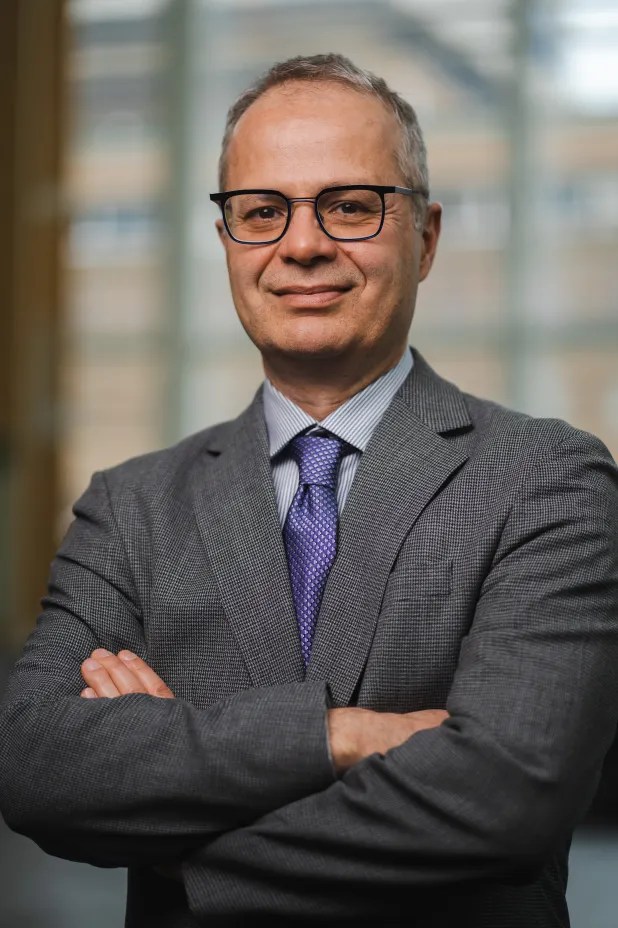
Provided by Dr. Karkouti
Dr. Keyvan Karkouti is a professor of anesthesiology and pain medicine at the University of Toronto and the head of the Department of Anesthesia and Pain Management at University Health Network (UHN), Sinai Health, and Women’s College Hospital. He is a globally-recognized clinician-scientist in his field. Dr. Karkouti completed his medical training and anesthesia residency at the University of Toronto, followed by a fellowship in anesthesia at St. Michael’s Hospital under the supervision of Dr. Keith Rose. He later obtained a master’s degree in Clinical Epidemiology, Health Care Research, and Health Administration at the University of Toronto. Working alongside his team–Dr. Jeannie Callum, Dr. Stuart McCluskey, and Dr. Justyna Bartoszko–his research focus has been on advancing the perioperative management of bleeding in cardiac surgery, focusing on minimizing blood loss and enhancing patient outcomes.
Dr. Karkouti’s motivation to focus his research on perioperative bleeding management stems from his understanding that bleeding carries a heavy burden of illness for surgical patients. Cardiac surgery offers a unique opportunity to study this problem because it provides for a relatively homogeneous, high-risk setting, which allows for easier identification of the effectiveness of interventions in clinical trials (as opposed to other settings such as trauma, where the causes of bleeding and patient population are very heterogeneous). Moreover, he underscores his passion in this field of research for the ability to collaborate with a robust network of hospitals and multidisciplinary teams across Canada, enhancing the quality and impact of the research conducted.
Dr. Karkouti reflected on his clinical experience from his time in the CVICU (Cardiovascular ICU), over 20 years ago, which further shaped his research focus. Despite their best efforts to address bleeding using the standard diagnostic assays and interventions available at the time, patients frequently had to return to surgery to control postoperative bleeding. In some cases, even returning to surgery did not address the problem, leaving the patients with refractory bleeding that would invariably lead to very poor outcomes, including major organ failure and death.
Today, we have access to far more effective therapies for managing refractory bleeding and diagnosing coagulation abnormalities, reflecting significant progress in this field. Traditional lab assays such as complete blood count (CBC), partial thromboplastin time (PTT), and international normalized ratio (INR) have been superseded by advanced point-of-care (POC) assays. These modern tools enhance our ability to better identify the cause of bleeding, predict its occurrence, and tailor targeted therapies for patients. This progress has also provided numerous research opportunities to explore the roles of clotting factor concentrates. Dr. Karkouti and his team have spearheaded several studies aimed at eliminating the need for allogeneic blood product transfusions, leading to substantial changes in clinical practice.
As noted earlier, coagulopathic bleeding is a frequent complication of cardiac surgeries that consumes a large proportion of our blood supply. Moreover, it is directly linked with increased morbidity and mortality rates.3 POC hemostatic assays, with their faster turnaround times and superior ability to identify the causes of coagulopathy compared to standard tests, are particularly useful in the dynamic environment of surgery. To investigate the efficiency of the POC assays, Dr. Karkouti led a multicentre study across 12 hospitals, recruiting almost 8,000 patients. This research demonstrated that the implementation of POC hemostatic assays significantly reduced major bleeding and the need for blood product transfusions after cardiac surgery, resulting in a substantial change in clinical practice across Canada.
Providing evidence for the adaptation of POC assays as a means of diagnosing coagulation abnormalities set the stage for Dr. Karkouti’s team to next investigate novel interventions in treating these conditions. In one major study, they compared the safety and effectiveness of an older blood product – cryoprecipitate – with a newer, purified product – fibrinogen concentrate. Cryoprecipitate is derived from FP and has long been used to treat fibrinogen deficiency, which is a crucial coagulation factor, in bleeding patients. However, cryoprecipitate is not a purified product and contains additional factors, some of which may increase the risk of complications. Following Dr. Karkouti’s study demonstrating that fibrinogen concentrate is as effective as cryoprecipitate, use of fibrinogen concentrates has largely replaced cryoprecipitate across Canada.4 Dr. Karkouti is now leading another study with the aim of reducing the reliance on frozen plasma, another allogeneic blood product that carries significant risks to some patients, by assessing the relative safety and effectiveness of another purified product, prothrombin complex concentrate (PCC), which contains significantly higher concentrations of clotting factors compared to FP. If this study demonstrates that PCC is superior to FP, it will have a tremendous impact on the practice as it may largely phase out the use of FP for management of coagulopathic bleeding in surgery and possibly other settings. He hopes to conclude the study by November and publish it by next year.
Lastly, Dr. Karkouti highlights the high prevalence of anemia among cardiac surgery patients, noting, “about 30% of patients present with anemia at the time of surgery.” He emphasizes that lower hemoglobin levels are associated with poorer postoperative outcomes and an increased likelihood of needing transfusions. To address this, hospitals across Ontario have implemented programs to diagnose anemia before surgery and intervene by increasing hemoglobin levels through intravenous iron or erythropoietin treatments prior to the procedure. As advice to future clinician-scientists, Dr. Karkouti underscores the importance of teamwork and collaboration, stating, “all ships rise with a rising tide.” He also highlights the need for adaptability in research in response to emerging opportunities and challenges. Embracing these principles, Dr. Karkouti, who has become a trailblazer in bleeding management research, exemplifies how success in science depends not just on individual effort, but also on the collective strength and adaptability of the team. As for ongoing research on bleeding, he believes that research is advancing well and is confident that exceptional researchers across Canada will continue to drive progress in this field.
References
1. Ghadimi K, Levy JH, Welsby IJ. Perioperative management of the bleeding patient. Vol. 117, British Journal of Anaesthesia. 2016.
2. Dyke C, Aronson S, Dietrich W, Hofmann A, Karkouti K, Levi M, et al. Universal definition of perioperative bleeding in adult cardiac surgery. Vol. 147, Journal of Thoracic and Cardiovascular Surgery. 2014.
3. Karkouti K, Callum J, Wijeysundera DN, Rao V, Crowther M, Grocott HP, et al. Point-of-Care Hemostatic Testing in Cardiac Surgery: A Stepped-Wedge Clustered Randomized Controlled Trial. Circulation. 2016;134(16).
4. Callum J, Farkouh ME, Scales DC, Heddle NM, Crowther M, Rao V, et al. Effect of Fibrinogen Concentrate vs Cryoprecipitate on Blood Component Transfusion after Cardiac Surgery: The FIBRES Randomized Clinical Trial. JAMA – Journal of the American Medical Association. 2019;322(20).
 IMS Magazine
You must be logged in to post a comment.