
by Kyla Trkulja
Graphic design by Lauren Jones
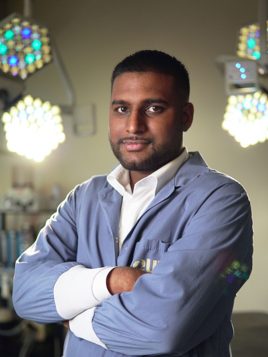
Graduates from IMS take on diverse career paths, with no two trajectories being identical. In these roles, alums make an impact on the communities around them in their unique ways. Recently, I had the privilege to meet with 2021 alumnus Dr. Aadil Ali, where we sat down in the MaRS Discovery District and discussed his experiences over coffee. Dr. Ali’s journey is a testament to the power of collaboration and innovation. His contributions to science have earned him several academic awards, including the IMS Emerging Leader Award at this year’s Scientific Day, and international recognition on the Forbes 30 Under 30 list.
Provided by Dr. Ali
Dr. Ali completed his PhD at IMS under the supervision of Dr. Marcelo Cypel at Toronto General Hospital (TGH). With an area of focus in lung transplantation, Ali benefited greatly from the expertise and guidance of his mentors at a world-renowned center for transplantation medicine, where TGH had performed the world’s first successful lung transplant in 1983. “There’s so much history, so many exciting things that come from the team here,” Dr. Ali highlighted. “The team at the Toronto Lung Transplant program really understands the urgency and importance of going bench-to-bedside for the benefit of patients. Good things happen when you are apart of such an amazing team.”
Dr. Ali still had the chaotic research journey that most PhD students embark on, regardless of their research site and supervisor, where “you start with one thing and then end up gearing off into a different pathway.” He initially started his research with the intent of focusing on gene therapies for organs before transplantation, but after some time, he began looking at strategies to improve the way donor lungs were preserved outside of the body.
One of the team’s key discoveries challenged the conventional wisdom that colder is always better for preservation. Many of us are used to thinking that if you want to preserve something longer, you should put it in the fridge or freezer–and for years, this rationale was used to preserve organs outside of the body before transplant, as they were kept on ice. However, the team of researchers learned that keeping organs on ice leads to accumulated damage from ice injuries, ultimately causing cell death within the organ. As a result, organs such as the lungs could only be preserved for a maximum of six to eight hours outside of the body. Building off this, they later found that preserving the organ at a slightly warmer temperature of ten degrees Celsius prevents this damage, allowing it to be stored outside of the body for longer.
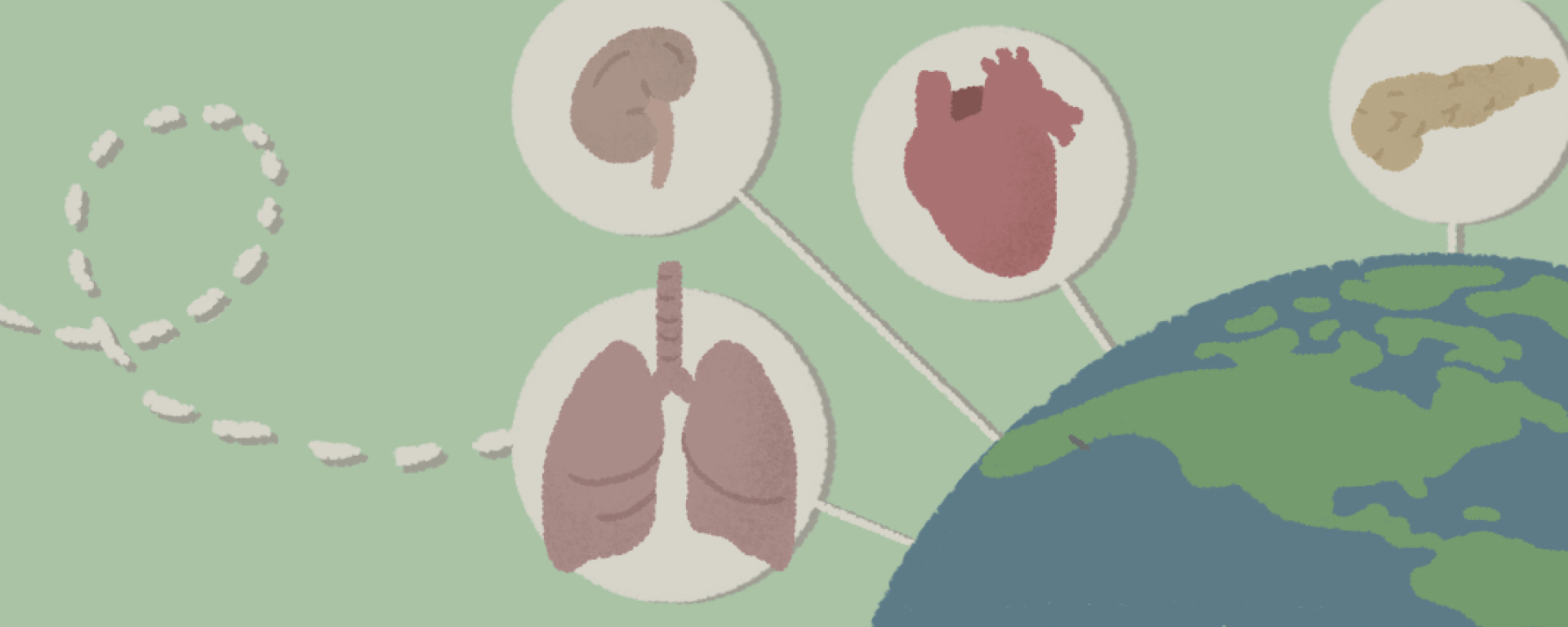
After completing his PhD, Dr. Ali worked closely with commercial partners to help transform this discovery into a practical innovation that could revolutionize transplant care worldwide. Collaborating with Traferox Technologies, a Canadian biomedical device company, Dr. Ali played a pivotal role in the development of a preservation device that keeps the organs at a ten-degree Celsius temperature. Dr. Ali credits the entire team at Traferox Technologies for recognizing this critical clinical need and for their dedication in driving the development of this innovative technology forward. This small change in storage conditions has had remarkable effects, as lungs are now able to be stored for as long as 24 hours outside of the body–four times longer than they were able to be stored on ice. This device is now used routinely as a method for preserving organs prior to transplant not just in Canada, but also in medical centres in the United States, Europe, Australia, India and Israel, and the technology is also being expanded so it can store other organs such as the heart, liver, kidney, and pancreas. Not only does this have a direct impact on patients, but transplant surgeons have benefitted as well, as the increased window of time the organs can survive outside of the body has improved their workflow: “A lot of residents and fellows don’t want to go into transplant because of the intensive work schedule and how complicated it is,” Dr. Ali explained. “If you get a call that you have a donor lung, you have to pick up the call at 9 pm and you do the transplant at 2 am, stay up the whole night, and then do your elective surgeries the next morning … Now, you have 24 hours to make your schedule more flexible.” As a result of this, overnight transplants are no longer done in Toronto and many parts of the world, easing some of the intensive scheduling on physicians. Hopefully, as transplant scheduling becomes less vigorous, residents and fellows will become more inclined to choose this specialty for their career path.
Currently, Dr. Ali is the Director of Clinical Development at Traferox, where he continues to contribute towards innovative work on organ preservation. He has played a crucial role in the collaborative effort of expanding these preservation devices to other organs and spreading this technology to other countries, allowing patients and medical professionals all around the world to be impacted by the benefits of these extended times where the organs remain viable. “When I did my research, even after publishing it, it felt very confined within the walls of the institution and the facility,” Dr. Ali says. “But now … my favourite part is just being able to spread all this technology, spread all work that I’ve done, and have people use it to benefit patients around the world.”
When reflecting on his journey throughout his PhD, Dr. Ali credits IMS with providing him with the skills and resources he needed to take part in something so original. “Being in a cutting-edge environment, that definitely was one of the huge things that IMS offered me on top of the other things, such as time management skills, being able to have relations with people, and critical thinking,” he explained. He learned the value of collaboration and forming meaningful relationships with those around him, and, just as important to the success of his device, how to work with industry partners to commercialize an innovative idea. “I think that as things progress, there definitely has to be more conversations that will facilitate those healthy relationships between research and industry because it is the new way that things are going and to move things forward,” Dr. Ali mentioned, expressing the importance of industry support in getting the appropriate regulatory approvals so that this scientific concept could be made into a viable device that would impact the world around him.
In addition to learning how to conduct research and make discoveries as meaningful as possible, Dr. Ali also shared that learning to overcome failures was a crucial skill he developed during his PhD. “It’s more about the process [of research], and people don’t realize that,” he explained. “You have to go through the exercise of trying, failing, and problem solving. I think that’s where the real value of doing a PhD comes from.” By combining research skills with resilience and relationships, one can work towards success in whichever career path they choose and use their strengths to touch the lives of those around them. In the case of Dr. Ali, he did exactly that, and the results of his efforts are a direct representation of UofT’s goals for their impacts: to be boundless.
 IMS Magazine
You must be logged in to post a comment.