
by Ilakkiah Chandran
Graphic design by Jeah Kim
Today, we are fortunate to benefit from technology that enhances the efficiency of our daily lives and improves our overall quality of life. We depend on innovative devices to better our lives, from using Netflix to skip television advertisements to using smartwatches to track our activity patterns.
In 2007, vaping using electronic cigarettes (e-cigarettes) was introduced in North America. Marketed as a safer alternative to smoking cigarettes, vaping soon became a popular substance.1 In comparison to traditional cigarettes that are known to cause multiple chronic and acute health complications, e-cigarettes were perceived to be effective in curbing the desire to smoke a cigarette while allowing consumers to experience a similar sensation. Soon after their introduction, the uptake of e-cigarettes increased and the use of traditional cigarettes decreased.1 However, with time, a growing body of research has associated e-cigarettes with harmful effects at both the systemic and cellular levels.2 The concern about e-cigarette use continues to grow, along with their popularity⎯especially among youth, with e-cigarette use increasing by almost 14 times between 2011 and 2018 among that demographic due to their user-friendly functionality, design, unique flavours, and ability to be used discretely.3
So, what exactly does this uptake of vaping among youth mean?
Long-term Health Concerns
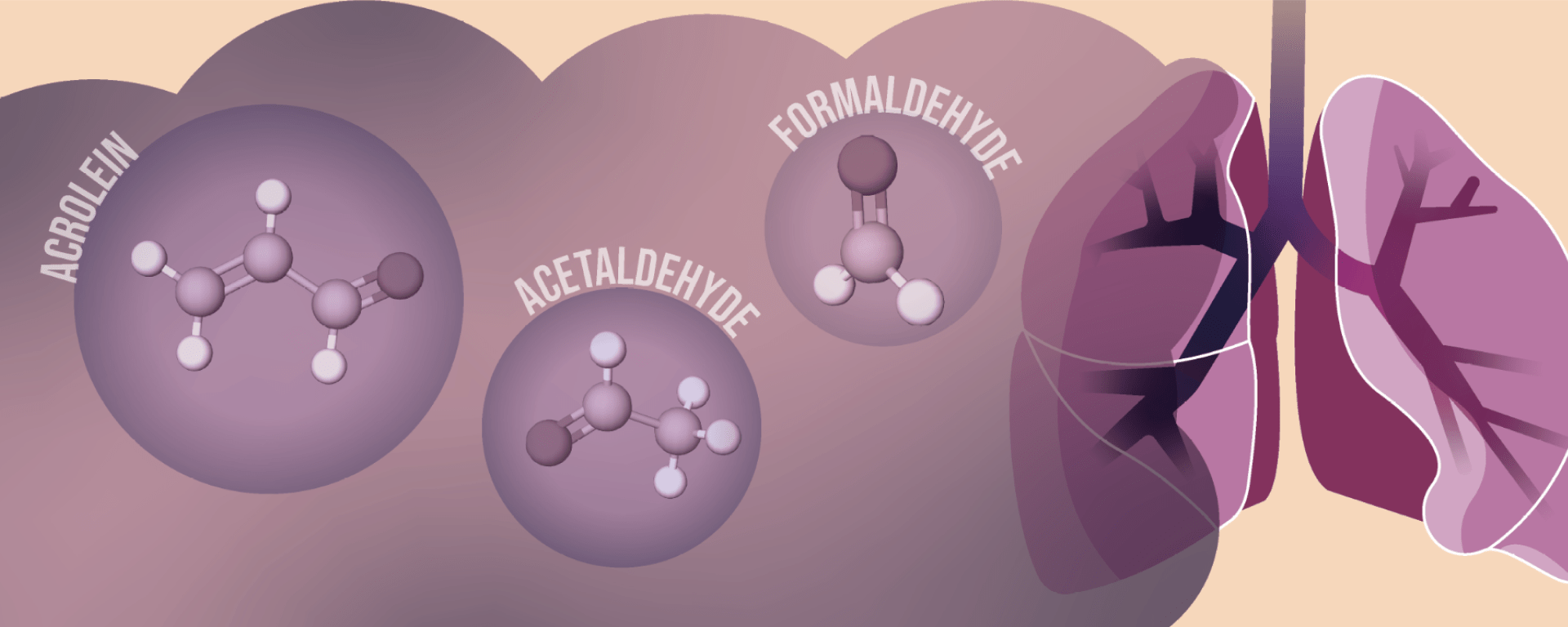
Vapes are largely unregulated and are often purchasable via the internet, making them easily accessible. Recent research reveals that the toxic components often found in vapes include formaldehyde⎯which is associated with some cancers⎯, as well as acetaldehyde and acrolein⎯which are associated with reduced respiration and irritation to the lungs at greater concentrations.4 Similarly, other studies have suggested that acute lung injuries and ocular health deficits are often seen among those who vape.5,6 The use of vapes also makes youth more susceptible to nicotine addiction, as early exposure to nicotine can make it difficult to tolerate and cease the use of nicotine. Nicotine addiction can then serve as a gateway to using other substances, including traditional cigarettes.
Despite the preliminary research on the health effects of vaping, the long-term impacts are difficult to know given that this is a fairly new substance with variable technology associated. This uncertainty is particularly concerning regarding young people at critical development stages.
Public Health Challenges
Aside from the direct health consequences of vaping on youth, it also poses challenges in the public health domain. Firstly, the increase in health consequences increases the public health burden by increasing expenditure both at the patient and systematic levels. It also creates the need for social structures to adapt to this usage. Another challenge concerns how the public health system will direct the messaging around vaping to ensure that the public is adequately educated on the topic, given the limited understanding on this substance.
Moreover, when considering this growing challenge from a health equity perspective, it is likely that, like other substances, individuals of lower socioeconomic status and those with a poor relationship with social determinants of health are more likely to be impacted by the risks of vaping⎯thus contributing to a rise in health disparities.
Policy and Regulation Issues
The ease of purchasing e-cigarettes through online and in-person vendors makes it difficult to curb the increasing incidence of vaping among youth. The various types of vaping products available online are often difficult to regulate, making the concentrations of ingredients unclear. Additionally, vaping products are often marketed as being available in flavours that resemble candy, with distinct colouring that makes them desirable for youth. In 2021, the Canadian government introduced a proposal to ban these ‘desirable’ flavours, instead limiting vape flavours to mint or tobacco.7 However, this proposal has yet to be approved.
It remains a challenge to enforce vaping policies and regulations, especially when features such as USB charging, sleek designs, and inconspicuous smells make it challenging to impose vaping restrictions in spaces with existing policies.
Call for Action
Vaping currently poses many risks and challenges to youth, including the possibility of reversing the progress made to cease the smoking of traditional cigarettes, thereby creating more serious long-term consequences. There is therefore a need to protect youth from the harms of e-cigarettes to ensure the well-being of future generations.
At a policy level, this includes enforcing more strict age restrictions and limiting marketing strategies that target youth. From a public health perspective, this can include building modules on the harms of vaping into school curriculums, while also creating broader campaigns to handle the information that is spread on vaping. Finally, by increasing health surveillance and research on vaping, we as a society can be better informed of the harms of vaping and prepared to handle the risks associated with this new, mysterious substance.
References
1. Lichtenberg, K. E-Cigarettes: Current Evidence and Policy. Mo Med 114, 335–338 (2017).
2. Münzel, T., Daiber, A. & Hahad, O. Are e-cigarettes dangerous or do they boost our health: no END(S) of the discussion in sight. Eur J Prev Cardiol 30, 422–424 (2023).
3. Fadus, M. C., Smith, T. T. & Squeglia, L. M. The rise of e-cigarettes, pod mod devices, and JUUL among youth: Factors influencing use, health implications, and downstream effects. Drug Alcohol Depend 201, 85–93 (2019).
4. Kaisar, M. A., Prasad, S., Liles, T. & Cucullo, L. A decade of e-cigarettes: Limited research & unresolved safety concerns. Toxicology 365, 67–75 (2016).
5. Martheswaran, T., Shmunes, M. H., Ronquillo, Y. C. & Moshirfar, M. The impact of vaping on ocular health: a literature review. Int Ophthalmol 41, 2925–2932 (2021).
6. Traboulsi, H. et al. Inhalation Toxicology of Vaping Products and Implications for Pulmonary Health. Int J Mol Sci 21, 3495 (2020).
7. Health Canada. Health Canada announces new restrictions to prevent youth vaping . Government of Canada (2021).
 IMS Magazine