
by Sipan Haikazian
Graphic design by Jeah Kim
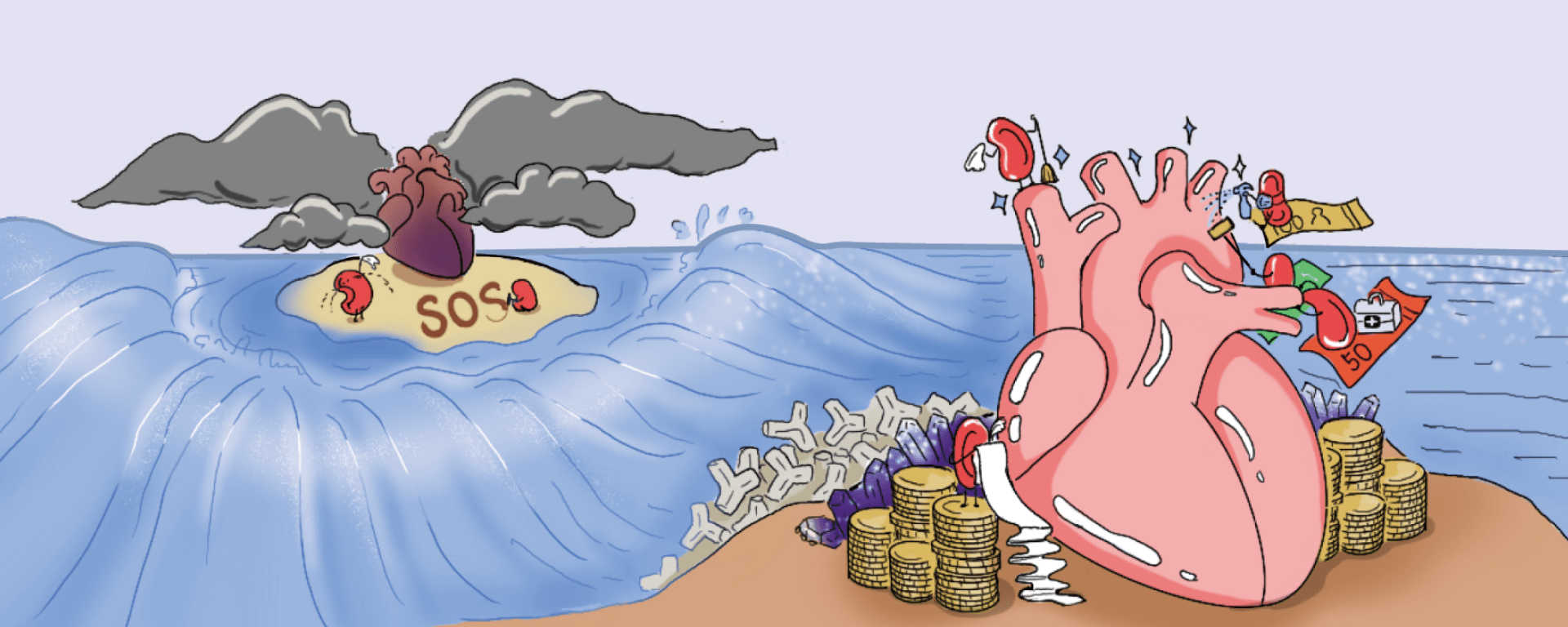
Cardiovascular disease (CVD) refers to a group of diseases of the heart and blood vessels, including angina, myocardial infarctions (heart attacks), strokes, heart failures, and arrhythmias.1 CVDs continue to be a leading cause of morbidity and mortality in Canada, with approximately one in 12 Canadians over the age of 20 living with one or more CVDs. As with many other medical conditions, there are significant disparities in outcomes, which are particularly influenced by numerous racial and socioeconomic factors. This article will bring attention to the factors responsible for some of the most significant disparities in CVD across Canada, discuss some driving factors of these disparities, and finally, offer a look into what is being done to address these differences.
In Canada, incidences and prevalences of CVD vary greatly across ethnic groups. In one study of over 350,000 Canadians, hypertension, which is a risk factor for numerous CVDs, was found to be significantly greater in Filipino, South Asian, and Afro-Caribbean communities, as compared to the greater white population.2 The prevalence of CVDs was higher among South Asian-born immigrant communities as compared with Native-Born Canadians.3 Additionally, the Cardiovascular Health in Ambulatory Care Research Team (CANHEART) Immigrant Study investigated incidence rates of cardiovascular symptoms and events over ten years, including a population of just under 825,000 immigrants in Canada.4 They found that immigrants of Black and Southeast Asian heritage had some of the highest rates of diabetes in the population. Rates of hypertension were also greatest in these communities. Both diabetes and hypertension are significant risk factors for CVDs. From this research, the increased risk seen in these communities is due in part to higher rates of diabetes and hypertension.
Studies of these discrepancies have outlined a few key risk factors that may be unique to ethnic groups. For example, low fluency in English may present barriers to reporting cardiovascular symptoms and seeking help from the healthcare system. The lack of formal education around these topics may also play a role. Furthermore, the overlap between the challenges above and the possibility that members of these communities may begin their lives in Canada at a relatively lower socioeconomic status are also important considerations.
Indigenous peoples also face a higher burden of cardiovascular disease as compared with non-Indigenous peoples. According to a 2001 analysis published in the Lancet, Indigenous Peoples who identify as First Nations had a 250% increase in the prevalence of CVDs, as compared with non-First Nations individuals.5 Risk factors and prodromes are more prevalent in these populations than non-Indigenous peoples. Rates of congestive heart failure, hypertension, and stroke were found to be significantly higher in a sample of Mètis Indigenous peoples as compared with a non-Indigenous sample.6
Multiple contributing factors have been explored. Looking from a historical lens, the impact of colonization, widespread oppression, and healthcare biases that continue to persist to this day all play essential roles. For a large part of Canada’s history, Indigenous peoples received subpar care as compared with their non-Indigenous counterparts. While much legislation has been passed to provide greater care to these communities, challenges remain. The geographical isolation of many of these communities, lack of adequate resources and infrastructure, and preponderance of Western-style medicine continue to play a role in exacerbating medical disparities for many individuals. As a simple example, healthcare in rural and remote areas, largely composed of Indigenous communities, are typically very sparsely staffed. Many of these hospitals and health centers are lucky to get 24/7 coverage from a family physician, so it is unlikely that they would receive a cardiologist with extensive training and expertise in treating CVDs.
Socioeconomic status is also a key determinant of cardiovascular health outcomes in Canada. Individuals with lower socioeconomic status often face higher risks of hypertension, coronary artery disease, and other cardiovascular conditions. A systematic review and meta-analysis of 31 studies conducted in the Journal of Public Health found that socioeconomic inequalities contribute significantly to differences in cardiovascular health.7 The results showed that the lower a person’s socioeconomic status, the more likely they are to present cardiovascular risk factors and associated CVD outcomes. Lower-income individuals experienced higher rates of risk factors such as smoking, obesity, and physical inactivity.7
Furthermore, access to healthcare is a critical factor that may influence cardiovascular health outcomes more globally. Despite Canada’s universal healthcare system, disparities still exist. For instance, a lack of affordable transportation may reduce access to care for many, especially if there is no robust public transit infrastructure. While general medical care may be covered by provincial healthcare plans, other services such as prescription coverage, eye care, and dental treatment are typically covered by private insurance plans. The lack of prescription coverage is particularly damning for those with CVD, as rates of medication usage are high for those with these diseases. These barriers can lead to delays in diagnosis and treatment, exacerbating cardiovascular health disparities.
In terms of interventional strategies, several are being implemented to improve cardiovascular-related outcomes for affected populations. As with other areas of medicine and healthcare, there is currently a shift towards culturally sensitive care and accessibility. Improving literacy has been a central focal point for intervention. For example, one interventional trial attempted to incorporate Indigenous traditions and culturally sensitive material for Indigenous patients presenting with CVDs and found that rates of medication and treatment understanding had significantly improved compared with before the intervention.8 Combining such strategies with broader policy changes and systemic improvements can result in not only a bridging of a gap in disparities in CVD outcomes but also a reduction in such outcomes.
References
1. Olvera Lopez E, Ballard BD, Jan A. Cardiovascular Disease. In: StatPearls [Internet]. Treasure Island (FL): StatPearls Publishing; 2024 [cited 2024 Aug 22]. Available from: http://www.ncbi.nlm.nih.gov/books/NBK535419/
2. Liu R, So L, Mohan S, Khan N, King K, Quan H. Cardiovascular risk factors in ethnic populations within Canada: results from national cross-sectional surveys. Open Med. 2010;4(3):e143-153.
3. Sebastian SA, Sethi Y, Padda I, Johal G. Ethnic Disparities in the Burden of Cardiovascular Disease Among Immigrants in Canada. Current Problems in Cardiology. 2024 Jan;49(1):102059.
4. Tu JV, Chu A, Rezai MR, Guo H, Maclagan LC, Austin PC, et al. The Incidence of Major Cardiovascular Events in Immigrants to Ontario, Canada: The CANHEART Immigrant Study. Circulation. 2015 Oct 20;132(16):1549–59.
5. Anand SS, Yusuf S, Jacobs R, Davis AD, Yi Q, Gerstein H, et al. Risk factors, atherosclerosis, and cardiovascular disease among Aboriginal people in Canada: the Study of Health Assessment and Risk Evaluation in Aboriginal Peoples (SHARE-AP). The Lancet. 2001 Oct;358(9288):1147–53.
6. Atzema CL, Khan S, Lu H, Allard YE, Russell SJ, Gravelle MR, et al. Cardiovascular Disease Rates, Outcomes, and Quality of Care in Ontario Métis: A Population-Based Cohort Study. Zhang W, editor. PLoS ONE. 2015 Mar 20;10(3):e0121779.
7. Wang T, Li Y, Zheng X. Association of socioeconomic status with cardiovascular disease and cardiovascular risk factors: a systematic review and meta-analysis. J Public Health (Berl) [Internet]. 2023 Jan 21 [cited 2024 Aug 22]; Available from: https://link.springer.com/10.1007/s10389-023-01825-4
8. Crengle S, Luke JN, Lambert M, Smylie JK, Reid S, Harré-Hindmarsh J, et al. Effect of a health literacy intervention trial on knowledge about cardiovascular disease medications among Indigenous peoples in Australia, Canada and New Zealand. BMJ Open. 2018 Jan;8(1):e018569.
 IMS Magazine