
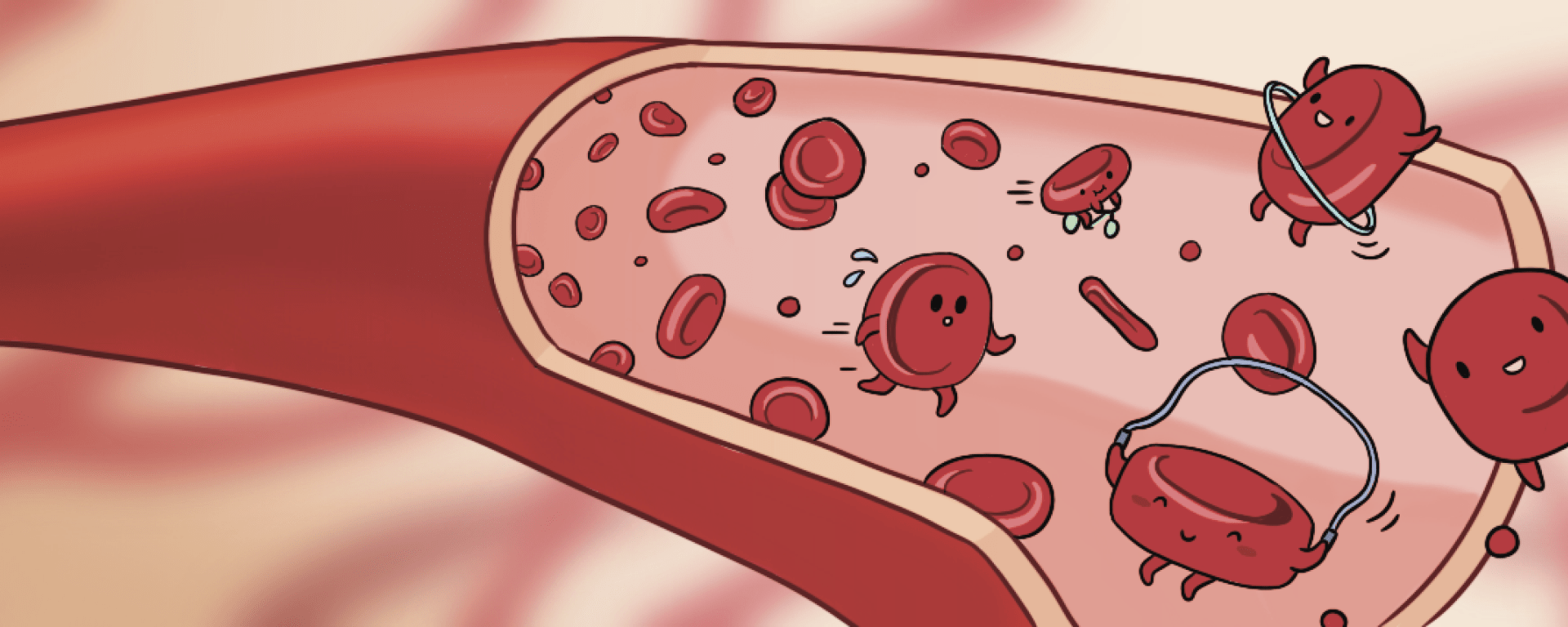
by Kyla Trkulja
Graphic design by Lauren Jones
We have all heard of developing a workout “routine”, but contrary to what many believe, this goes far beyond picking your favourite form of physical activity and deciding when you’ll slot it into your busy schedule. Exercise can be broken down into four main types–strength, balance, flexibility, and endurance training–and not all are created equal.1 For example, strength training involves building up muscle throughout the body, whereas flexibility training combines stretches with deep breathing to increase oxygen flow and elasticity in the muscles. As a result, a healthy workout routine ideally includes all four types of exercise.1
Out of all exercise types, endurance training captures the attention of many. This form of workout, also known as aerobic exercise or “cardio” training, involves activities that increase breathing and heart rate.1 A wide variety of exercises can be captured under this umbrella, including running, biking, jumping rope, and the newly popular “High Intensity Interval Training” (HIIT) workouts being offered at specialized fitness centres. Personally, HIIT workouts are what have made me passionate about endurance training, as different exercises can be incorporated into each session, making no two sessions identical and allowing me to overcome my self-perceived boredom of running.
It’s no secret that regular endurance training is good for the body’s cardiovascular system. We’ve all probably heard at some point that this type of exercise reduces blood pressure and cholesterol, lowering the risk of heart disease, heart attacks, and other cardiovascular conditions.2 Other benefits include a minimised risk of type 2 diabetes and metabolic syndrome, as well as reduced inflammation and stress hormones.2,3 These benefits are made possible by changes that happen within the heart, blood vessels, and other cells in the body when engaging in regular aerobic activity. Let’s explore these changes a little bit further:
How Does Regular Endurance Training Lower Risk of Type 2 Diabetes (T2D)?
T2D is a form of diabetes that develops in adulthood due to insulin resistance. This is partially part due to poor eating habits resulting in chronic insulin signalling that the body eventually learns to ignore.4 Regular endurance training, however, helps those with T2D manage their blood sugar and also lowers the risk of developing the disease in the first place. This is due to the effects of frequent muscle contractions during exercise, which requires a substantial amount of energy; as a result, muscle cells will increase the expression of surface proteins that take up sugar from the blood, such as GLUT4 transporters, to increase their energy supply.5 As a result, blood sugar is lowered, and cells become more responsive to insulin due to the increased expression of these surface proteins, which helps maintain healthy blood sugar levels even after exercise is complete.
How Does Regular Endurance Training Lower Blood Pressure?
There is no singular way regular aerobic activity reduces blood pressure, but one of the most well-understood mechanisms involves the release of a compound called nitric oxide (NO).6 NO acts as a vasodilator, meaning that it causes blood vessels to widen. Wider blood vessels allow the blood to become less dense, reducing the pressure put on the vessel walls, ultimately decreasing blood pressure. While NO is released during endurance exercise in response to signals released from the muscles requiring increased blood flow, long-term exercise training can actually increase NO release even while the body is resting, leading to an overall reduction in blood pressure.
How Does Regular Endurance Training Lower Risk of Heart Conditions?
Heart attack, heart disease, heart failure, and arrhythmia risk are all lowered by regular endurance training. Increased NO release that lowers blood pressure results in reduced clumping of blood cells throughout the vessels, lowering the risk of blood clots and heart attacks.3 Levels of triglycerides, a type of fat that very easily stacks on top of blood vessels and increases the risk of blood clots, are also decreased.3 Regular aerobic exercise also increases the amount of “good” cholesterol in the body, known as High-Density Lipoprotein (HDL), while decreasing the amount of “bad” cholesterol, Low-Density Lipoprotein (LDL), which lowers the risk of heart disease.6 Whereas LDL builds up in the blood vessels, HDL removes LDL, improving cardiovascular health and reducing the risk of cardiovascular disease.
Physical changes also occur in the heart as a consequence of regular endurance training. During intense exercise, increased blood flow is required to meet the energetic demands of cells throughout the body, such as muscle cells. To meet these demands and minimize stress on the body, the heart will structurally adapt to make it more efficient at pumping blood throughout the body.6 Cardiac myocytes, the muscle cells in the heart, will increase in size, leading to an increase in the overall mass of the heart–especially in the heart’s pumping chambers known as the ventricles.6 This makes the heart contract in a more powerful and effective way, preventing conditions such as heart failure and arrhythmia. The impacts of these effects on cardiovascular health are quite evident, as regular endurance exercise has been found to reduce cardiovascular-related deaths by up to 40%.3
How Much Physical Activity Is Needed?
Surprisingly, there is no true consensus on how much exercise is needed to achieve these health benefits. The World Health Organization (WHO) recommends a minimum of 150 minutes of moderate-intensity or 75 minutes of vigorous-intensity physical activity each week,7 but some studies have suggested 3-5 times this amount.8 There is also some evidence that too much exercise, 15-20 times higher than the amount recommended by the WHO, can actually be detrimental to cardiovascular health due to chronic stress on the body, exaggerated blood pressure rises, and inflammatory processes that occur during exercise.3 As a result, there is no “magic number”, but the most common guidelines suggest 30 minutes of physical activity each day, five days each week.1 That being said, any amount of physical activity is better than nothing, so even if this target isn’t possible to reach, you can still experience the benefits of regular exercise with shorter workouts–listen to your body, and create a routine that works for you.
References
- American Heart Association. Endurance exercise (aerobic) [Internet]. 2024. Available from: https://www.heart.org/en/healthy-living/fitness/fitness-basics/endurance-exercise-aerobic
- Johns Hopkins Medicine. Exercise and the heart [Internet]. 2023. Available from: https://www.hopkinsmedicine.org/health/wellness-and-prevention/exercise-and-the-heart
- Parry-Williams G, Sharma S. The effects of endurance exercise on the heart: Panacea or Poison? Nature Reviews Cardiology. 2020 Mar 9;17(7):402–12. doi:10.1038/s41569-020-0354-3
- Galicia-Garcia U, Benito-Vicente A, Jebari S, Larrea-Sebal A, Siddiqi H, Uribe KB, et al. Pathophysiology of type 2 diabetes mellitus. International Journal of Molecular Sciences. 2020 Aug 30;21(17):6275. doi:10.3390/ijms21176275
- Nystoriak MA, Bhatnagar A. Cardiovascular effects and benefits of exercise. Frontiers in Cardiovascular Medicine. 2018 Sept 28;5. doi:10.3389/fcvm.2018.00135
- Kuru O, Şentürk ÜK, Koçer G, Özdem S, Başkurt OK, Çetin A, et al. Effect of exercise training on resistance arteries in rats with chronic nos inhibition. Journal of Applied Physiology. 2009 Sept;107(3):896–902. doi:10.1152/japplphysiol.91180.2008
- World Health Organization. Global recommendations on physical activity for health [Internet]. 2010. Available from: https://www.who.int/dietphysicalactivity/factsheet_recommendations/en/
- Kyu HH, Bachman VF, Alexander LT, Mumford JE, Afshin A, Estep K, et al. Physical activity and risk of breast cancer, colon cancer, diabetes, ischemic heart disease, and ischemic stroke events: Systematic review and dose-response meta-analysis for the global burden of disease study 2013. BMJ. 2016 Aug 9;i3857. doi:10.1136/bmj.i3857
 IMS Magazine