

By Tesam Ahmed and Emily Wiljer
Graphic design by Anaiah Reyes
Mental health is complex, influenced by a web of biological, psychological, and environmental factors. Yet, traditional research often isolates these aspects, overlooking the intricate ways they interact. In the Whole Person and Population Modelling (WPPM) lab at the Centre for Addiction and Mental Health (CAMH), Dr. Daniel Felsky and his team are transforming how we understand mental health. Using a data-driven, integrative approach, the lab examines everything from individual genomes to large-scale population data, aiming to unlock new insights into mental health trajectories and outcomes. We sat down with Dr. Felsky to explore how this innovative approach can pave the way for more precise, personalized treatments in mental health care—and what it means for researchers, clinicians, and students alike.
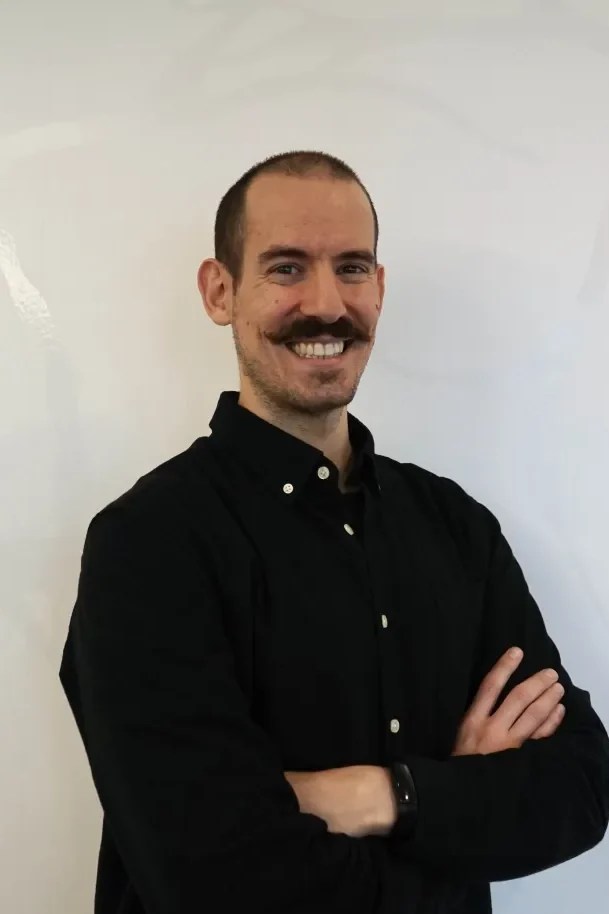
Photo credit: Nancy Kim
Dr. Daniel Felsky began his research journey during his undergraduate degree in biology at the University of Guelph. His interest in genetics earned him a spot in the lab of Dr. Jim Kennedy where he first investigated genetics and mental illness. Enjoying this experience, he then completed his PhD under the co-supervision of Dr. Aristotle Voineskos and Dr. Jim Kennedy through the Institute of Medical Science at the University of Toronto, integrating neuroimaging with his background in genetics. Upon graduation, Dr. Felsky conducted postdoctoral research under Dr. Philip L. De Jaeger, in a multi-centre project between Harvard Medical School, the Broad Institute of Massachusetts Institute of Technology and Harvard, and Columbia University. These collaborations helped him develop his experience in neuroimmunology, neurology, and multi-omic data types, which later facilitated the founding of his lab, WPPM, at the Krembil Centre for Neuroinformatics in May 2019.
The excitement around whole-person modeling stems from the breadth of data and approaches used to tackle complex research questions. When asked about past projects exemplifying these possibilities, Dr. Felsky described the ongoing work of a former Master’s student on clustering patients across data types. In collaboration with The Hospital for Sick Children (SickKids), they developed a new machine learning method to identify “unique biopsychosocial profiles across large groups of people in complex data types.” This method was applied to a subsample of the ongoing Toronto Adolescent Youth cohort study, consisting of youth seeking mental health treatment at CAMH. The team integrated brain imaging, cognitive, and demographic data to cluster individual needs and impairments. Dr. Felsky expressed excitement at this new method’s ability to cluster multiple data types reliably, without the usual assumptions, which could account for a broader range of information compared to other clustering algorithms. Future directions include examining whether this cohort responds differentially to various treatment paradigms, aiding in the development of precision medications.
Another prominent study, conducted in collaboration with new CAMH faculty member Dr. Peter Zhukovsky, was published earlier this year. In the largest study of its kind, they explored how genetic risk profiles interact with modifiable risk factors to influence brain health. They identified specific genetic loci associated with cortical thickness, white matter hyperintensities (lesions in the brain’s white matter), and cognitive function, and the interaction of these loci with risk factors such as depression and cardiovascular conditions.1 “Critically, we also [looked at] how these genetic influences on brain structure are modified, interacted with, or could be overcome by modifiable factors,” says Dr. Felsky. Integrating diverse data types and examining interactions is essential in mental health research, as the same genetic factors can have varied effects on different people. By moving beyond generalized genetic profiles, researchers can better capture the complexity of individual experiences.
Reflecting on challenges in his research, Dr. Felsky highlighted data availability, privacy governance, and transdisciplinary education. In a computational lab, balancing sufficient, high-quality data that accurately captures risk features, while maintaining data sovereignty and protection is a constant challenge. “To make something that is impactful, generalizable, and clinically useful, the evidence has to be really strong for people to adopt it, to trust it,” he states. When accessing and collecting data, there is often a fine balance to consider with regards to patient risk and population benefits. In terms of standardizing the whole-person approach, he points out that equipping trainees with the knowledge and skills needed for this type of work is a unique challenge that defies tradition. Despite these challenges, many scientists are working with institutions to assess barriers in data access and analysis.
To ensure maximum impact of this field of research, Dr. Felsky calls for more collaboration with implementation science—the study of how to integrate research findings into policy and practice. He highlights a lack of evidence showing that results from predictive modeling in psychiatry can be effectively applied in clinical practice or population-based screening. Beyond promising clinical trials, there are very few groups committed to investigating how these emerging tools could exist in our current healthcare system. This presents a roadblock for computational labs, and must be addressed in tandem with the accumulation and analysis of data. Dr. Felsky here points out one of his favourite papers and tells us to read it: “Chaos in the Brickyard”.2
When asked how research can be made more accessible to the public, Dr. Felsky emphasized engaging with the community. He mentions that having patients involved in study design and implementation is essential, as “the best ideas for how to transmit and exchange knowledge come from the people that are using that information.” He adds, “we sometimes forget that scientists are also people, who struggle with the same problems as the rest of society; when it comes to mental health research, we are often our own ‘customers’.” Dr. Felsky also emphasizes the importance of effectively communicating ideas to a general audience and fostering conversations among individuals from diverse backgrounds, experiences, and expertise. This approach facilitates knowledge translation and dissemination.
Looking ahead, Dr. Felsky is excited to move beyond classifying mental health and neurological diseases by categories and symptoms, and shift towards framing issues in the context of resilience and risk factors. He describes this approach as “linking the whole lifespan and understanding how events, even very far in the past, can impact future events [and contribute to] risk and resilience pathways.” This involves examining “time sensitive” windows across the lifespan through diverse biopsychosocial data. An ongoing project aims to identify aspects of physiology, life experience, and behavior that contribute to cognitive resilience and how they interact with non-modifiable risk factors such as genetics.
Dr. Felsky underscores the significance of thinking broadly and creatively in precision medicine, explaining that stratification markers in research “could be any reliable measurement,” provided researchers develop and test innovative study designs to group individuals effectively. Offering guidance to early-career scientists, he highlights the importance of embracing new concepts, while maintaining a structured and methodical approach to their work. This balance, he notes, can pave the way for deeper learning, fresh perspectives in research design, and more effective execution, ultimately driving progress in the field.
References
- Zhukovsky, P., Tio, E.S., Coughlan, G. et al. Genetic influences on brain and cognitive health and their interactions with cardiovascular conditions and depression. Nat Commun 15, 5207 (2024). https://doi.org/10.1038/s41467-024-49430-7
- Forscher BK. Chaos in the Brickyard. Science. 1963 Oct 18;142(3590):339. DOI: 10.1126/science.142.3590.339
 IMS Magazine
You must be logged in to post a comment.