

By Beatrice Acheson
Graphic design by Emily Huang
“55 million people worldwide are living with dementia. That is a lot of people. This is too many people to ignore,” Dr. Tartaglia emphasizes. By 2050 this number will increase to 152 million.1 For Dr. Tartaglia, these are not just statistics—they are real patients, each with their own unique story. This perspective drives her work as a Professor in the Institute of Medical Science and a leading Clinician-Scientist at the Tanz Centre for Research in Neurodegenerative Diseases and the UHN Memory Clinic at Toronto Western Hospital. Her work aims to transform how we understand, diagnose, and treat the underlying causes of dementia.
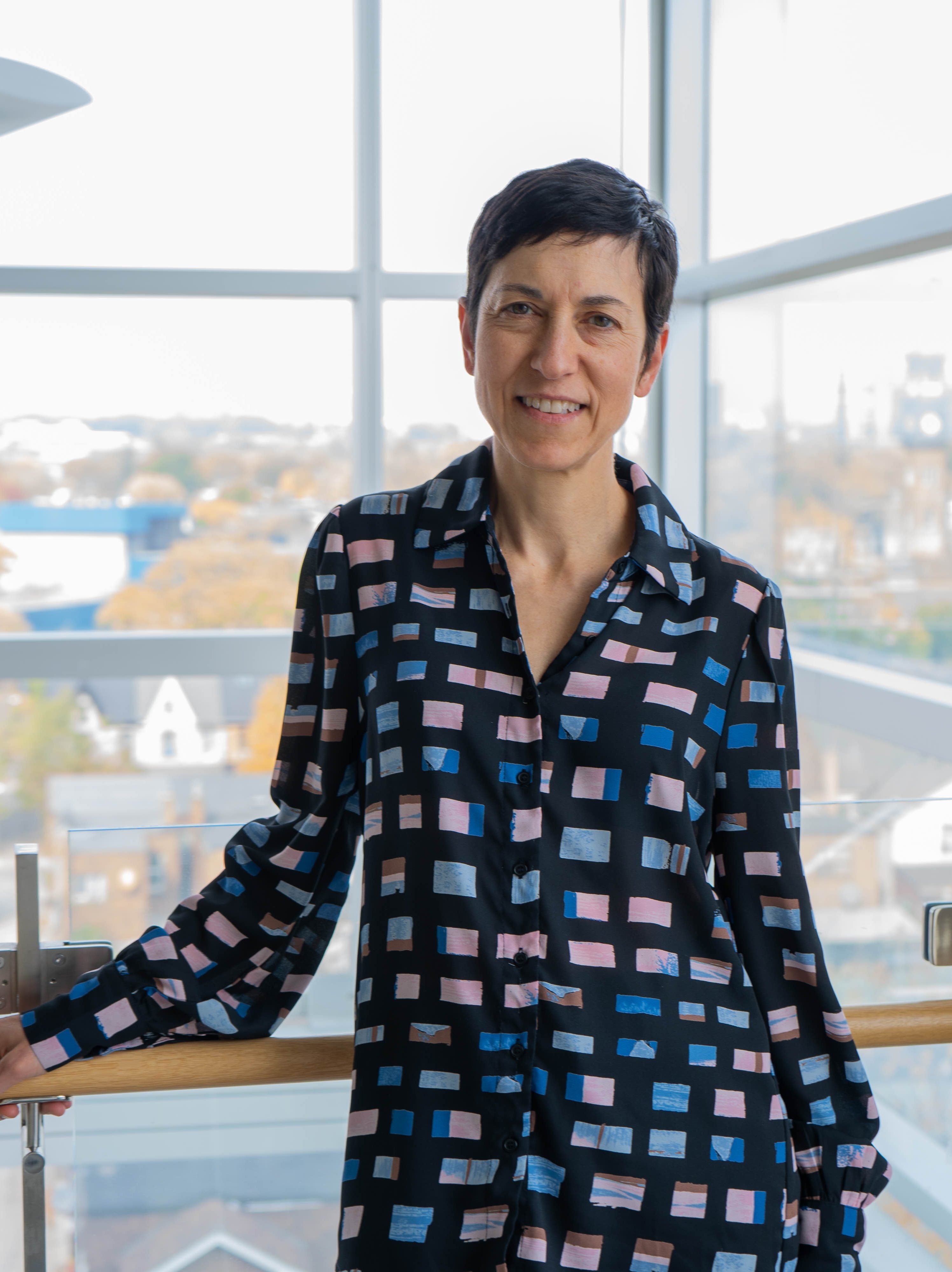
Photo by Sara Yuan, provided by Dr. Carmela Tartaglia
Dr. Tartaglia works with a diverse range of neurodegenerative diseases, including Alzheimer’s disease (AD), frontotemporal dementia, progressive supranuclear palsy, and other conditions that affect behaviour and cognition. Her fascination with these diseases, especially those that alter behaviour such as frontotemporal dementia, stems from her fascination with what defines an individual’s sense of self. “I’ve always been interested in personality, the way we interact with others, and what defines us. I’m trying to understand the neural substrate of who we are. One way to do that is by studying brain diseases,” she explains.
The main challenge to overcoming these devastating conditions lies in their heterogeneity. Dr. Tartaglia explains that “No two patients are alike. Your disease always happens in the landscape of you,” with patients often having multiple pathologies, as “one brain disease does not protect you against another.” She notes, emphasizing the nuanced nature of neurodegenerative diseases.
The diverse manifestations of neurodegenerative diseases make them an ideal candidate for tailored methods of detection, diagnosis, and treatment. While precision medicine has transformed other fields, such as oncology, similar progress in brain disorders has been slower. Dr. Tartaglia attributes this lag in precision medicine for dementia to two main factors: the difficulty of obtaining patient samples and the historical lack of urgency due to the absence of effective treatments.
Dr. Tartaglia and her team are working to overcome these barriers by introducing new methodologies that leverage individual patient data to address the variability of these diseases. The clinical success of personalized treatments for neurodegenerative diseases will require a sound and robust understanding of the heterogeneity of these pathologies that underlie the symptoms that Dr. Tartaglia witnesses so often.
The message is clear: it is crucial that we move beyond the “one-size-fits-all” approach to neurodegenerative disease, and this will require more comprehensive patient data collection, innovative imaging tools, and reliable biomarkers that can capture the complexity of each patient’s condition. Dr. Tartaglia and her team are laying the groundwork for a future in which precision medicine improves patient outcomes and transforms the standard of care. She is optimistic about the direction in which we are headed.
“Until recently, we didn’t have anything. We had MRI, but that isn’t a piece of your brain. Now, in [AD], for example, we have excellent tools. We have cerebral spinal fluid analysis, we have positron emission tomography (PET) scans, which allow us to make definitive diagnoses correctly with 90% certainty,” she says.
Building on such advances, her team is striving for similar breakthroughs for the diagnosis of other neurodegenerative conditions. Recently, Senior Research Associate Ivan Martinez-Valbuena developed an assay to detect 4-Repeat-Tau to diagnose patients with progressive supranuclear palsy (PSP).2 This assay marks a significant step forward, not just for PSP, but as a model for the development of similar diagnostic tools for other neurodegenerative conditions.
Dr. Tartaglia emphasizes the importance of pairing such novel diagnostic tools with better guidelines for the detection of neurodegeneration. “In early stages of disease, there are people with subjective cognitive decline. This means they feel like things have changed for them, but when you administer neuropsychological tests, they perform within normal ranges. [One third] of these people have neurodegenerative disease in the brain,” she says. She adds that shifting diagnostic resources towards this population of patients in early disease stages will open doors to preemptive treatments that target pathology prior to the occurrence of irreversible damage.3
In addition to revolutionizing the diagnosis of neurodegenerative diseases, Dr. Tartaglia hopes to change the way that we study them. Representative clinical data ensures that personalized strategies are effective across diverse populations. Ethnic minorities are severely underrepresented in clinical studies, and studies of dementia are no exception.4
To combat underrepresentation in clinical trials, Dr. Tartaglia is integrating her clinical work with her research endeavors. “People of different ethnic backgrounds will have different propensities for disease. I have promoted embedding research in care approach. I ask patients who have come to the clinic…if they would be willing to contribute [their] data to research. We try to tap into a more diverse population that way,” she explains.
In addition to accessing more diverse patient groups, Dr. Tartaglia is looking to improve clinical trials by minimizing bias in endpoint metrics. Given the nature of cognitive decline, it is difficult to obtain information from the patient themselves. Informants include relatives, spouses, and caregivers who know the patient well enough to comment on their condition. A 2024 paper by Dr. Tartaglia et al. demonstrated that the Clinical Dementia Rating Sum of Boxes scores, a tool used by researchers to measure the severity of cognitive decline, is heavily influenced by informant-provided characteristics.5
“If you look at the effect size from informants, it is almost equal to the difference between the treatment arm and the placebo,” she explains. She adds that corrective factors will be crucial to account for such skew. Therefore, the implementation of multi-dimensional analyses is necessary to capture the full spectrum of patient experiences.
Despite the challenges of implementing precision medicine for the treatment of neurodegenerative diseases, Dr. Tartaglia is excited for a reality where personalized therapies are the norm, but she believes we will have to embrace the complexity of neurodegeneration to get there. By applying a precision medicine approach, Dr. Tartaglia envisions a future where tailored therapies can not only slow disease progression but also restore a higher quality of life for patients and their families.
References
- Livingston G, Huntley J, Sommerlad A, et al. Dementia prevention, intervention, and care: 2020 report of the Lancet Commission. The Lancet [Internet]. 2020 Aug [cited 2024 Nov 13];396(10248):413–46. Available from: https://linkinghub.elsevier.com/retrieve/pii/S0140673620303676
- Martinez-Valbuena I, Tartaglia MC, Fox SH, et al. Four-Repeat Tau Seeding in the Skin of Patients With Progressive Supranuclear Palsy. JAMA Neurology. 2024 Sep 23;
- Zetterberg H, Schott JM. Objectifying Subjective Cognitive Decline: The Prognostic Role of Alzheimer Biomarkers. Neurology. 2022 Sep 2;10.1212/WNL.0000000000201172.
- Brijnath B, Croy S, Sabates J, et al. Including ethnic minorities in dementia research: Recommendations from a scoping review. Alzheimer’s & Dementia: Translational Research & Clinical Interventions. 2022 Jan;8(1).
- Vargas-Gonzalez JC, Chadha AS, Castro-Aldrete L, et al. Informant characteristics are associated with the Clinical Dementia Rating Sum of Boxes scores in the Alzheimer’s Disease patients participating in the National Alzheimer’s Coordinating Center Uniform Data Set. Research square [Internet]. 2024 Autumn;rs.3.rs3982448. Available from: https://pubmed.ncbi.nlm.nih.gov/38559129/
 IMS Magazine
You must be logged in to post a comment.