

By Jasmine Amini
Graphic design by Lauren Jones
Graduate studies, at any level, are a period of intense learning and self-discovery. Although developing core skills, such as those of research design and scientific writing, are essential to growing as an academic, so are skills in leadership and communication. For many individuals, including Dr. Sandy Lee, a 2023 IMS PhD graduate, leadership experiences are, in themselves, essential to becoming a better scientist and conducting more impactful research. Sandy recently sat down with the IMS Magazine to discuss her path to and through graduate school, as well as her future as a scientist in cancer metabolism.
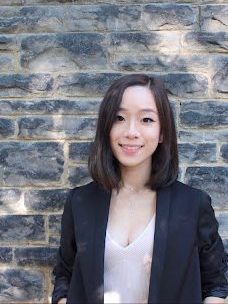
Photo provided by Dr. Sandy Lee
Sandy was always naturally drawn to science. Feeling unsated by her middle school science fairs, Sandy approached her school’s science director to learn about opportunities to explore her interests. It was through this interaction that Sandy first learned about research and her first research opportunity. The Sanofi Biogenius Competition sponsors young Canadians pursuing health science research with a principal investigator (PI). The only caveat? Students had to find their own PI. Determined, Sandy, at the age of 14, contacted 500 principal investigators before one, Dr. Yvonne Myal, agreed to supervise her. Thus began Sandy’s journey into cancer research, a journey that has carried her from Winnipeg to Toronto to Los Angeles.
Despite her passion and experience, Sandy’s path to graduate school was circuitous. After facing personal and familial health issues that strained her GPA in the first two years of her undergraduate degree, Sandy, undeterred, began rebuilding her academic record, taking and acing six to seven courses per semester in her final undergraduate years. Following periods of research in evolutionary biology, epigenetics, and plant biology, Sandy realized she wanted to return to cancer research for her PhD studies. Among the programs Sandy applied to, IMS stood out.
On applying to IMS with a lower cumulative GPA than what was usually considered competitive, Sandy reflected:
“IMS is actually the one department that looked at that [final two-year GPA]. They brought me in for an interview and they asked me what happened because they could see I was capable.” Sandy acknowledges her supervisor, Dr. Marianne Koritzinsky, for “[taking] a huge risk … I will always be grateful to IMS for giving me a chance because it allowed me to flourish.”
IMS’ wager on Sandy proved fruitful. During her PhD studies, Sandy distinguished herself as an unparalleled student leader, serving as the president of the IMS Student Association (IMSSA), co-founder of the U of T chapter of Love146, an anti-child-trafficking awareness group, and most recently, as a co-founder of Let’s Talk Grad Wellness (LTGW). These opportunities, Sandy noted, not only influenced her as a leader, but also made her a stronger researcher.
“[Being a student leader] shaped me in many ways. I learned that students can’t reach their full potential if they’re not supported. And to be [in] that supportive role changed me immensely as a friend, family member, and scientist.”
The legacy of Sandy’s tireless work with LTGW is enduring. LTGW was founded by IMS students in 2020, shortly after the onset of the pandemic. Speaking on LTGW’s beginnings: “This was an initiative that was constantly talked about during my IMSSA co-presidency with Rachel [Dadouch]… Then COVID happened. We were like, what if we use this as an excuse to work together again? And that’s how it started… we were trying to find light in the pandemic.”
LTGW blossomed out of Sandy’s and Rachel’s shared observation that IMS students were struggling and weren’t getting the support they needed from their program. During IMSSA office hours, or “mini-therapy sessions,” as Sandy called them, students often shared their anxieties around expectations with their PIs. When could students take vacation and for how long? How much is too much extra-curricular involvement? How could students bring up difficulties with burnout or poor mental health? These expectations, Sandy articulated, were often hidden or unspoken.
“There’s that big generational gap between PIs and students that we really needed to identify. [LTGW] was about learning how to smooth that gap and facilitate those types of conversations.”
Sandy’s and Rachel’s reflections were the catalyst for the ELEFANT agreement, which was recently ratified as a program requirement for all IMS graduate students beginning January 2024. With the aim of increased transparency, the ELEFANT agreement was designed to manage PI and student expectations throughout the course of a graduate degree.
Developing LGTW and its initiatives was a formative learning experience for Sandy. Despite its obvious merits, LTGW was not met with acceptance by all faculty members. With recent cultural shifts in the importance of mental wellness and graduate student wellbeing, some faculty members struggled to recognize the value of the ELEFANT agreement. Learning how to communicate new ideas to a diverse group of leaders and manage emerging conflicts were two key skills Sandy developed during this time.
“LTGW helped me get out of my comfort zone and ask the top questions to the higher ups… And those were huge lessons, learning how to frame certain questions, pitch my ideas in a way [so that faculty can] understand I’m not here for short term, but [for] long-term improvements.”
Beyond her countless leadership roles, Sandy was also an extraordinary scholar and teacher. Sandy worked under the supervision of Dr. Marianne Koritzinksy studying the hypoxic microenvironment of tumours through protein folding and metabolism. It was for this work that Sandy received one of only 45 prestigious NSERC Vanier scholarships offered by U of T’s School of Graduate Studies in 2020. In addition, Sandy developed her mentorship skills as a teaching assistant (TA) and course instructor in the Human Biology Department, quickly becoming a student favourite as demonstrated by her near-pristine “Rate-My-Prof” record.
Currently, Sandy is a post-doctoral researcher in the Shackelford Lab at the University of California, Los Angeles (UCLA) where she continues to study cancer metabolism, combining her PhD expertise with novel approaches, such as imaging and immunotherapy. Sandy’s passion for her research is palpable, even during a short conversation.
“I just love [cancer research] so much. I love that it makes me feel so speechless and completely lost at times, it’s so humbling. Cancer research is exciting, everything moves so fast and whatever you do, it’s a discovery that makes a difference to the patient and their families. At the end of the day, that’s what keeps me moving.”
Looking to the future, Sandy aims to further carve out her own niche in cancer research and begin a lab of her own. Her research foci remain steadfast in tumour metabolism and the immune microenvironment in cancer, due to their potential for translational impact. Reflecting on her experiences as a mentor and the kind of lab culture she would like to foster, Sandy emphasized that “I want my group to answer questions in a bold and risky way, without being afraid of failure… I always say there are no stupid questions.”
Sandy’s accomplishments to date are a testament to her resilience, zeal for cancer research, and courage to step outside her comfort zone as a student leader. Despite numerous obstacles, Sandy persisted and spearheaded systemic change to improve the IMS student experience. Her final piece of advice for current students? “Don’t be afraid to try big things, because you never know until you start.”
 IMS Magazine
You must be logged in to post a comment.