

By Kristen Ashworth
Graphic design by Bonnie Wang
Dr. Lisa Robinson took the helm as Dean of the Temerty Faculty of Medicine last year, becoming the second woman to lead the faculty in its history at the University of Toronto.
Her appointment in December 2023 was preceded by a multifaceted career as a pediatric nephrologist and kidney disease researcher, as well as a dedicated leader in the broader community. In this special Faculty Spotlight feature of our Spring 2025 issue, IMS Magazine had the privilege of speaking with Dr. Robinson to gain deeper insight into her distinguished career and the pivotal foundations that led to her current role as Dean.
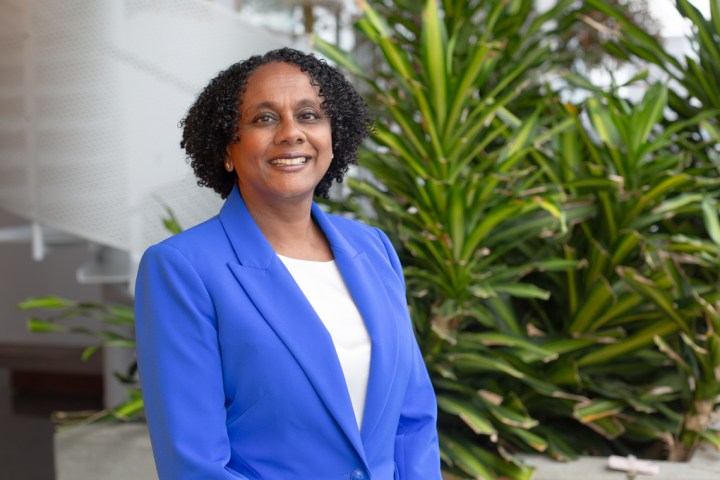
Dean, Temerty Faculty of Medicine
Photo credit: Erin Howe
Dr. Robinson’s academic journey began at the University of Toronto where she completed her medical education. She recalls that one of her final clerkship rotations–the pediatrics rotation–was particularly defining for her career. It was during this time that she established a deep passion for working with children and their families. After obtaining her medical degree, she pursued an internship in Internal Medicine at Toronto General Hospital, followed by a Pediatrics residency at the University of Western Ontario, then a Pediatric Nephrology fellowship at Duke University. Her decision to sub-specialize in nephrology came from a combination of her innate draw to this area of biology, in addition to strong mentors that guided her interests, including Dr. Mitchell Halperin in Toronto and Drs. John Foreman and Del Wigfall at Duke. She reflects, “They really opened my eyes to the beauty of the kidney.” Dr. Robinson further explains what attracted her to nephrology stemmed from its logical and structured nature: “In nephrology, what I found is that, if you understand the physiology, then you don’t have to memorize very much. You can derive pretty much everything that you’re trying to measure and assess. […] Those things really appealed to me, and putting together nephrology and pediatrics–that’s how I ended up doing what I do.”
Dr. Robinson is now a staff physician in the Division of Nephrology at The Hospital for Sick Children (SickKids), a senior scientist at SickKids Research Institute, and holds a Tier 1 Canada Research Chair in Vascular Inflammation and Kidney Injury. Her research interests focus on acute kidney injury and chronic kidney disease—a condition that, she emphasizes, “is one of the leading causes of illness and death worldwide.” As it pertains to optimizing and advancing how we treat chronic kidney disease, Dr. Robinson is interested in the role of the immune system. Her lab team investigates the mechanisms by which the immune system influences both the transition of acute kidney injury to chronic disease, and, conversely, the immune system’s role in repair. It is through these insights that her team has been able to identify candidate molecules to be used therapeutically.
This research has guided Dr. Robinson to reach translational heights over the past few decades in the field of kidney transplantation. Understanding the way in which key immune molecules (and other signalling molecules) function in repair after acute kidney injury can inform the approach to refine successful kidney transplantation, especially with injured donor grafts.
In collaboration with Dr. Markus Selzer, IMS faculty member and transplant surgeon at Toronto General Hospital, Dr. Robinson is leading a project with the ultimate goal of expanding the pool of human donor kidneys eligible for use in kidney transplantation. She describes an example of an ineligible donor kidney as one with prolonged acute ischemic injury. Dr. Robinson’s team is exploring ways to revive such donor kidneys so they can be used for transplantation. To study this, they use Normothermic Ex Vivo Kidney Perfusion (NEVKP) in a pig model of transplantation.
“What we have found using this model,” Dr. Robinson explains, “is that [we can] take kidneys that are profoundly injured–and would never have been considered in the setting of transplant–and ‘buff them up’ so that they can work in transplant.” The team aims to harness the molecular and cellular mechanisms involved in restoring kidney function and apply these in the context of preservation for damaged donor kidneys. Pathways of mitochondrial metabolism are of particular importance in preservation. AP39 is a mitochondrial stabilizer and enhancer in this pathway that the team has explored. “We were able to use [AP39] in these models and take kidneys that were seriously injured and revive them, so they were suitable for transplant.” She highlights that one of the most exciting outcomes of this work was moving from bench to bedside. Recently, the team of Dr. Selzner and Robinson conducted a patient pilot study at Toronto General Hospital demonstrating the feasibility of NEVKP in the setting of kidney transplantation.
Upon reflecting on the translational aspects of her research, Dr. Robinson emphasizes the significant role her patients play in helping to inform new directions for her work: “Sometimes the things that we think are the most relevant are actually not the most relevant things that patients and their families are thinking about. It’s really important that they be included in all aspects of our studies, from the conception to the execution, to the interpretation.”
In addition to the impact she makes on youth both in her clinic and through her research, over the past two decades, Dr. Robinson has founded two landmark scientific outreach programs: Kids Science and the Student Advancement in Research (StAR) Program. Based at SickKids, both programs aim to bring hands-on research experience to middle- and high-school students from priority neighbourhoods in Toronto and Northern Ontario. These programs have had far-reaching effects, with over 40,000 students participating in Kids Science since its founding in 2006, and more than 100 high school students completing the StAR Program’s fully funded six-week research internship since its founding in 2014. Beyond the numbers, Dr. Robinson reflects on the deeper impact these programs have made, stating that the students often form invaluable and lasting connections–the peers they meet become lasting friends, the graduate students they work with become enduring mentors, and the faculty with whom they interact create the foundations of an important professional network.
Dr. Robinson finds grounding in her work at SickKids–whether in clinic, research, or outreach–as she takes on the responsibilities in her role as Dean. When asked what continues to drive her, she reflects “I’ve always been motivated by, how can I have impact, given my sphere of influence?” She adds, “I think your sphere of influence changes as your career progresses, too. Those opportunities for leadership positions and new challenges were pivotal moments because they showed me, in real time, that you can have a broad impact through these different systems and networks.”
For students at the Institute of Medical Science, these sentiments, and Dr. Robinson’s journey as a whole, exemplifies the power of mentorship and leadership—both personally and professionally—to expand our own spheres of influence. As our paths through IMS and beyond evolve, so do the ways in which we can lead, innovate, and drive meaningful change.
By passionately caring for and learning alongside her patients; by leading ground-breaking discovery and translational research in kidney transplantation; and by building up the next generation of scientists and clinicians, Dr. Robinson is a scientific and community trailblazer, and a true role model for all of us at the Temerty Faculty of Medicine.
 IMS Magazine
You must be logged in to post a comment.