

By Hayeon (Nancy) Kim
Graphic design by Anaiah Reyes
Neurodegenerative diseases, like multiple sclerosis (MS) and Alzheimer’s disease, are conditions with a progressive course and currently have no cure.1 Neurodegenerative diseases are characterized by the loss of neurons and the disruption of synaptic connections, leading to cognitive and physical deficits. In these diseases, neuroinflammation often precedes neuroinflammation. Neuroinflammation typically serves as a defense mechanism against harmful stimuli—such as injuries and pathogens—within the brain and spinal cord. However, chronic neuroinflammation, a consequence of the failure to resolve the inflammatory stimuli, often leads to neurodegeneration.2 Studying neuroinflammation can aid in early diagnosis and, ultimately, early intervention of neurodegenerative diseases, as expressed by Dr. Amanda Boyle, principal investigator in the Brain Health Imaging Centre at the Centre for Addiction and Mental Health (CAMH). During her PhD in Radiopharmaceutical Sciences at the University of Toronto, she studied preclinical mouse models of gastrointestinal and ovarian cancers using Positron Emission Tomography (PET). Currently, her research focuses on utilizing PET imaging to study neuroinflammation in MS.
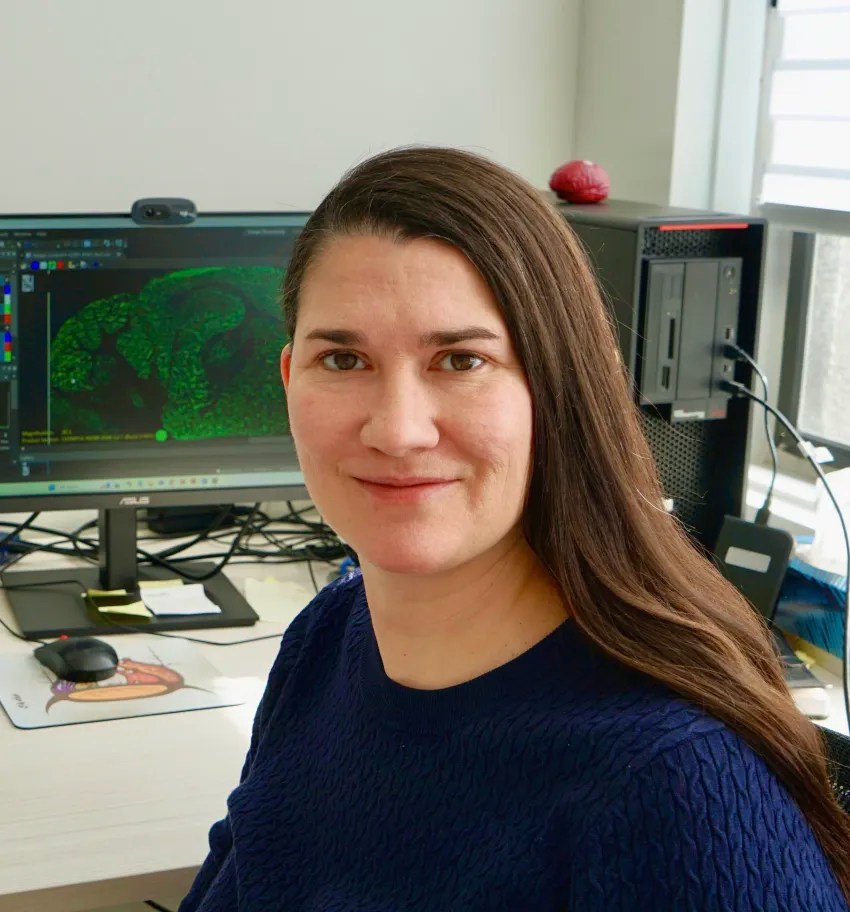
Photo credit: Nancy Kim
When asked about the neuroinflammatory mechanisms in MS, Dr. Boyle explained that MS is an autoimmune disease where immune cells found in the bloodstream—T-cells and B-cells—attack the brain and spinal cord. These peripheral immune cells are typically restricted from entering the brain by the blood-brain barrier. However, a breakdown of this barrier has been observed in MS, where immune cell infiltration induces glial cell activation towards a pro-inflammatory phenotype.3 In the brain, glial cells—including microglia and astrocytes—maintain brain health by behaving in a pro-inflammatory or anti-inflammatory manner to maintain tissue homeostasis. The chronic activation of glial cells disrupts their homeostatic role of maintaining healthy brain tissue, resulting in inflammatory damage. This chronic neuroinflammation can result in neurodegeneration and progression of MS.3
Neuroinflammation may be quantified by PET imaging, and could therefore be used as a screening tool for early diagnosis of neurodegenerative diseases.3,4 In one of Dr. Boyle’s current projects, her team is applying PET imaging of neuroinflammation for early diagnosis of MS. They are using a brain-penetrating PET radiotracer that targets a specific membrane-associated protein involved in the neuroinflammatory pathway, known as cyclooxygenase-1 (COX-1). Since this biomarker is primarily located in microglia,5 Dr. Boyle aims to demonstrate that the PET radiotracer will be able to detect changes in microglial behaviour before clinical symptoms emerge in MS.
When discussing the preliminary findings from her COX-1 study in MS, Dr. Boyle highlights interesting findings pertaining to sex-based differences. She observed that healthy males have lower levels of COX-1 compared to females. However, when clinical symptoms of MS appear, both sexes presented with the same COX-1 levels. This indicates that PET imaging of COX-1 may be more sensitive in the early detection of MS in males compared to females. Future work can aim to investigate additional neuroinflammatory biomarkers beyond COX-1 to better understand what drives the progression of MS symptoms in females. Altogether, these findings may contribute to the development of tailored sex-specific early screening tools for MS.
While Dr. Boyle hopes her work can contribute to groundbreaking advancements in the early diagnosis of MS, she also aims to extend her investigation of neuroinflammation to brain cancer research. From an oncology perspective, she noted an extensive overlap between the cell signalling pathways involved in inflammation and cancer. In the brain, there are tumours known as gliomas, which arise from glial cells. As of 2010, roughly 32,260 Canadians have a glioma diagnosis, with 5.45 new cases per 100,000 individuals each year.6 These tumours vary in type, and are further classified in terms of their gradings (Grades I-IV), with a higher grade referring to a tumour that is rapidly dividing and more aggressive in nature.6 Dr. Boyle and her team are interested in understanding how healthy glial cells are involved in the formation of tumours. Ultimately, she aims to utilize PET imaging to assist in more accurately diagnosing and staging gliomas. Although the study of neuroinflammation and its role in brain cancer is a relatively new perspective for Dr. Boyle, she has successfully leveraged the crossover between inflammation and cancer by repurposing a COX-1 targeted PET radiotracer for early detection of ovarian cancer.7 Based on current preliminary research, Dr. Boyle sees potential in applying this PET-based approach to her current glioma research, further exploring neuroinflammation beyond MS.
Another emerging concept in neuroinflammation research is the relationship between neuroinflammation and gut-health. The gut microbiota, which consist of bacteria and fungi in the intestine, interacts with the brain by bidirectional communication along the ‘microbiota-gut-brain axis’. Through this interaction, microbiota can influence neuroinflammation.8 As the understanding of the gut-brain relationship expands, Dr. Boyle prompts us to consider how one’s diet may contribute to the development of neurological disorders. This highlights the wonders of neuroinflammation, demonstrating its involvement not only in neurodegenerative diseases and brain cancers, but also its relation to gut-health.
Dr. Amanda Boyle continues to explore the use of PET imaging for early and enhanced diagnosis of MS and gliomas through examination of biomarkers for neuroinflammation. She believes that machine learning will play a crucial role in PET imaging for neuroinflammation. She highlights potential limitations of the current status of PET imaging—lengthy scan times, radiation exposure— and hopes that these issues can be addressed by machine learning, by reducing both acquisition time and radiation dose. These enhancements can be specifically beneficial for children, as the lengthy duration of PET scans and the concerns regarding radiation exposure often precludes the pediatric population from PET scans for disease diagnosis. Ultimately, Dr. Boyle hopes her and her team will continue to play a significant role in these exciting new advancements in PET imaging for the detection of neuroinflammation; one day, allowing for early and enhanced diagnosis and intervention in MS and gliomas.
References
1. Gadhave DG, Sugandhi VV, Jha SK, et al. Neurodegenerative disorders: Mechanisms of degeneration and therapeutic approaches with their clinical relevance. Ageing Res Rev. 2024;99:102357. doi:10.1016/j.arr.2024.102357
2. Zhang W, Xiao D, Mao Q, Xia H. Role of neuroinflammation in neurodegeneration development. Signal Transduct Target Ther. 2023;8(1):1-32. doi:10.1038/s41392-023-01486-5
3. Takata F, Nakagawa S, Matsumoto J, Dohgu S. Blood-Brain Barrier Dysfunction Amplifies the Development of Neuroinflammation: Understanding of Cellular Events in Brain Microvascular Endothelial Cells for Prevention and Treatment of BBB Dysfunction. Front Cell Neurosci. 2021;15. doi:10.3389/fncel.2021.661838
4. Jain P, Chaney AM, Carlson ML, Jackson IM, Rao A, James ML. Neuroinflammation PET Imaging: Current Opinion and Future Directions. J Nucl Med. 2020;61(8):1107-1112. doi:10.2967/jnumed.119.229443
5. Yang W, Xiong G, Lin B. Cyclooxygenase-1 mediates neuroinflammation and neurotoxicity in a mouse model of retinitis pigmentosa. J Neuroinflammation. 2020;17(1):306. doi:10.1186/s12974-020-01993-0
6. Ji X, Alakel A, Ghazawi FM, et al. Investigation of incidence and geographic distribution of gliomas in Canada from 1992 to 2010: a national population-based study highlighting the importance of exposure to airport operations. Front Oncol. 2023;13:1190366. doi:10.3389/fonc.2023.1190366
7. Boyle AJ, Tong J, Zoghbi SS, Pike VW, Innis RB, Vasdev N. Repurposing 11C-PS13 for PET Imaging of Cyclooxygenase-1 in Ovarian Cancer Xenograft Mouse Models. J Nucl Med Off Publ Soc Nucl Med. 2021;62(5):665-668. doi:10.2967/jnumed.120.249367
8. Bairamian D, Sha S, Rolhion N, et al. Microbiota in neuroinflammation and synaptic dysfunction: a focus on Alzheimer’s disease. Mol Neurodegener. 2022;17(1):19. doi:10.1186/s13024-022-00522-2
9. Mesfin FB, Karsonovich T, Al-Dhahir MA. Gliomas. In: StatPearls. StatPearls Publishing; 2025. Accessed February 6, 2025. http://www.ncbi.nlm.nih.gov/books/NBK441874/
 IMS Magazine
You must be logged in to post a comment.