
by Abigail Wolfensohn
Graphic design by Lauren Jones
It is a pleasant spring day. While many are eager to finally enjoy the great outdoors without the burden of heavy parkas and winter boots, if you’re one of the estimated 20-25% of Canadians with seasonal allergies,1 you may be bracing yourself for weeks of pollen-induced itchiness and congestion instead. You may even be yearning for the days when your seasonal allergies didn’t seem this bad. If this sounds like you, it isn’t your imagination—this trend of progressively worsening allergies is a growing public health concern that is not limited to seasonal allergies alone. Allergies are becoming more prevalent and severe every year, and human-driven climate change is a likely culprit.
How could climate change be contributing to this phenomenon? As humans burn fossil fuels, greenhouse gases trap heat in the atmosphere, causing global temperatures to rise. This leads to extreme weather patterns and ecological shifts, which are further exacerbated by human activity, such as deforestation and other forms of environmental destruction. Despite overwhelming scientific evidence, global responses to climate change have been inadequate, with insufficient action being taken to curb carbon emissions and mitigate the escalating impacts on ecosystems and human health.2 When it comes to seasonal allergies, these environmental changes significantly impact the growth patterns of allergenic plants. The development and severity of a pollen allergy depend on three key components: pollen concentrations in the air, the duration of pollen exposure, and the allergenicity of said pollen.3 Climate change amplifies each of these factors, intensifying seasonal allergies.
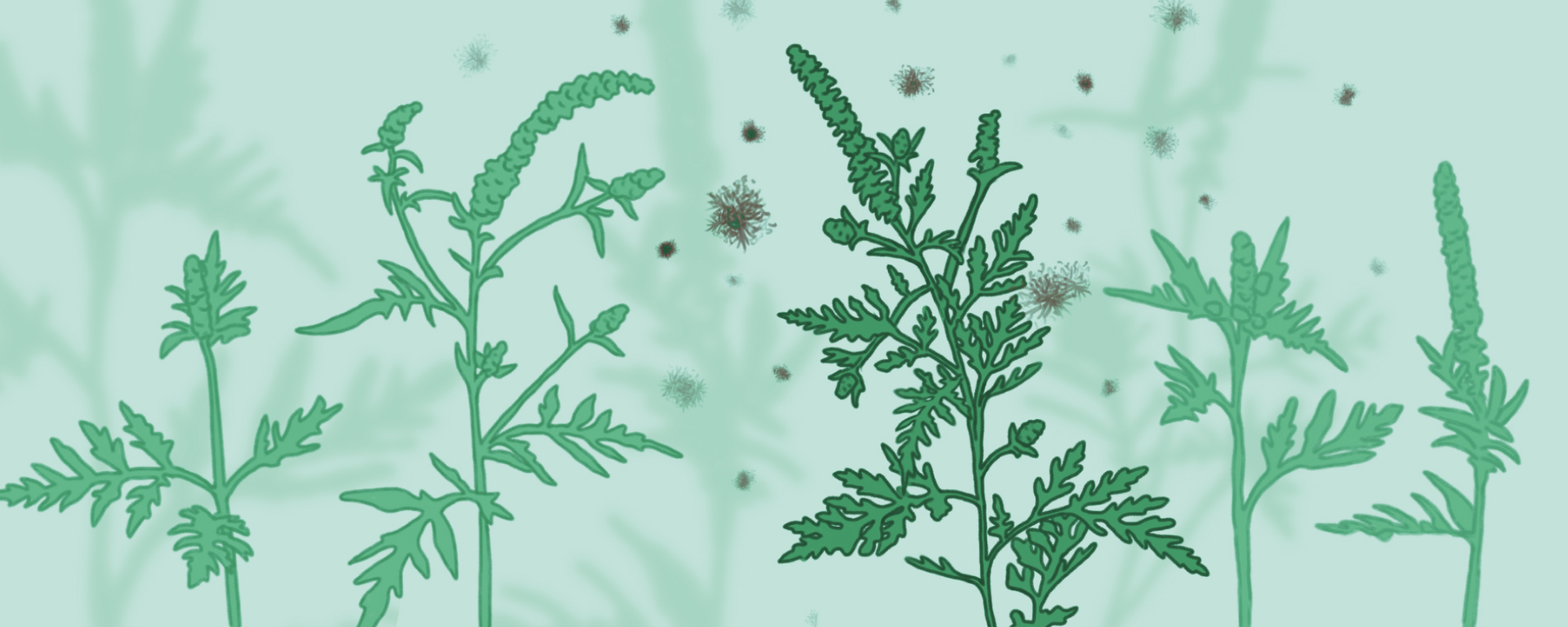
One way climate change exacerbates seasonal allergies is by driving the spread of allergenic plants into regions where they were not previously found, exposing millions of new people to allergy-inducing pollen. For example, ragweed, a plant native to the Americas, produces pollen that commonly causes allergies in late summer and fall. Due to shifts in climate, ragweed’s range is rapidly expanding poleward as temperatures rise and more areas become suitable habitats, transforming it into a globally invasive species.4 Deforestation and urban development have also contributed to its spread, since ragweed thrives in disturbed soil.5 A landmark 2017 study projected that the rate of sensitization—a necessary step in the development of an allergy—to ragweed will more than double in Europe by the mid-21st century due to climate change.5
In addition to expanding the range of allergenic plants, climate change is also extending allergy seasons by lengthening the growing seasons of allergenic plants. When allergenic plants thrive for a longer period without succumbing to frost damage, allergy seasons begin earlier in the spring and end later in the fall. A 2021 study analyzing long-term pollen records from 60 North American cities between 1990 and 2018 found that by 2018, springtime pollen seasons were starting 20 days earlier and lasting eight days longer on average compared to 1990. Using climate modeling, the authors estimated that human-caused climate change alone was responsible for around 50 percent of this shift.6
Moreover, mounting evidence suggests that rising temperatures and air pollution affect the quantity and allergic potency of airborne pollen. In fact, springtime pollen concentrations in North America are on average 21.5% higher than they were three decades ago.6 Indeed, at higher temperatures, plants tend to grow more vigorously and produce greater amounts of pollen with higher allergen concentrations. This effect has been observed in numerous studies on ragweed, birch, cypress, grass, and other plants that commonly cause seasonal allergies.3,7
The impact of climate change on allergies extends beyond seasonal allergies. Rising temperatures, higher CO2 levels, and extreme weather, such as heavy rainfall, increase the abundance and potency of mold and poison ivy.3,8 Allergy rates to house dust mites, a common indoor allergen that thrives in warm, humid conditions, have also significantly increased worldwide.9
Beyond influencing many allergens responsible for allergic diseases, climate change has increased human exposure to ambient air pollution, which could further aggravate the allergic response. Inhaling pollutants could impact the immune system’s response to potential allergens and make us more prone to developing allergies.2 This may even extend to food allergies. A longitudinal study conducted in Australia, published in December of 2024, demonstrated a significant association between elevated exposure to air pollution during infancy and persistent peanut allergy throughout the first ten years of life.10 Other consequences of climate change, such as loss of biodiversity, water pollution, and increased prevalence of wildfires and dust storms,2 may also increase the prevalence and severity of allergies, as these events can alter human microbiome composition and immune function.
The consequences of climate change exacerbating allergies are a pressing public health concern, given the wide-reaching societal and individual burden these changes impose. Addressing this issue will require a coordinated global effort. On a systemic level, this means reducing greenhouse gas emissions, preventing environmental degradation, substantially investing in environmental and health science research, and implementing strategies to protect vulnerable populations. On an individual level, we can contribute by advocating for policy changes, educating those around us, and staying informed about local pollen and air quality conditions. Ultimately, the fight against allergies is part of a broader challenge—protecting human health in an increasingly unpredictable environmental landscape.
References
1. Keith PK, Desrosiers M, Laister T, et al. The burden of allergic rhinitis (AR) in Canada: perspectives of physicians and patients. Allergy Asthma Clin Immunol. 2012 Jun 1;8(1):7.
2. Seastedt H, Nadeau K. Factors by which global warming worsens allergic disease. Annals of Allergy, Asthma & Immunology. 2023 Dec 1;131(6):694–702.
3. Ziska LH, Epstein PR, Schlesinger WH. Rising CO2, Climate Change, and Public Health: Exploring the Links to Plant Biology. Environ Health Perspect. 2009 Feb;117(2):155–8.
4. Oswalt ML, Marshall GD. Ragweed as an Example of Worldwide Allergen Expansion. Allergy Asthma Clin Immunol. 2008 Sep 15;4(3):130–5.
5. Lake IR, Jones NR, Agnew M, et al. Climate Change and Future Pollen Allergy in Europe. Environ Health Perspect. 2017 Mar;125(3):385–91.
6. Anderegg WRL, Abatzoglou JT, Anderegg LDL, et al. Anthropogenic climate change is worsening North American pollen seasons. Proceedings of the National Academy of Sciences. 2021 Feb 16;118(7):e2013284118.
7. Sénéchal H, Visez N, Charpin D, et al. A Review of the Effects of Major Atmospheric Pollutants on Pollen Grains, Pollen Content, and Allergenicity. ScientificWorldJournal. 2015;2015:940243.
8. Paudel B, Chu T, Chen M, et al. Increased duration of pollen and mold exposure are linked to climate change. Sci Rep. 2021 Jun 17;11(1):12816.
9. Acevedo N, Zakzuk J, Caraballo L. House Dust Mite Allergy Under Changing Environments. Allergy, Asthma & Immunology Research. 2019 May 14;11(4):450.
10. Lopez DJ, Lodge CJ, Bui DS, et al. Air pollution is associated with persistent peanut allergy in the first 10 years. Journal of Allergy and Clinical Immunology. 2024 Dec 1;154(6):1489-1499.e9.
 IMS Magazine