
By Aria Afsharian
Graphic design by Raymond Zhang
“Even though we as graduate students emphasize the love of our work, we can’t do it without support… Failure is inevitable but there are other things to reassure you that you are capable. That you can do it.”
This quote encapsulates Shaghayegh (Feri) Faroozan’s story as she reflects on the mountainous journey it took to get to where she is now: a sixth-year PhD student in Dr. Nigil Haroon’s lab at Toronto Western Hospital and recent Sara Al-Bader Memorial Award recipient. As an international student from Iran, Feri’s path to science took shape back when she was studying for the Iranian University Entrance Exam: “Though it was tough, it gave me the opportunity to think about my future,” she reflected. “I really enjoyed cell and molecular biology in high school, so I decided to go into that field for my bachelor’s and master’s degrees.” In line with her interest in cell biology, Feri studied cell death pathways and male infertility during her master’s. But it was after her master’s where Feri described a major turning point in her life: her supervisor offered her a job at his in vitro fertilization (IVF) clinic in the Iranian city of Isfahan, where she would work in the embryology lab. The job offer came at a critical time in Feri’s life, as this was also when she was supporting her father who was diagnosed with late-stage glioblastoma. As Feri put it, this experience helped to “anchor” herself during a highly frustrating and stressful time. Building on her experience at the IVF clinic, Feri shifted focus to her overarching goal of pursuing a PhD abroad to branch out into more diverse areas of research in immunology.
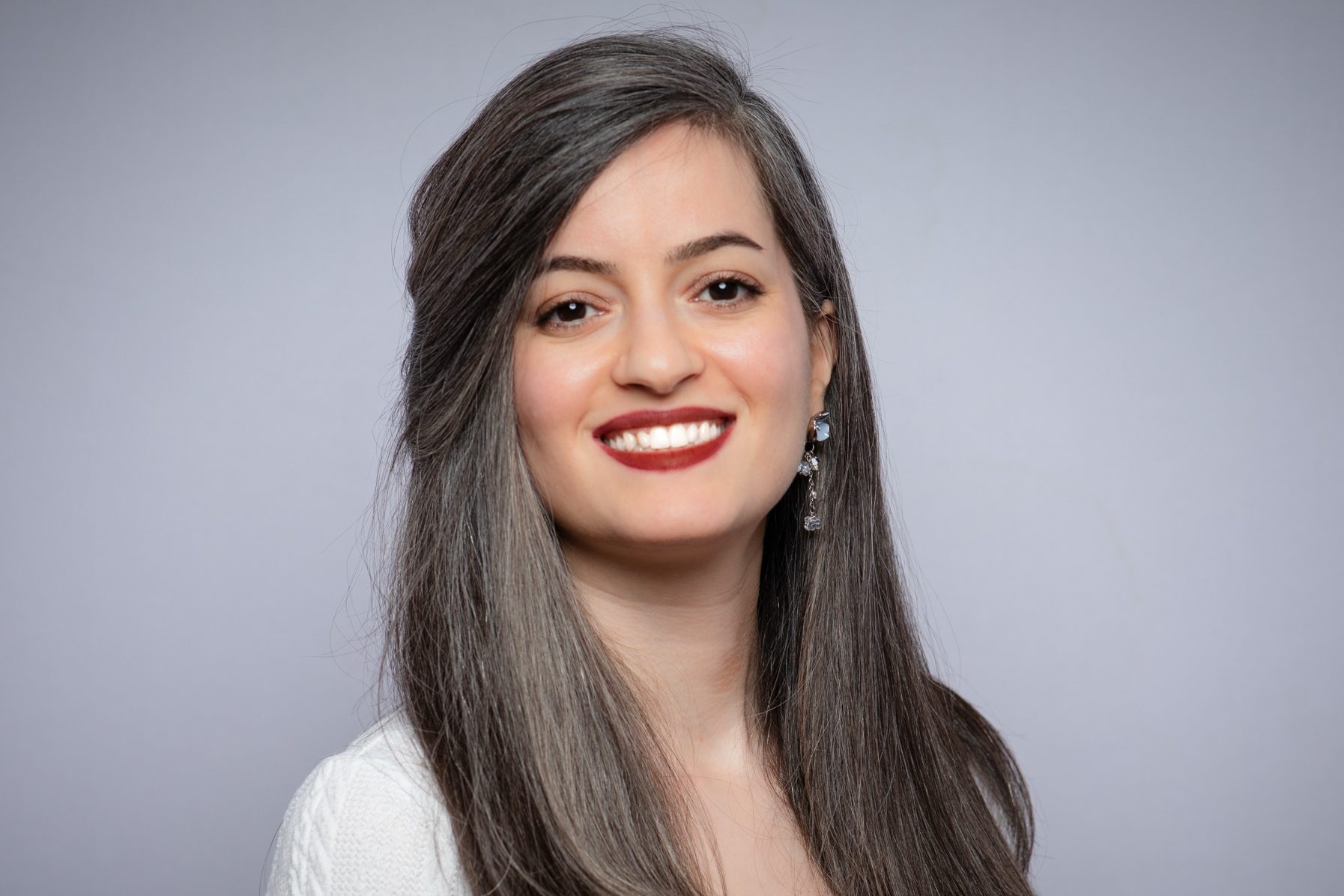
Photo credit: Feri Foroozan
It was not long after this that she came across a paper by Dr. Haroon on autophagy and spondyloarthritis, a disease which, at the time, she had no idea about. Fascinated by Dr. Haroon’s work, she reached out to him to learn more about his research and to potentially join his lab as a graduate student. With everything going on in her life, however, Feri gave little thought to her request, assuming that she would not hear back–which made it even more surprising when she got a response in the middle of the night. This was yet another invigorating moment in Feri’s life, as she received this email back from Dr. Haroon while she was with her father in the hospital emergency room. Despite missing the early bird deadline for applications, Feri recalls how supportive Dr. Haroon was of her situation, helping her to get an extension for applying, leading to her being offered a place at the Institute of Medical Science (IMS) to begin her PhD. “When I heard back from IMS that I was accepted, I felt like I was on cloud nine,” Feri explained when reminiscing her excitement of the good news. But this acceptance was bittersweet as her father’s condition was deteriorating, and she had to decide whether she should stay with him or leave and come to Canada. When asked what swayed her decision, she remembered the final push given to her by her mom: “She told me to go. That I should go after my life and pursue my goals.” This was the final motivation that Feri needed to embark on her new journey in Canada as a graduate student in the summer of 2019.
But what was it like coming to Canada as a newcomer? When asked this question, Feri acknowledged the difficulties that international students face when they leave their homes to start a new life in another country, explaining that “usually [newcomers] can feel lost on what to do and where to go.” Having mentioned this, she then discussed how her own experience was smooth thanks to the wide support network she had upon her arrival. Her best friend was pursuing her master’s degree in Toronto at the time, and she helped her find a place to live and set up her student card, banking, and phone number. During our talk, Feri could not stress enough just how happy she was to join the IMS in Toronto, but that is not to say that she did not miss home as well, describing the “long rich history [of my home city] that I miss being a part of, compared to the relatively newer history of Canada. Not that it’s a bad thing, it’s just different.” With Feri’s move to Toronto being settled, I then asked more specifically about her current research.
Spondyloarthritis is a chronic inflammatory disease that mainly affects the spine and peripheral joints. Interestingly, this disease also manifests in regions outside of the joints, such as inflammation of the eyes, skin, and gut.1 Feri is specifically focused on the relationship between the gut and the joints in the context of spondyloarthritis. She explains the importance of breaking away from the idea that inflammation is only a regional effect, but rather, “there are systemic connections between different parts of the body; inflammation in one region can spark inflammation in another.” For example, Feri explains, there is evidence that immune cells in the joints can express markers associated with the gut, and vice versa.1 While Feri’s love for research shines through her dedication and commitment from her master’s to her current work, she also emphasizes the importance of community involvement.
Feri became involved with extracurriculars from day one of her PhD, and has been a major contributor to student life at both the University of Toronto (UofT) and IMS ever since. A lot of her time was spent with UofT Talks, a student-run symposium that discusses major breakthroughs in health research. Feri led the organizing committee from 2021 to 2023, and describes this as huge achievement for her since “2023 was the first time we held UofT Talks in-person after the pandemic, so I am very proud of my team and what we were able to accomplish.” Building off this success, Feri teamed up with her lab mates to create IMS MedDash, an Amazing Race-style competition for high-school students interested in learning more about research, which is currently set to host its inaugural event this July. The intention with MedDash, was to introduce biomedical science research to the youth in upper years of high school since they are in a critical point of deciding their future , specifically those from underserved communities, and present science in a fun, interactive way.
After her PhD, Feri hopes to work in industry, citing her desire to see the impact of her work faster as opposed to the slower-paced environment of academia. Looking back on her journey, Feri stressed the importance of extracurricular involvement, especially in graduate school, proclaiming that “achievements in graduate school can be slow, so getting involved in other activities can help remind you that you are not a failure, and that your potential can be realized in many different ways beyond just the lab.” Through this we arrive at the essence of Feri’s story; the need to surround yourself with the right people. From her master’s supervisor helping her get a job at the IVF clinic, to Dr. Haroon helping with her graduate school application, to her friend helping her transition to Toronto life, we must realize that we are not in this alone. Graduate school should be a time to build and foster connections, enabling us to make an impact not only on ourselves but also on our community.
References
1. Lefferts AR, Norman E, Claypool DJ, et al. Cytokine competent gut-joint migratory T Cells contribute to inflammation in the joint. Frontiers in Immunology. 2022 Sep 7;13.
 IMS Magazine
You must be logged in to post a comment.