
by Beatrice Acheson
Graphic design by Yu-Wen Jan
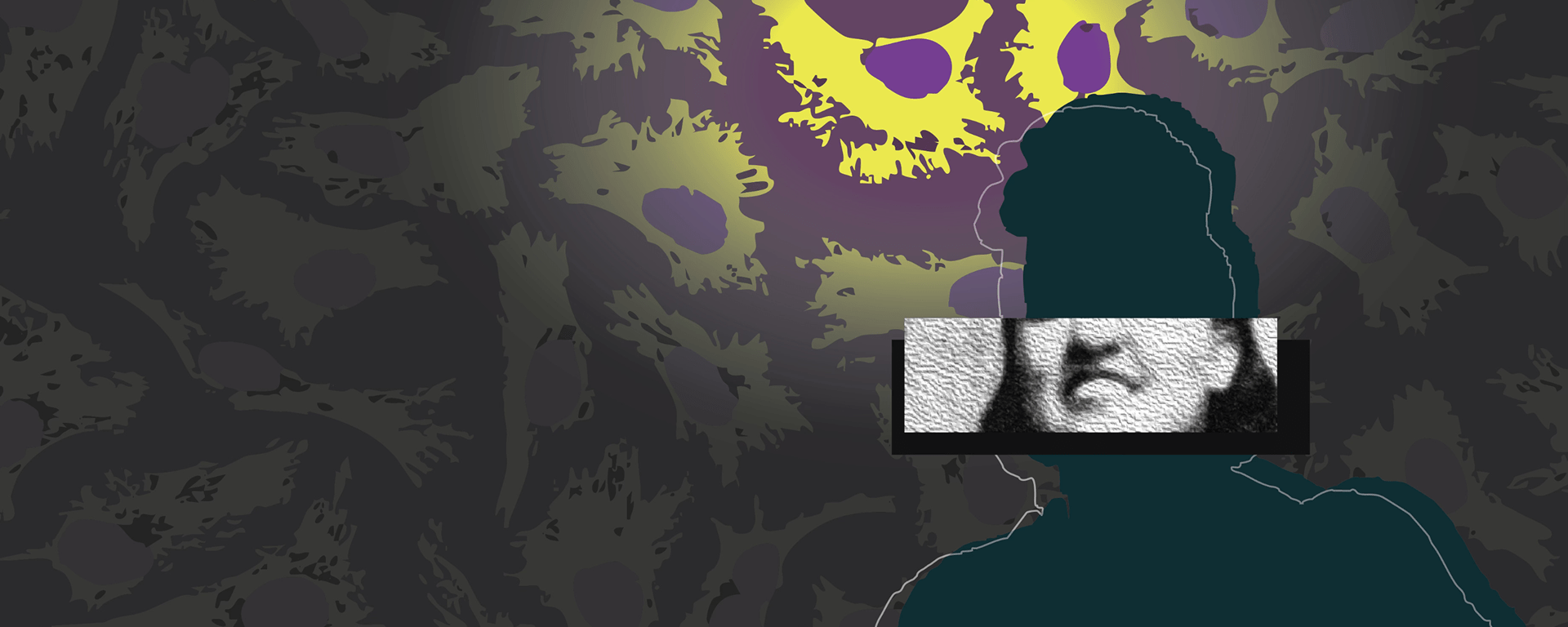
In 1951, in the “Colored Ward” of Johns Hopkins Hospital, Henrietta Lacks was diagnosed with cervical cancer after undergoing a routine tissue biopsy. Unknowingly and without consent, Henrietta had started a scientific revolution. Her cells, termed “HeLa” cells, would divide continuously and robustly in a petri dish, becoming the first immortal human cell line. In the decades following, her cells would enable the development of the polio vaccine, gene therapies for hemophilia, and chemotherapies for leukemia. This unprecedented advancement was accompanied by immense financial gain, as companies like Thermo Fisher Scientific made billions in profit through the commercialization of Henrietta’s cells. Henrietta died later that year, unaware of the immense impact of her contribution and the exploitation that would follow.1
For over 50 years, Henrietta Lacks’ identity was reduced to four letters: HeLa. In her biography, The Immortal Life of Henrietta Lacks, Rebecca Skloot reckons with Henrietta’s near erasure and restores her story in over 300 pages. Skloot’s desire to tell Henrietta’s story began in her high school biology classroom, when a teacher briefly mentioned the HeLa cells and the research they enabled. Years later, still curious, Skloot searched for Henrietta online, only to discover a disjointed collection of conflicting facts. Henrietta’s cells laid the groundwork for unprecedented scientific discovery, but no one knew who Henrietta really was. Skloot uncovers Henrietta’s legacy and situates it amongst a larger conversation about ethics, autonomy, and consent in medical research.
Using news stories, medical records, and interviews, Skloot humanizes Henrietta, painting a portrait of her life from birth to diagnosis to death—and beyond. Throughout the book, Skloot deliberately retains the native dialects of the people she interviews, a decision made when Henrietta’s daughter, Deborah, said, “If you pretty up the way people spoke and change the things they said, that’s dishonest. It’s taking away their experiences, and their selves.”1 Through meticulous storytelling, Skloot preserves the humanity of Henrietta and her family members, a consideration that was not offered in 1951.
Skloot also reminds the reader that while Henrietta’s story was unique, it does not exist in isolation and is rather a part of a longstanding pattern of injustice specifically experienced by Black communities. Skloot tells Henrietta’s story but also references other ethical violations that have occurred at the hands of scientists, including the Tuskegee trials and the forced sterilization of Black women. In doing so, Skloot establishes Henrietta’s story as part of a larger, systemic pattern of oppression and exploitation and exposes the injustices that arise in the absence of medical ethics.
The objectification and dehumanization of Black women take many forms, and Henrietta’s story serves as a reminder of the quieter, more insidious violence that occurs under the guise of science. The Immortal Life of Henrietta Lacks is a stringent reminder that our responsibility as scientists extends beyond the test tube. We are accountable for the samples that we use and upholding the dignity of those who have provided them. Skloot reminds us that Henrietta’s story is not just one of scientific discovery, but also one of the ethical responsibilities that we owe to the “stories” that underlie the science.
In 2023, 13 years following the publication of the Immortal Life of Henrietta Lacks—and nearly 70 years after the first use of Henrietta’s cells—the Lacks family reached a settlement with Thermo Fisher Scientific.2 Decades following her cancer diagnosis, Henrietta’s family was finally compensated for the years of commercialization that occurred in the absence of her informed consent. Multiple avenues of justice are available to reckon with erasure such as Henrietta’s, whether through financial compensation or literary reclamation. As scientists we ought to engage with both to view our research through a more humanistic and ethical lens. Reading stories like the one Skloot so gracefully tells in The Immortal Life of Henrietta Lacks is an important step in this process.
References
- Rebecca Skloot. The Immortal Life of Henrietta Lacks. New York, NY: Crown Publishers; 2010. 381 p.
- Meredith Wadman. Science. 2023 [cited 2025 May 2]. What does the historic settlement won by Henrietta Lacks’s family mean for others? Available from: https://www.science.org/content/article/what-does-historic-settlement-won-henrietta-lacks-s-family-mean-others
 IMS Magazine