

By Yalda Champiri
Graphic design by Athena Li
When Dr. Anna Badner reflects on her time in the Institute of Medical Science (IMS) program at the University of Toronto, she sees it as the foundation for a career that has taken her from the research bench to the forefront of biotechnology in Silicon Valley. Today, she works at a startup company, Switch Therapeutics, that is developing conditional siRNA-based therapeutics for neurodegenerative diseases–an ambitious endeavour that combines her scientific expertise with the fast-paced environment of drug discovery. With aspirations to grow into leadership roles such as principal scientist, team lead, and eventually, vice president, Dr. Badner is charting a path defined by curiosity, adaptability, and a commitment to meaningful scientific impact.
Dr. Badner’s interest in neuroscience began during her undergraduate studies at the University of Ottawa, where she was drawn to questions exploring how the brain and spinal cord recover after injury. Inspired by the possibility of translational discoveries that could one day improve patient care, she chose to pursue graduate studies at IMS.
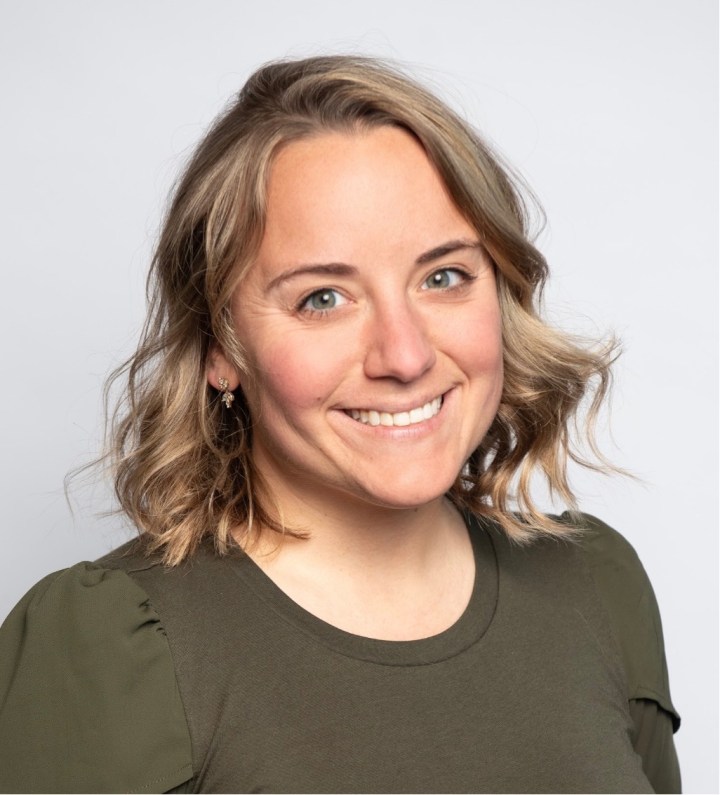
PhD, IMS Alumnus
Photo credit: Dr. Anna Badner
Her time spent in Dr. Michael Fehlings’ laboratory was a formative chapter. Immersed in translational research and in vivo disease modelling, she gained valuable exposure to cell therapy approaches and the practical considerations involved in developing potential treatments. Her PhD work focused on traumatic spinal cord injury and experimental therapies aimed at promoting repair, which provided her with experience in techniques such as in vivo ultrasound imaging and modelling of disease processes. These skills were instrumental in helping her secure postdoctoral fellowships, as they translated directly to other areas of neurotrauma and repair research. “I really enjoyed the freedom and flexibility in the lab,” Dr. Badner recalls. “It was a place where you could follow your curiosity and learn by doing.” That environment also helped her identify the types of work that energized her most, shaping her vision for the future. Following her PhD, Dr. Badner pursued two postdoctoral fellowships that further refined her professional direction. At the University of California, Irvine, she worked with Dr. Aileen Anderson and Dr. Brian Cummings on projects involving traumatic brain injury and cell transplantation. While she valued contributing to this important aspect of the field, she observed the challenges of translating such research into large-scale clinical applications. “Neurotrauma research is incredibly important,” she reflects, “but I began to realize that the opportunities for large-scale translation in that space were limited.”
Her second postdoctoral role at Stanford University, under the mentorship of Dr. Erin Gibson, opened the door to work on multiple sclerosis and remyelination, as well as a front-row seat to the rapid growth of the biotech sector during the pandemic. The combination of her expertise and the timing of industry expansion brought exciting new career possibilities into focus. “I didn’t have one big ‘Eureka’ moment,” she explains. “It was more a series of realizations that built over time, seeing where I could grow, what I enjoyed, and how I wanted my career to evolve.”
Dr. Badner’s move into biotech began with a role at a Stanford spinout company working on CRISPR-edited hematopoietic stem cells for sickle cell disease. Here, she gained valuable insights in clinical trial operations, regulatory interactions, and working within a highly targeted drug development pipeline—expertise that would serve her well in subsequent positions. She quickly learned that industry science often operates under different constraints than academia, with highly focused goals and rapid decision-making. Despite the steep learning curve, she embraced the opportunity, noting that the role offered not only valuable skills but also a new perspective on how science is conducted in different settings.
She went on to join a small venture capital (VC)-backed team developing RNA-based therapeutics for Amyotrophic Lateral Sclerosis (ALS) within a Johnson & Johnson incubator, a space where young biotech companies can access labs, resources, and mentorship to enhance their discoveries. “It was a fantastic experience,” Dr. Badner recalls. “We were just six people, so everyone’s contribution mattered. There was real opportunity to wear multiple hats, learn new skills, and a sense of shared purpose.” Presenting to the board and working in such a collaborative environment deepened her appreciation for the agility and innovation possible in small biotech companies. It also gave an understanding of investor-driven science funding, how start-up raise capital and what it takes for a company to IPO (be listed on the public stock exchange).
Not every chapter was without difficulty. Startups can face unexpected hurdles, from funding limitations to clinical outcomes, and Dr. Badner experienced the reality of navigating these shifts. Yet, each transition brought new skills, insights, and clarity about her professional priorities. A brief return to academia at the University of California, San Francisco, reaffirmed that her future lay elsewhere. “It helped me see how much I’d grown in industry,” she says. “The pace, the problem-solving, and the variety of work, I realized that’s where I thrive.”
Dr. Badner attributes much of her success to the habits she formed during her time at IMS. Eager to contribute wherever she could, she learned specialized techniques, such as in vivo ultrasound imaging in mice, that became valuable across multiple projects. “If you can pick up a skill that others need, you become an integral part of the team,” she advises. “That mindset led to my involvement in more than a dozen publications during my PhD, and it set me up very well for the future.”
Her advice to current graduate students is grounded in experience: “Be a sponge, learn as much as you can, from as many people as you can. The momentum you build often shapes where you end up. I’ve seen that when people work hard, stay honest, and commit to themselves, good things tend to follow.”
She is also mindful about how priorities evolve over time. “There’s no perfect formula for balance,” she says. “At different stages, you’ll focus on different things—sometimes it’s your research, sometimes it’s your health or personal life. It’s about knowing what will give you the most payoff in the long-term and trusting that you can shift focus when you need to.”
Looking ahead, Dr. Badner remains passionate about the science at the heart of drug discovery while steadily building the leadership skills needed to guide teams and projects on a larger scale. Each stage of her journey, from the academic lab to multiple startups, has deepened her understanding of how discoveries move from concept to clinic. And while the path has taken unexpected turns, she sees every step as an integral part of her growth as a scientist and innovator. “I’ve loved every part of this journey,” she reflects. “No matter the challenges, I have no regrets.”
From all of us at IMS Magazine, we thank Dr. Anna Badner for sharing her story, and we look forward to seeing how her work continues to shape the future of neurotherapeutics.
 IMS Magazine
You must be logged in to post a comment.