
by Hamzah Khan
Graphic design by Raymond Zhang
It was the final day of our week-long teaching seminar with Pueblo Science in the remote community of Santa Teresita Dumaran in the Philippines. We had been teaching students how to use and individually program their own soil sensors, to detect when crops needed watering, addressing their community’s need to monitor and maintain adequate watering for their coffee crops. At the end of the session, a young boy approached us. He seemed sad, with tears in his eyes–a stark contrast to the previous days when he was engaged, insightfully answering questions and diligently coding his robot with his team. He expressed his disappointment that we were leaving but thanked us for coming to his town and for the rare opportunity to take part in the session. He radiated excitement about the possibility of us returning next year. It was clear that his tears were of happiness, appreciation, and hope, not sadness.
This moment stuck with me.
This is why I work with Pueblo Science–to give students like him a chance to learn, explore their curiosity, and encourage them to think about pursuing careers in science. Pueblo Science’s model is simple: empower educators and inspire students through hands-on, engaging science education that reflects the needs of the community, using low-cost and locally available materials. Through their efforts, I have had the privilege of working in remote communities, from North Spirit Lake First Nations Reserve, a fly-in only Northern Ontario community, to Banjarmasin, a river town in Borneo, Indonesia. In these communities, it’s more than science education, it’s about bringing opportunity, inspiration, and engagement. Science education should be for everyone, not only for those with the resources to access it.
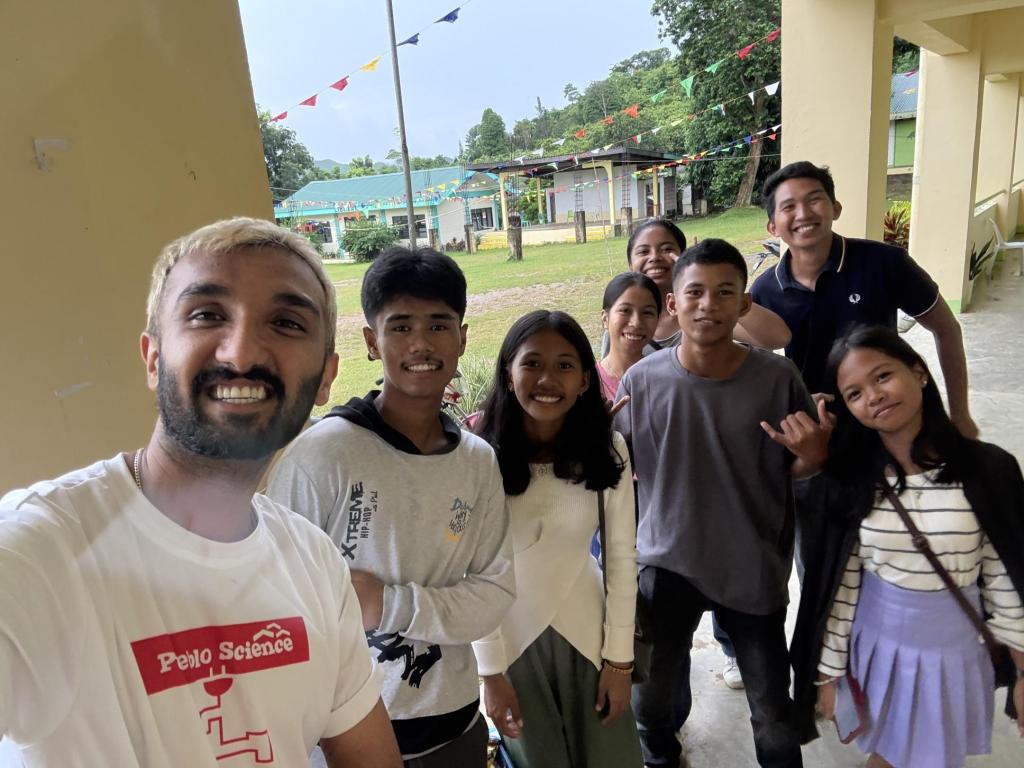
Hamzah Khan and a group of students after our Robotics competition in Dumaran, Philippines.
Photo credit: Hamzah Khan
What is Pueblo Science?
Pueblo Science is a Canadian charity co-founded by University of Toronto alumni Dr. Mayrose Salvador and Professor Cynthia Goh. The charity aims to increase scientific literacy in underserved communities around the world, creating lasting and sustainable impact by providing local teachers with the knowledge, skills, and tools to effectively deliver engaging science content to future students.
I had the opportunity to ask Mayrose what motivated her to start this organization. She was inspired to create Pueblo Science by her own experience being born and raised in a remote community in the Philippines, where the river beside her house was their lifeline—they used it for everything, including drinking. As a child, Mayrose often experienced stomach pain but did not understand why until she learned about bacteria in her high school science class. After this, she encouraged her community members to start boiling the river water before drinking it, and the change was dramatic. While pursuing her science degree in university, she realized that many of the health and environmental problems in her community could be prevented through delivering education in a way that was meaningful to their daily lives.
This idea came back to her when she started her entrepreneurship course at the Impact Centre UofT, with supervisor, and co-founder of Pueblo Science, Dr. Cynthia Goh, who had also grown up in a remote village in the Philippines. Together, they pledged to change how science was taught, making it hands-on and related to the community’s lived experiences. They started Pueblo Science by designing classroom activities using locally available materials and training teachers to incorporate these strategies in lesson plans. Eventually, the goal expanded to empower critical thinking in students and to apply their scientific knowledge by designing solutions to community problems.
Mayrose shares her advice to students who are looking to make a difference: “Get out into the real world, visit communities, talk to people, and listen to their stories. That’s where you’ll discover the challenges that truly matter.” She emphasizes that to make a difference, you must surround yourself with others who share the same goal. “The world isn’t short on challenges. It’s waiting for people who care enough to do something about them. You don’t need to have all the answers, you just need to start. Innovation begins with action.” This sentiment resonates deeply speaking to the courage it takes to move from ideation to implementation.
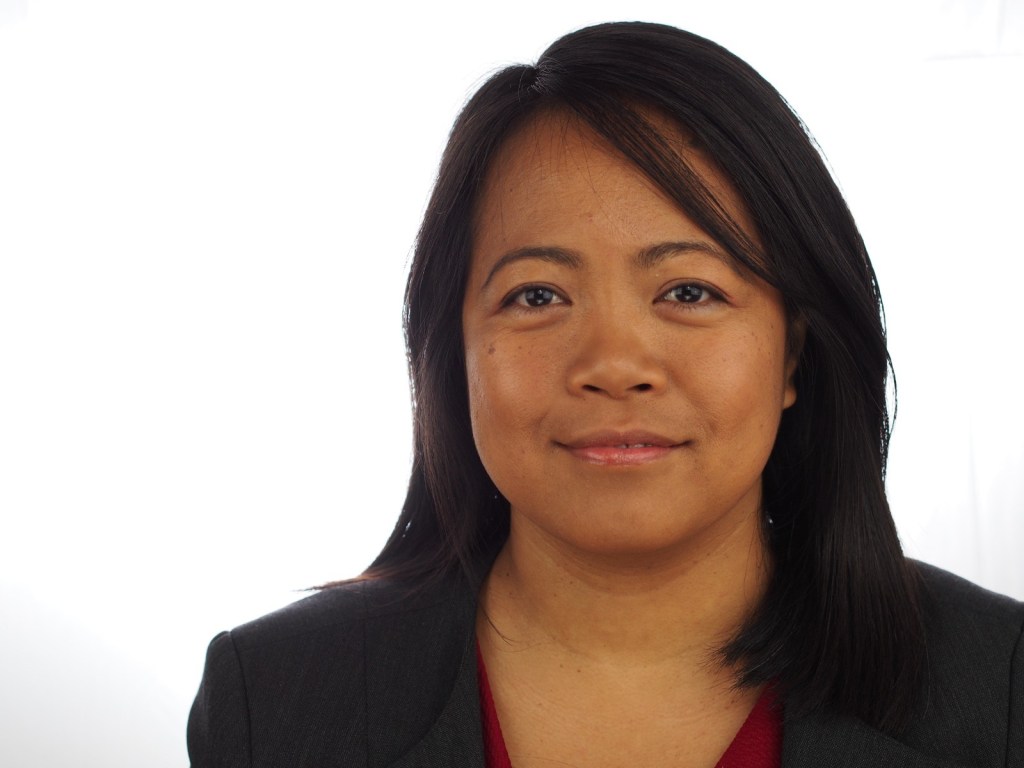
Pueblo Science Co-Founder Dr. Mayrose Salvador.
Photo credit: Mayrose Salvador, Pueblo Science
Educating About Health
At the root of many global health disparities is a lack of education. By improving health literacy, people can make informed decisions, seek care, and understand the healthcare disparities that affect their communities. Pueblo Science strives to achieve this by incorporating health education into their sessions. In Indonesia, cardiovascular disease (CVD) is the leading cause of death, with CVD-related deaths more than doubling from 1990 to 2019, according to the Global Burden of Disease study.1 To address this, our trip included a session on heart disease where students learned to create and code their own heart rate monitors, and use them to measure changes in heart rates during exercise or meditation. To further develop their understanding, we created simple heart models to demonstrate how exercise increases blood flow through the heart and supports a healthy cardiovascular system.
In the Philippines, dengue fever poses a significant threat to public health.2 Approximately 794,000 cases of dengue occur every year, with 80% of dengue fever-related deaths occurring in individuals under 20 years old.2 To address this, we taught students about the immune system, and how our body induces fever to fight infection. The students then created their own temperature sensor to track their body temperature over time, learning to apply it to detecting illness and preventing complications associated with high fevers.
By embedding these health topics in their hands-on science lessons, Pueblo Science aims to make health education that is not only engaging but helps students connect scientific knowledge to their own lives and the health of their community.
Learning Goes Both Ways
Teaching and working with students are at the heart of Pueblo Science’s work, but for me, something just as meaningful has been realizing that learning doesn’t flow in just one direction. On trips with Pueblo, I go to teach, but I leave having been taught about resilience, community, and tradition. Knowledge exists outside of research papers and textbooks, it flourishes in the people around you, in your community, in your culture. In North Spirit Lake, we went ice fishing with local leaders, while in Indonesia we learned about Ikat, a traditional form of tie-dye, and in Dumaran, we snorkeled through an untouched coral reef with a local conservationist who has dedicated his life to protecting the marine ecosystem. These experiences remind me that knowledge isn’t just found by pipetting in the lab or creating a regression model. It can be found in the wisdom of the community’s elders on that ice lake, the hands of the artists weaving a story through Ikat on a cloth, or the passion of a local acting as a guardian of the corals. As an instructor with Pueblo, you come as a scientist hoping to inspire a community, and you leave inspired by the community, with cultural humility, an appreciation for traditions, and an understanding that knowledge comes in many forms.
To get involved with Pueblo Science, check out our website at: https://www.puebloscience.org/.
References
1. Muharram FR, Multazam CECZ, Mustofa A, et al. The 30 Years of Shifting in The Indonesian Cardiovascular Burden—Analysis of The Global Burden of Disease Study. J Epidemiol Glob Health. 2024 Feb 7;14(1):193–212.
2. Undurraga EA, Edillo FE, Erasmo JNV, et al. Disease Burden of Dengue in the Philippines: Adjusting for Underreporting by Comparing Active and Passive Dengue Surveillance in Punta Princesa, Cebu City. Am J Trop Med Hyg. 2017 Apr 5;96(4):887–98.
 IMS Magazine
You must be logged in to post a comment.