

By Aria Afsharian
Graphic design by Qingyue Guo
Around 20 to 30 percent of Canadian children have a mental health or neurodevelopmental problem.1 Children with social inequities often experience barriers accessing health care and are less likely to receive early interventions for neurodevelopmental and mental health problems. This issue was further exacerbated by the COVID-19 pandemic, which saw increased demand for mental health services as well as increased wait times for seeing healthcare professionals.1 There are major systemic barriers that prevent school-aged children from accessing appropriate care in Canada. One innovative method for alleviating these barriers is by bringing healthcare into the schools.
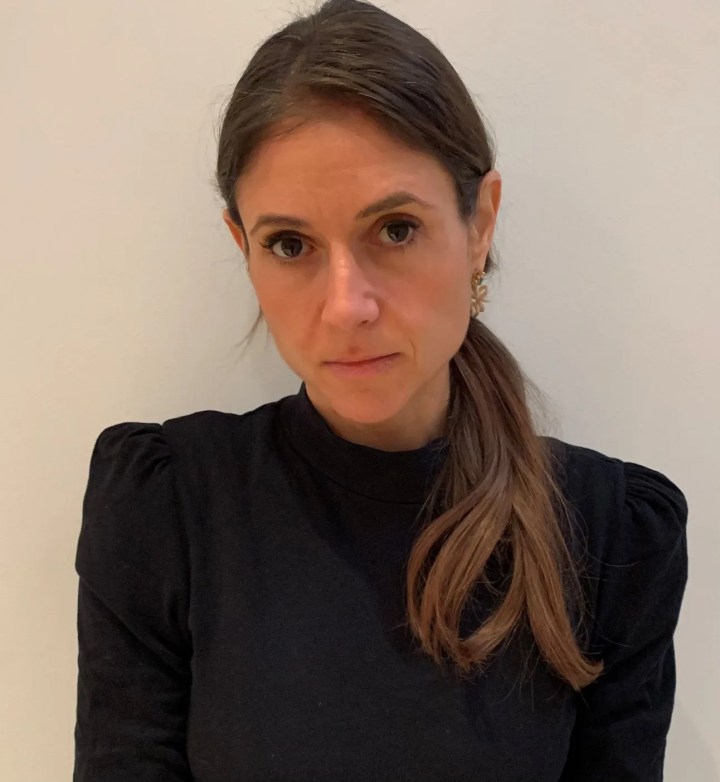
M.D., FRCPC, MSc., Associate Professor, Department of Pediatrics, University of Toronto
Photo credit: Dr. Sloane Freeman
This is the mission of the Research Equity Advocacy in Child Health (REACH) School Network, as discussed in our interview with its founder, Dr. Sloane Freeman, a pediatric physician at St. Michael’s Hospital and Associate Professor in the Department of Pediatrics at the University of Toronto. One of the pillars of St. Michael’s Hospital is its focus on at-risk populations. Pediatrics is an extension of this focus, as children from these disadvantaged families may face further psychosocial problems, especially at school. When asked what drove her towards pediatrics, Dr. Freeman explained, “One of the unique things about pediatrics is the population. Having the opportunity to intervene early in the life course of an individual is very rewarding, especially when you can make meaningful differences that impact their future.” This sentiment motivated Dr. Freeman to start the REACH program, a system that connects school children to health professionals.
Schools emerge as a natural environment to connect children with healthcare. Children spend much of their daily time at school, and there is an established system of trust in place between the school system and families. As Dr. Freeman put it, “Merging healthcare and education allows us to overcome many barriers that families may face.” Prior research supports the association between low socioeconomic status (SES) and poor academic outcomes, psychiatric disorders, and chronic health problems in children.2 These same marginalized families also have the greatest difficulties accessing healthcare.3,4 School-based health is not new, with the United States having over 4,000 School-Based Health Centres (SBHCs), mostly serving low SES families.1,3,4 Research on American SBHCs have shown an improvement in vaccinations, quality of life, and academic performance, as well as lower hospitalization rates.2 In Canada, SBHCs are emerging as potential avenues for connecting underserved children to healthcare providers.
The REACH School Network is a collaboration between Unity Health Toronto’s hospital networks and the Toronto District School Board (TDSB). Currently the program has two physical SBHCs: one at Nelson Mandela Park Public School, serviced by St. Michael’s Hospital, and the other at Parkdale Public School, serviced by St. Joseph’s Health Centre. These schools act as hubs, supporting over 150 additional schools to help connect children with mental health and developmental problems to pediatric health care. The centres are staffed by family physicians, pediatricians, therapists, and patient navigators.3 This physician-led team diagnoses and treats mental health and neurodevelopmental disorders, and collaborates with allied health professionals who provide counseling, and direct families to accessible community resources.3 Students are referred to the REACH clinics by school staff, parents, or the School Support Team (SST).3 The SST includes psychologists, social workers, teachers, and other school staff who meet monthly to discuss student wellbeing, and whether individuals’ behaviour or mental health warrants a referral to the program.3 This system is designed for the delivery of precise care to students who need it, allowing for faster, more accessible diagnosis, treatment, and support.3
Dr. Freeman notes that since REACH and similar systems are still relatively new in Canada, feasibility studies are only just emerging, and additional research is needed to make conclusions about the efficacy of the program. A recent pilot study on the REACH program examined the feasibility of Coping Power, an evidence based cognitive behavioural intervention method, on the mental health of children.1 The 10-week program aimed to improve children’s social competency and self-regulation. At the end of the study period, parents/guardians were asked to fill out a follow-up survey.1 13 out of 18 participants (parent/guardian-child dyads) who completed the program and the survey reported being somewhat or very satisfied with the program.1 An earlier retrospective feasibility study on SBHCs reviewed the charts of 379 children enrolled at a SBHC over one year.2 Most children were from low-income families whose first language was not English.2 Of the 127 children who attended the clinics, 74% received a new diagnosis and 90% received a treatment plan.2 Interestingly, more girls were diagnosed than boys in the SBHC setting, which was unexpected given that boys are usually diagnosed at a higher rate, likely due to them displaying more obvious symptoms that help with early recognition compared to girls.2 It is believed that the increased accessibility of SBHCs may improve the detection of psychosocial disorders in girls that would otherwise be overlooked.2
It remains unclear whether SBHCs impact children’s academic outcomes. A recent quasi-experimental prospective cohort study on 14 TDSB schools compared measures of academic achievement between students who had access to SBHCs and those who did not during the 2016/2017 to 2018/2019 school years.3 While there was insufficient evidence to show a difference in grades, many children who accessed the SBHCs received a new neurodevelopmental diagnosis.3 Several limitations in this study, including COVID-mediated school closures, further the need for additional research on the matter.3
Nonetheless, Dr. Freeman’s passion for the vast potential and importance of the REACH program is evident. She explains that “In a perfect world, in the next decade, the program will expand. More health centres will be built, allowing us to expand throughout Toronto.” The biggest limiting factor to this expansion is funding; “Bringing this to the attention of the government and Ministry of Health is critical for our program’s sustainability,” Dr Freeman says. Only with sustained funding and support can the REACH program continue its mission in connecting children with health professionals. Increased governmental awareness and visibility are necessary to ensure the continued delivery of accessible and efficient care for our most vulnerable patient populations.
References:
1. Rasiah S, Andrade BF, Cohen-Silver J, et al. Coping Power at the REACH School Network: A pilot feasibility study. Paediatrics & Child Health [Internet]. 2024 Nov 17 [cited 2025 Aug 14];29(8):493–500. Available from: https://doi.org/10.1093/pch/pxae060
2.Freeman S, Sgro M, Wormsbecker A, et al. Feasibility study on the Model Schools Paediatric Health Initiative pilot project. Paediatrics & Child Health. 2013 Aug;18(7):361–5.
3.Rasiah S, Jüni P, Sgro MD, et al. School-based health care: improving academic outcomes for inner-city children—a prospective cohort quasi-experimental study. Pediatric Research [Internet]. 2023 Feb 8;(94):1488–95. Available from: https://www.ncbi.nlm.nih.gov/pmc/articles/PMC9907190/
4.Freeman S, Sgro M, Mamdani M. Novel approach to health care delivery for inner-city children. Canadian Family Physician. 2013 Aug;59:816–7.
 IMS Magazine
You must be logged in to post a comment.