
By Shreya Vasudeva
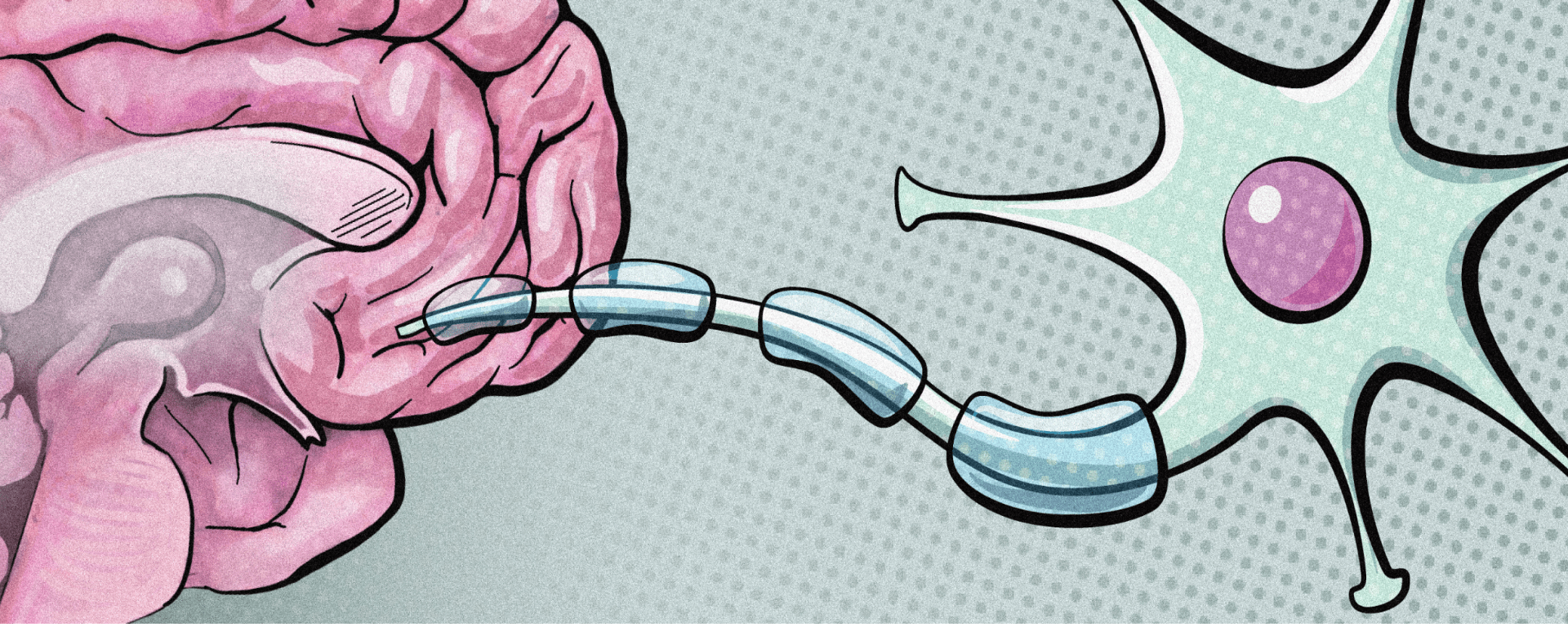
Graphic design by Athena Li
“This is the most random email you’re ever going to get.”
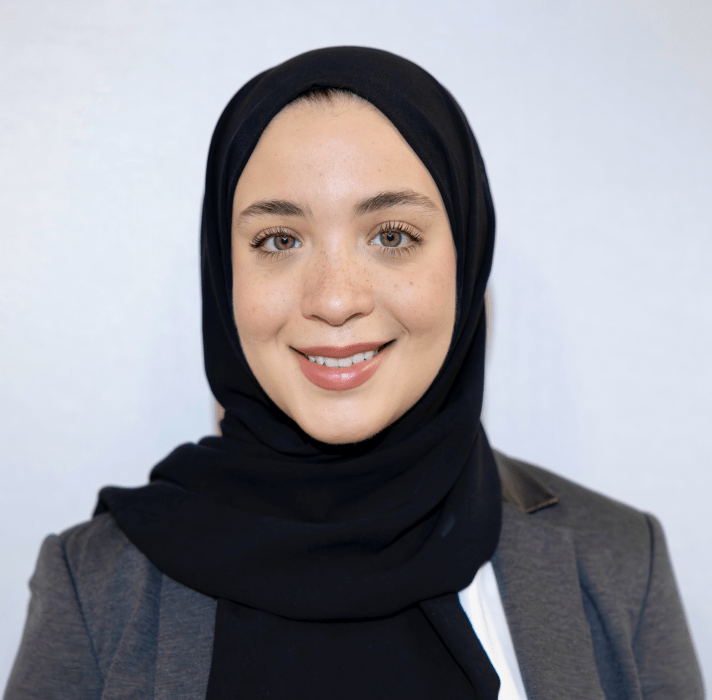
Photo credit: Mariam Elsawy
It all began with a spontaneous message that sparked a collaboration between Institute of Medical Science (IMS) students Mariam Elsawy and Shannen Kyte. This correspondence eventually grew into the Medical Science Comic Conference (MedComics Con), a creative initiative connecting IMS and Biomedical Communications (BMC) students to turn research into visual stories, earning them the 2025 Jay Keystone Memorial Award for Innovation in Scientific Communication.
For Mariam, the journey to IMS began after completing her undergraduate degree in Health Sciences with a minor in Psychology at Carleton University. After graduating during the pandemic, she moved to Toronto and worked at SickKids in administrative roles but her interest in public health and policy led her to Dr. Ahmed Bayoumi at the MAP Centre for Urban Health Solutions at Unity Health Toronto. Now, her work focuses on alternatives to drug criminalization and the lived experiences of people who use drugs.
Shannen graduated from the University of Toronto Scarborough (UTSC) with a specialist in Psychology and a minor in English Literature. Shannen discovered IMS through what he fondly calls “the wonders of LinkedIn” when a UTSC alumnus reached out with an opportunity and introduced him to the program. He now works with Dr. Philip Gerretsen at the Centre for Addiction and Mental Health, researching illness awareness in schizophrenia and substance use disorders, neural correlates, and interventions including deep brain stimulation and virtual reality.
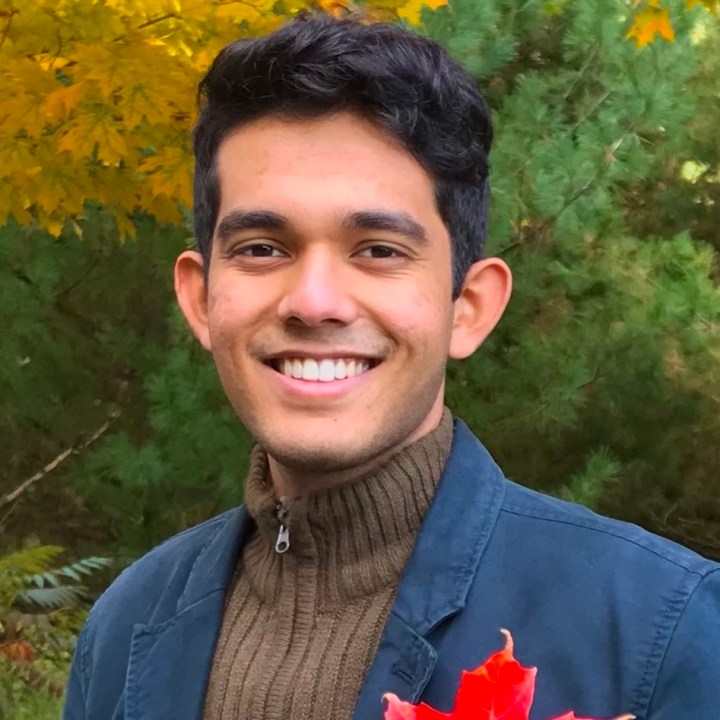
Photo credit: Shannen Kyte
Mariam and Shannen first met in their Graduate Professional Development class, designed to help students explore communication and professional growth. Mariam recalls connecting with Shannen, who “mentioned that he is passionate about education and making it accessible.”
Months later, Mariam returned to a childhood passion—drawing. “I drew things I was learning about. It was always a way I was learning things. I missed that in grad school, and I remember thinking I wish there was a way I could implement this into my research or a part of IMS and share it with others.”
That week, emails about the Jay Keystone Award went out. Mariam had “an epiphany that this was the perfect time to apply to this award.” She reached out to Shannen with the now-famous line. Shannen, chuckling as he recalled the email, was immediately interested.
The pair connected with Dr. Shelley Wall, a professor in Biomedical Communications known for her work in graphic medicine who opened their eyes to the field. The resulting concept was simple but innovative: to create a science-focused event that combines research and visual storytelling. On developing the basis for the project, Mariam explains, “I think the idea of comics itself was how I imagined the easiest way to really understand something, having pictures along with words makes things so much easier.” Shannen adds that many people are visual learners and noted that around the same time, he also saw a real-world example in Marvel’s Moon Knight, whose depiction of dissociative identity disorder fascinated him.
Developing the award-winning proposal was at times challenging, but the support from their collaborators was incredibly encouraging. Mariam notes that it was sometimes difficult “to balance the ambition of what they wanted the event to be with what was realistic time- and budget-wise.” Together with IMS Magazine and BMC students, they figured out what was feasible, managed the budget, and anticipated logistical challenges.
At its core, MedComics Con is about accessibility, creativity, and engagement. Shannen’s hope for MedComics Con is two-fold; “[Grad school] can be frustrating at times, so it’s a good time for students to explore the creative side of science and think about their research at a much simpler level.” He also hopes to “make science easy to understand for anyone and everyone.”
MedComics Con provides IMS students with an opportunity to get involved with their community outside their labs. Mariam points out that despite being part of large research sites, students “can also become isolated or siloed.” She hopes that the event will encourage students to rediscover creativity, explore graphic medicine, and develop professional skills while sharing research. In addition, collaboration with BMC students is central to the project. Mariam says, “It’s mutually beneficial, BMC students get to build their portfolios by illustrating real-world projects, and IMS students learn a different way to represent their research.”
“MedComics Con is helping to remind people that there is room to think outside the box in science,” Mariam says. Shannen agrees, noting, “Science is vast and [it is] for all.” They also wanted to pay tribute to Dr. Jay Keystone and his legacy, aiming to embody his “fun and light spirit” through their initiative. Mariam says, “He felt like a friend who was talking to you at a coffee shop and explaining the things they do at the lab.”
MedComics Con will be a one-day event in Spring 2026, bringing together IMS and BMC students. Student pairs will be matched in late November 2025 to create comic-style research posters showcased at the event, which will feature guest speakers in graphic medicine and an interactive comic workshop. A poster competition will recognize top entries with certificates, cash prizes, and publication in the Fall 2026 issue of IMS Magazine.
Receiving the Jay Keystone Award has been a validating experience for Mariam and Shannen. Shannen says it felt “reassuring” and emphasized that “even though science can sometimes feel rigid, there is a lot of room to grow and be creative.” Mariam adds, “Whenever you can’t find the specific thing you’re looking for, you can always make your own opportunities.” She also realized the importance of collaboration. “Wherever I go, even beyond IMS, I’ll always look around [myself] to see who around me has overlapping interests, take [the time] to speak to them, and see what comes of it.”
Mariam and Shannen both emphasize the importance of taking initiative and believing in your ideas, even when self-doubt arises. They encourage students to seek out opportunities, share their ideas with others, and not be discouraged by the details early on. As Shannen puts it, “Sometimes we live in our own minds, and we limit ourselves, but push yourself to start on things and worry about the little things later. There are people out there who can help you make your idea possible.”
Looking forward, Mariam and Shannen hope MedComics Con becomes an annual event, offering a space for scientists, artists, and communicators to collaborate and learn; “If attendees and participants walk away having learned something new about graphic medicine and potentially implementing it in their future careers, I would personally feel like we did a really good job,” Mariam says.
Mariam and Shannen want to thank the University of Toronto and IMS for having the Jay Keystone award, which made the initiative possible. They are currently launching social media channels and sharing updates through the IMS Student Association (IMSSA) newsletter and their Instagram: @medcomic.con. Mariam encourages students to get involved however they can, whether it is volunteering, sharing research, or illustrating.
By blending art and science, Mariam and Shannen’s initiative seeks to help researchers communicate complex ideas while inspiring the IMS community to explore new ways of thinking. Throughout it all, the spirit of Dr. Jay Keystone—playful, innovative, and committed to education—lives on.
 IMS Magazine
You must be logged in to post a comment.