
by Kinjal Parekh
Graphic design by Josip Petrusa
Ozempic needs no introduction; often described as a “miracle drug,”1 it has quickly become a household name, crossing the usual boundaries that limit most medications to the medical community and their patients. Dominating social media feeds with users chronicling its weight-loss effects, this frenzy has overshadowed its actual FDA-approved indication: a prescription medicine for diabetes-management.2
Ozempic is part of a class of drugs called glucagon-like peptide-1 receptor agonists (GLP-1s), which work by mimicking our natural GLP-1 hormone.3 Your gut releases GLP-1 in response to eating, essentially slowing down how quickly your stomach empties and signalling to your brain that you’re full.3 Although originally developed to help control blood sugar for type 2 diabetes, they were found to have an added benefit of significant weight loss.3 This led to the development of weight-loss medications based on active ingredients used in diabetes-management drugs, such as semaglutide in Ozempic.1
The benefits of these drugs are clear, as they are powerful tools for managing type 2 diabetes and obesity.3 However, the increasing use of these drugs is also alarming, especially with the United States seeing a 700% increase from 2019 to 2023 in patients without diabetes starting Ozempic treatment.4 What is especially concerning is the jump in off-label prescriptions, with an increase from 16% in 2021 to 33% in 2024.2 As the drug’s weight loss effects are being increasingly advertised, younger adults make up the majority of these off-label prescriptions. A study from Michigan Medicine shows the use of these drugs is increasing rapidly in adolescents and young adults, especially females;5 using a prescription database that reports prescriptions from 93.6% of US retail pharmacies, between 2020 and 2023, researchers found a 594% increase in the monthly number of young adults using GLP-1s.5
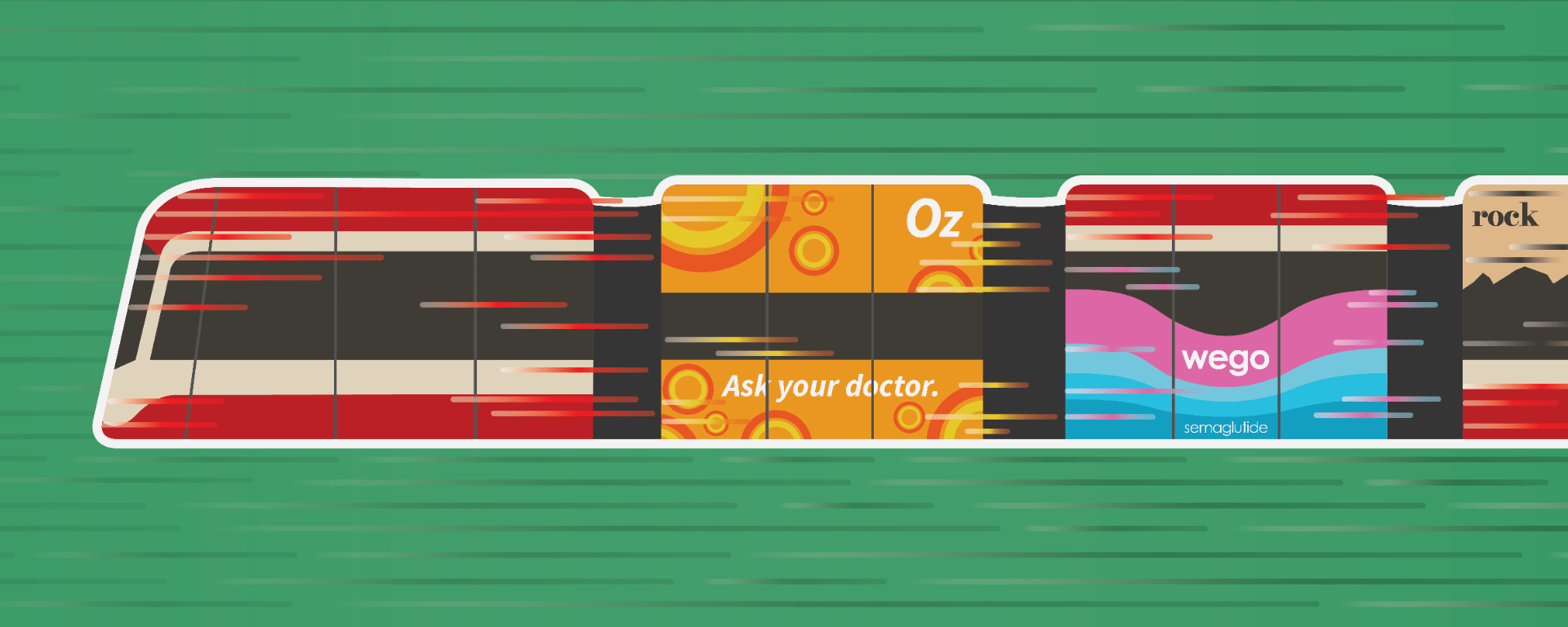
Proper regulation of these drugs is becoming increasingly important due to the rising interest of individuals beyond the patients they were initially intended to treat.5 Part of the normalization of GLP-1 use comes from celebrity endorsements that laud Ozempic without the full spectrum of warnings.2 Ranging from Elon Musk to Serena Williams,6 every week there is yet another star that states how GLP-1s have contributed to their current physique. Importantly, it is not only those who actively seek out GLP-1 drugs that are hypnotized by its effects; just by taking a ride on Toronto’s public transit, which is ridden by approximately 1.7 million people every weekday,7 people encounter advertisements from companies like myRocky.ca, which convey how easily available GLP-1s can be.8 These advertisements can easily sway viewers into perceiving GLP-1s as a simple, accessible lifestyle choice rather than a medical treatment. This type of exposure raises ethical concerns, as it may influence vulnerable populations such as individuals with eating disorders.
There is also a potential danger to the expanding off-label use of GLP1s, as the range of the drugs’ side effects remain underknown. Emerging research is highlighting the risk of gastrointestinal issues (nausea, vomiting, diarrhea, constipation), as well as more severe complications like pancreatitis, kidney problems, potential thyroid cancer, and extreme cases of malnutrition due to its suppressant effects.9 Several studies show GLP-1 to have conflicting effects on both retinal health and diabetes-associated vision loss, where some studies suggest potential beneficial effects,10 while others propose detrimental effects.11 This underscores the uncertainty surrounding GLP-1s, with many potential side effects still undiscovered as rapid adoption forces science to play catch-up.
Another important consideration is maintaining the desired effects of GLP1s, especially following their discontinuation. About half of people with obesity on GLP-1s discontinue their use within a year due to high cost and adverse side effects.12 A study led by the University of Oxford reviewed randomized trials and observational studies on overweight or obese adults who took GLP-1s compared to others in behavioural weight management programs to understand weight regain after cessation of these medications.12 Interestingly, participants who went off these weight-loss medications regained weight approximately four times faster than those who stopped exercising or did not stick to their diets.12 Consequently, at a time when we are bombarded with pharmacological methods for weight loss, it is important not to rely on these alone, but to remember their effectiveness is greatest when combined with a healthy diet and regular exercise.
The importance of emphasizing the risks and limitations of GLP1s is further increasing with their expanded availability and accessibility. In Canada, there are six medications that are authorized by Health Canada for long term weight management and require a prescription from a licensed health care provider.13 However, companies like MyRocky provide same day appointments, connecting patients to physicians who can provide them with a prescription within a week.8 Novo Nordisk is one of the world’s most influential biopharmaceutical companies, responsible for Ozempic and Wegovy. However, their data exclusivity for semaglutide has expired in Canada, which opens the door for generic versions, potentially expanding the pool of access.13 Although these have not yet been reviewed and approved by Health Canada, there is discussion that they may debut as early as this summer.14
Increasing supply and demand also poses additional challenges surrounding regulation. Within the first six months of introducing the Ozempic analog for obesity, Wegovy, supplies ran short and led to individuals who use the drug for cosmetic purposes to seek other semaglutide-based drugs from untrustworthy online sellers.15 Presently, Health Canada has identified unauthorized GLP-1 products in retailers.15 These products are extremely dangerous as they have not been assessed for safety, efficacy, or quality. The potential risks can be due to alterations of the active ingredient, containment of unlisted and dangerous ingredients, contaminants like heavy metals, and even improper manufacturing and storing.14 Importantly, multiple reports of hospitalizations have been linked to use of counterfeit GLP-1 drugs, attributed to infections due to lack of sterility and abdominal pain due to incorrect dosing.14 These dangers highlight the need for strict regulation behind dispensing and producing these drugs.
With GLP-1s becoming a rising cultural phenomenon, regulation and enforcement are paramount. Regulation of GLP-1s is needed to prevent shortages for those that require it medically, educate GLP-1 users on the benefits and risks of GLP-1 use, and ensure they do not fall into the hands of those with the potential to abuse its weight-loss effects.
References
1. Logan P. On the Increase in Use of GLP-1s. blogs. 2024. Available from: https://medicine.iu.edu/blogs/bioethics/on-the-increase-in-use-of-glp-1s
2. Lynch E. Ozempic, Celebrities, and TikTok: A Regulatory Nightmare Waiting to Happen? – Petrie-Flom Center. Petrie-Flom Center – The blog of the Petrie-Flom Center at Harvard Law School. 2025. Available from: https://petrieflom.law.harvard.edu/2025/06/26/ozempic-celebrities-and-tiktok-a-regulatory-nightmare-waiting-to-happen/
3. Fisher J. How does Ozempic work? Understanding GLP-1s for diabetes, weight loss, and beyond – Harvard Health. Harvard Health. 2025. Available from: https://www.health.harvard.edu/staying-healthy/how-does-ozempic-work-understanding-glp-1s-for-diabetes-weight-loss-and-beyond
4. Mahase E. GLP-1 agonists: US sees 700% increase over four years in number of patients without diabetes starting treatment. BMJ. 2024 Jul 23;q1645–5.
5. Lee JM, Sharifi M, Oshman L, et al. Dispensing of Glucagon-Like Peptide-1 Receptor Agonists to Adolescents and Young Adults, 2020-2023. JAMA. 2024;331. Available from: https://jamanetwork.com/journals/jama/article-abstract/2819128
6. Ryan T. Celebrities on Ozempic: Stars who’ve used the weight-loss drug. Page six. 2023. Available from: https://pagesix.com/article/celebrities-who-used-ozempic-for-weight-loss/
7. City of Toronto. Toronto Transit Commission. City of Toronto. 2017. Available from: https://www.toronto.ca/city-government/accountability-operations-customer-service/city-administration/city-managers-office/agencies-corporations/agencies/toronto-transit-commission/
8. Rocky – Your Health Partner. Rocky Health. 2026. Available from: https://www.myrocky.ca
9. Catanese L. GLP-1 diabetes and weight-loss drug side effects. Harvard Health. 2024. Available from: https://www.health.harvard.edu/staying-healthy/glp-1-diabetes-and-weight-loss-drug-side-effects-ozempic-face-and-more
10. Allan KC, Joo JH, Kim S, et al. Glucagon-like Peptide-1 Receptor Agonist Impact on Chronic Ocular Disease Including Age-Related Macular Degeneration. Ophthalmology. 2025 Jan 1.
11. Marso SP, Bain SC, Consoli A, et al. Semaglutide and Cardiovascular Outcomes in Patients with Type 2 Diabetes. New England Journal of Medicine. 2016 Nov 10;375(19):1834–44.
12. Zafar A. People regained weight, worsened heart health after stopping weight loss drugs: review. CBC. 2026. Available from: https://www.cbc.ca/news/health/weight-regain-weight-medications-glp1-9.7037276
13. Gagner M. GLP-1 Drugs for Weight Loss: What Patients Should Know in 2025. Clinique Michel Gagner. 2025. Available from: https://cliniquemichelgagner.com/news/glp-1-drugs-for-weight-loss-what-patients-should-know
14. CBC. Health Canada warns about fake or unauthorized versions of GLP-1 drugs. CBC. 2026. Available from: https://www.cbc.ca/news/health/ozempic-health-canada-counterfeit-9.7054857
15. Goodall-Summers I. The science of skinny: Ozempic reinforces the obsession with thinness. The Oxford Scientist. 2023. Available from: https://oxsci.org/the-science-of-skinny/
 IMS Magazine