
By Eesha Rehman
Graphic design by Anthony Bortolin
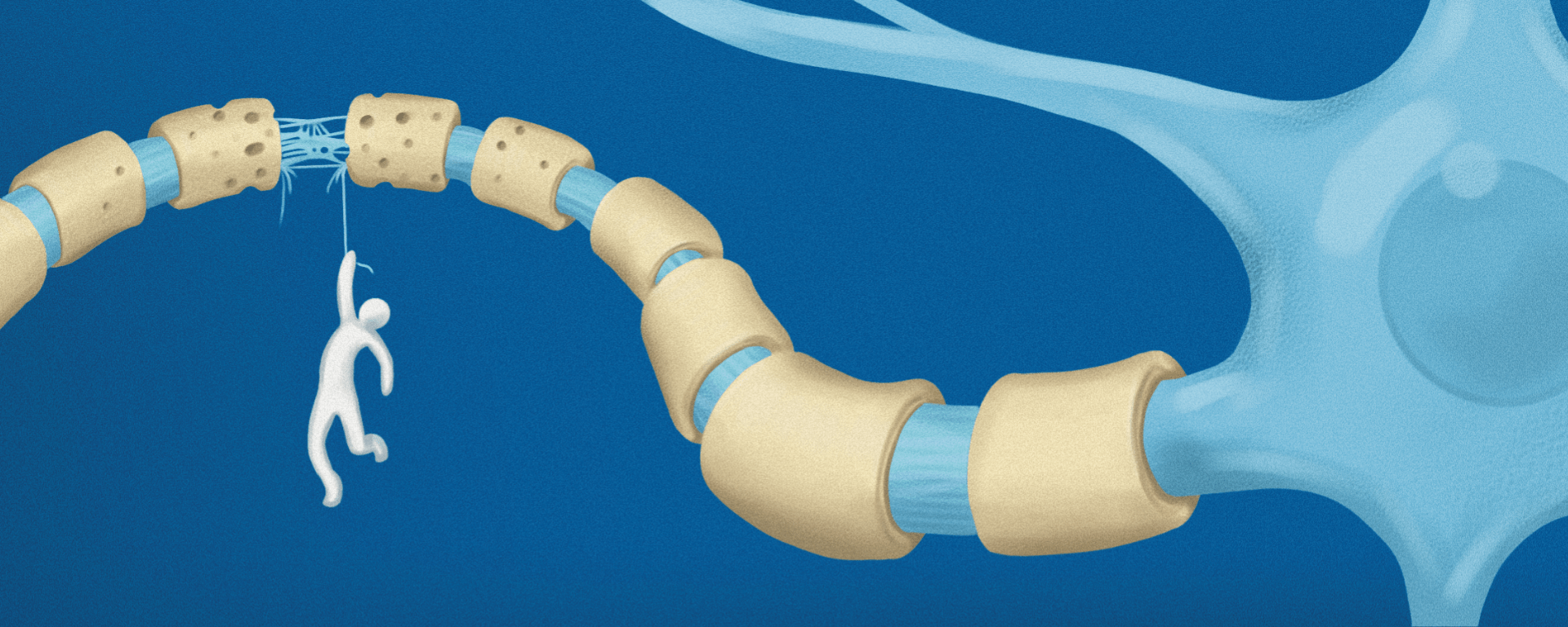
It can start with a feeling of numbness or burning. Then, a sudden sharp, shooting pain dashes across a limb. Even the weight of a blanket feels like thousands of tiny needles. This is the reality of living with a peripheral nerve injury (PNI).
Every day, athletes push their bodies to the limit. All it takes is a fall, collision, or repetitive movement to cause a PNI. These injuries are invisible but debilitating, and may lead to muscle weakness, numbness, pain, and autonomic dysfunction. Unlike broken bones and torn ligaments, nerve injuries are often difficult to recognize, diagnose, and treat. Although they account for a small proportion of sports injuries, delayed diagnosis and limited access to specialized care can leave athletes with lifelong pain, weakness, or loss of function.
The peripheral nervous system connects the brain and spinal cord to the rest of the body, and enables sensation, muscle control, and perception of and interaction with the environment.1 The peripheral nervous system is essential not just to athletic performance, but to quality of life; when it is damaged, sensation and movement are impacted.
PNIs may result from sudden trauma or repetitive overuse. Acute injuries—like those caused by forceful tackles, fractures, and dislocations—can stretch, compress, or sever a nerve.2 Repetitive motions common in sports like baseball, swimming, and cycling may cause tissue swelling that gradually compresses nerves, leading to chronic entrapment injuries. PNIs represent only 5.7% of sports-related injuries, though it is thought that PNIs are underrepresented due to poor recognition and diagnosis. Additionally, their impact is far more devastating than their frequency suggests.3 Without proper intervention, these injuries can become permanent, life-altering conditions.
Nerve damage is notoriously difficult to treat. Nerves are precisely organized structures and biologically prioritize signal transduction over regeneration.3 Therefore, nerve regrowth occurs at an extremely slow pace, growing at a rate of around one millimeter per day.4 Moreover, during the regeneration process, there are various vulnerabilities that can impede a full and complete recovery. For instance, axonal misdirection, i.e., failure of the nerve to regrow and contact its original target organs or muscles, results in poor functional recovery.4 Diagnoses and treatments require high levels of accuracy and precision to ensure proper recovery. Such requirements are particularly important for athletes, who utilize the peripheral nervous system for peak performance and coordination.
Diagnostic challenges are partially attributable to the inability to adequately visualise PNIs. Unlike a fractured bone, nerve damage cannot be detected with standard imaging techniques like X-ray.5 To overcome such limitations, classification systems have been implemented to standardize severity and predict recovery. These systems combine clinical examination, sensory testing, electromyography, and advanced imaging to understand the state of the injured nerve.5 Seddon’s classification system, the most widely used, divides PNIs into three tiers: neuropraxia, or temporary disruption of nerve signalling; axonotmesis, in which nerve fibers are damaged, but the surrounding structures remain intact; and neurotmesis, the complete severing of the nerve.6 Urgency of intervention increases with injury severity, meaning that standardized classification systems are critical to quality clinical care.
Increasingly, advanced imaging techniques like magnetic resonance imaging (MRI) and high-resolution ultrasound are being used to diagnose PNIs given their ability to provide detailed images of injured nerves and surrounding tissues, improving diagnostic accuracy.7 Despite their utility in assessing PNIs, such tools remain underused in Canada as long wait times and limited access often delay access.8 Without timely imaging and subsequent diagnosis, patients are at greater risk of delayed treatment or misdiagnosis, which risk the development of permanent nerve damage.
Even with a diagnosis, surgical treatment options for PNIs are limited, leading patients to rely solely on pain management, anti-inflammatory drugs, or physical therapy in hopes of achieving recovery.7 Surgery is reserved for severe PNIs like complete transections or injuries that persist despite rehabilitation. Surgical interventions like nerve grafts and direct repair are promising, but are associated with risk of infection, graft rejection, and improper regeneration of nerves.7
Treatment challenges are exacerbated by limited access to specialized care. Currently, only four clinics in Canada specialize in PNI, causing long wait times for assessment and surgery.9 A recent Ontario study reported median wait times of 27-45 days.9 Because successful nerve regeneration relies on timely intervention, even a week of delay can reduce the likelihood of a full recovery.10 Some patients opt to seek alternative care abroad, shouldering heavy medical fees to feel relief from the pain of nerve injury.
Emerging treatments aim to bypass invasive surgical intervention in hopes of improving access to care and enhancing recovery. These novel interventions are shifting PNI care towards a personalised approach. One promising avenue is the dual use of biological agents alongside stimulation modalities, in which the patient receives a localized delivery of neurotrophic factors and pluripotent stem cells.11 The treatment is delivered in tandem with non-invasive electric stimulation to support axonal growth and neurotrophic signalling. Less invasive than traditional surgical approaches, this dual support system promotes and assists nerve recovery and reduces the chance of adverse outcomes from graft rejection and nerve misalignment.
Overcoming the barriers to effective treatment of peripheral nerve injury is critical to restoring quality of life, especially for athletes, as the consequences of peripheral nerve injury extend beyond physical pain. Sports are often central to their identity and livelihood. Losing the ability to compete—or even to perform daily activities—can take a profound toll that alters the trajectory of an athletic career.
Treatment of PNIs requires an interdisciplinary, dynamic team of healthcare workers to share the weight of care and support the recovery of athletes. Sports medicine is an integrative field that requires professionals with surgical, rehabilitation, and pharmaceutical expertise to generate personalized plans. Every injury is different, and so is every person. Thus, each injury requires a combination of therapies that best aligns with recovery.
While peripheral nerve injuries are less common than other sports injuries, their consequences may be lifelong. Delayed diagnoses, limited access to specialized care, and the biological challenges of nerve regeneration mean that even minor injuries can have lasting effects. Advances in imaging and treatment modalities offer hope for improved recovery after PNI but implementing such innovations requires a shift toward accessible, specialized care. The translational gap between diagnoses and treatment results in worsened functional outcomes.10 Early intervention for PNIs can significantly reduce the possibility of permanent and debilitating health consequences. PNIs are more than just nerves and require a network of support to assist patients in their return to normal activity.
References
- Radić B, Radić P, Duraković D. Peripheral nerve injury in sports. Acta Clin Croat. 2018;57(3):561–9. doi:10.20471/acc.2018.57.03.20.
- Hirasawa Y, Sakakida K. Sports and peripheral nerve injury. Am J Sports Med. 1983;11(6):420–6. doi:10.1177/036354658301100607.
- Sheddon H. Three types of nerve injury. Brain. 1943;66(4):237–88. doi:10.1093/brain/66.4.237.
- Sunderland S. A classification of peripheral nerve injuries producing loss of function. Brain. 1951;74(4):491–516. doi:10.1093/brain/74.4.491.
- Farag JI, McDougall AN, Catapano M. Common sports-related nerve injuries seen by the electrodiagnostic medical consultant. Muscle Nerve. 2025;71(5):715–31. doi:10.1002/mus.28298.
- Baradaran A, El-Hawary H, Efanov JI, et al. Peripheral nerve healing: so near and yet so far. Semin Plast Surg. 2021;35(3):204–10. doi:10.1055/s-0041-1731630.
- Lorei M, Hershman E. Peripheral nerve injuries in athletes. Treatment and prevention. Sports Med. 1993;16(2):130–47. doi:10.2165/00007256-199316020-00005.
- Dong Y, Alhaskawi A, Zhou H, et al. Imaging diagnosis in peripheral nerve injury. Front Neurol. 2023;14:1250808. doi:10.3389/fneur.2023.1250808.
- Saggaf M, Novak CB, Baltzer HL, Anastakis DJ. Ontario wait times for delayed surgical treatment of traumatic peripheral nerve injury. Can J Surg. 2021;64(6):E636–E643. doi:10.1503/cjs.011920.

