

By Gisany Ravichandran
Graphic design by Anthony Bortolin
Receiving a dementia diagnosis marks the beginning of a complex, multifaceted story. Dementia encompasses over 50 conditions that cause decline in cognitive abilities, including memory and language.1,2 Among them, Alzheimer’s disease (AD) and vascular dementia are the most common forms.2
A dementia diagnosis, however, reveals only part of the picture. Different forms of dementia can share overlapping biological changes and clinical symptoms, while individuals with the same diagnosis can have diverse neurological profiles and symptom presentations.3 This complexity presents a significant obstacle in efforts to understand, diagnose, and treat dementia.
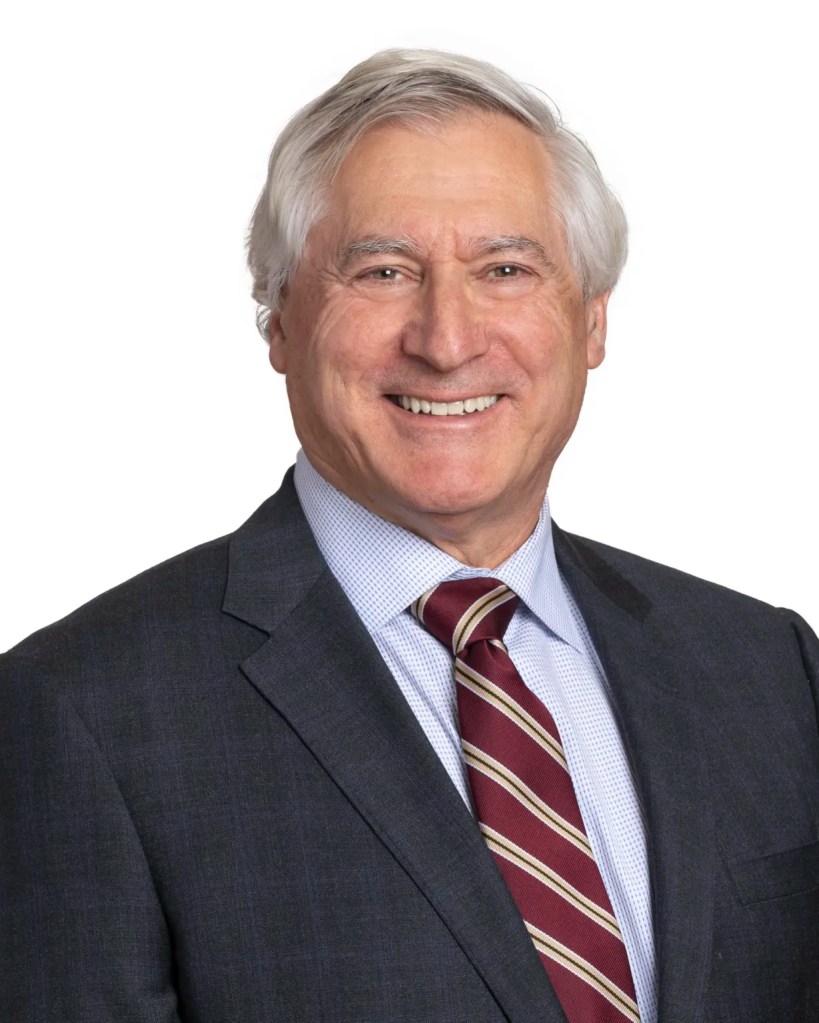
Cognitive Neurologist at Baycrest Health Sciences Centre, Senior Scientist and Chair in Cognitive Neurology and Innovation at Baycrest’s Rotman Research Institute, and Professor of Neurology in the Temerty Faculty of Medicine at the University of Toronto
Photo credit: Dr. Howard Chertkow
Recognizing this heterogeneity is becoming increasingly important. By 2050, approximately 1.7 million Canadians are expected to live with Alzheimer’s disease or related dementias (ADRD), underscoring the need for approaches that can prevent cognitive impairment and minimize cognitive decline in those affected.1,2 For Dr. Howard Chertkow, a cognitive neurologist at Baycrest’s Rotman Research Institute and a professor of neurology at the University of Toronto, delineating this complexity and developing approaches to improve cognition in people with or at risk of dementia is central to his work.
Early in his career, Dr. Chertkow became interested in language and memory problems. Through his clinical practice, he observed that language abilities can often decline in patients with AD and frontotemporal dementia (FTD)—a manifestation known as primary progressive aphasia (PPA).4 One symptom of PPA is anomia, difficulty recalling the words of objects, places, or people.4 Current treatment options for PPA do little to restore language function, highlighting a clinical need for more effective therapeutic approaches.4
Motivated by this gap, Dr. Chertkow turned to recent advances in localizing language function in the brain, which pointed to promising new therapeutic targets. Building on this finding, he partnered with Dr. Carlos Roncero to investigate whether transcranial direct current stimulation (tDCS)—a non-invasive neuromodulation technique that delivers electrical stimulation to modulate brain activity—could improve language-related cognitive abilities in people with anomic AD and FTD.4,5 Across ten sessions, Dr. Chertkow and his team used tDCS to stimulate the left inferior parietal lobe, a region implicated in language processing, while participants completed a naming task.4
Participants showed clinically meaningful improvements on the task that persisted for at least two weeks following the final stimulation session.4 These findings drove Dr. Chertkow and Dr. Roncero to explore the therapeutic potential of tDCS. After several clinical trials, their work revealed that tDCS does not affect all patients in the same way.6 Factors such as an individual’s baseline cognitive impairment level and the location of stimulation can influence its effectiveness, opening up new avenues for research into how the technique can be optimized.6,7 Dr. Chertkow’s team is now working with John Hopkins University and the University of Pennsylvania on an international clinical trial investigating tDCS in people with PPA.
Another important area of Dr. Chertkow’s research stems from his role as scientific director of the Canadian Consortium on Neurodegeneration in Aging (CCNA), an organization that unites leading dementia researchers across Canada to advance interdisciplinary research in the field.8 One of CCNA’s goals is to ensure dementia research captures the clinical diversity of those living with the condition. This diversity is frequently underrepresented in pharmaceutical trials and datasets, which have historically relied on “clean” single-disease dementia patients. This approach can “lump together subgroups or clusters [of a dementia form] that might have very different mechanisms and respond differently to medications,” Dr. Chertkow explained.
To address this, Dr. Chertkow and a hundred Canadian dementia scientists working within CCNA collaborated in the development of the Comprehensive Assessment of Neurodegeneration and Dementia (COMPASS-ND) cohort, which captures the real-world heterogeneity of dementia by including individuals across the full dementia spectrum, such as those with more than one form of dementia.8 Leveraging this rich dataset, his lab is currently working to characterize the heterogeneity of ADRD by identifying mechanistic subgroups defined by unique biological processes. Distinguishing these subgroups may help explain differences in disease progression and treatment responses from patient to patient.
One biological feature that Dr. Chertkow theorized may distinguish these subgroups is peripheral inflammation, a potential biomarker and risk factor for dementia that can be measured in the blood.9 Using the COMPASS-ND cohort, he and his Scientific Associate, Dr. Bruna Seixas-Lima, have led a study that identified varying levels of inflammation across ADRD subgroups.9 These differences in peripheral inflammation reflect potential mechanistic divisions that can help researchers characterize a patient’s diagnosis and disease trajectory.9,10
Studies such as this have helped the characterization of dementia advance considerably. However, translating this knowledge into effective treatment options and prevention strategies remains a challenge, with patients often left wondering what they can do to stop it from progressing further. For Dr. Chertkow, this question highlights a critical gap in dementia research. “The prevention therapy for [dementia] has lagged by decades behind our ability to diagnose,” he explained.
Closing this gap is now a major focus of Dr. Chertkow’s work as Co-Scientific Director of the Kimel Family Centre for Brain Health & Wellness. Working with older adults with no or mild memory loss, the research-based community centre uses assessments of cognition and physical health to identify modifiable risk factors and develop personalized interventions targeting exercise, nutrition, and mental health.11 By modifying lifestyle risk factors, Dr. Chertkow and co-Scientific Director Dr. Nicole Anderson hope to make meaningful progress toward preventing cognitive decline.
Together, Dr. Chertkow and his team’s efforts reflect a broader shift in dementia research: one that embraces the heterogeneity of dementia and centres around the creation of personalized approaches to treatment and prevention. From exploring the therapeutic potential of tDCS, to uncovering mechanistic subgroups in ADRD, to modifying lifestyle risk factors, his research spans the continuum from diagnosis to treatment to prevention.
“We are in what could be a critical transformative decade in terms of breakthroughs for therapy and prevention,” Dr. Chertkow noted. Although challenges remain, the field is entering an era of evidence-based optimism.
References
- Navigating the path forward for Dementia in Canada: The Landmark Study Report #1 [Internet]. [cited 2026 Aug 10]. Available from: https://alzheimer.ca/en/research/reports-dementia/navigating-path-forward-landmark-report-1
- The many faces of dementia in Canada [Internet]. 2024 [cited 2026 Aug 10]. Available from: https://alzheimer.ca/en/the-many-faces-of-dementia-in-canada-landmark-study-volume-2
- Ryan J, Fransquet P, Wrigglesworth J, et al. Phenotypic Heterogeneity in Dementia: A Challenge for Epidemiology and Biomarker Studies. Frontiers in Public Health. 2018;6; 381505. doi:10.3389/fpubh.2018.00181
- Roncero C, Kniefel H, Service E, et al. Inferior parietal transcranial direct current stimulation with training improves cognition in anomic Alzheimer’s disease and frontotemporal dementia. Alzheimers Dement (N Y). 2017;3(2):247-253. Published 2017 Mar 24. doi:10.1016/j.trci.2017.03.003
- Thair H, Holloway AL, Newport R, et al. Transcranial Direct Current Stimulation (tDCS): A Beginner’s Guide for Design and Implementation. Front Neurosci. 2017;11:641. Published 2017 Nov 22. doi:10.3389/fnins.2017.00641
- Roncero, C and Chertkow, H. One Form of tDCS Does Not Fit All: The intersectionality of severity level and expected tDCS benefit. Alzheimer’s Dement. 2023;19:e082235. doi:10.1002/alz.082235
- Roncero C, Service E, De Caro M, et al. Maximizing the Treatment Benefit of tDCS in Neurodegenerative Anomia. Front Neurosci. 2019;13:1231. Published 2019 Nov 22. doi:10.3389/fnins.2019.01231
- Chertkow H, Borrie M, Whitehead V, et al. The Comprehensive Assessment of Neurodegeneration and Dementia: Canadian Cohort Study. Can J Neurol Sci. 2019;46(5):499-511. doi:10.1017/cjn.2019.27
- Lima BS, Rosa‐Neto P, Phillips N, et al. Peripheral Inflammation subgroups in Alzheimer’s disease and related dementias. Alzheimers Dement. 2025;20(Suppl 1):e090393. Published 2025 Jan 3. doi:10.1002/alz.090393
- Seixas-Lima B, Rosa-Neto P, Phillips NA, et al. Peripheral inflammation in a Canadian cohort of neurodegenerative conditions: Occurrence, determinants, and impact. J Alzheimers Dis. 2026;109(2):1020-1035. doi:10.1177/13872877251401611
- The Kimel Family Centre: The Worlds First Research Based Community Centre dedicated to Brain Health [Internet]. 2025 [cited 2026 Aug 18]. Available from: https://baycrestfoundation.org/articles/research/baycrest-kimel-family-centre/


You must be logged in to post a comment.