

By Rivka van Klei
Graphic design by Qingyue Guo
“Working as a rights advisor [that involved] talking to patients about their rights and experiences opened my eyes to the broader pieces that impact someone’s overall care and outcomes,” shares Lauren de Freitas, Institute of Medical Science (IMS) alumna and Senior Specialist at the Mental Health and Addictions Centre at Ontario Health.
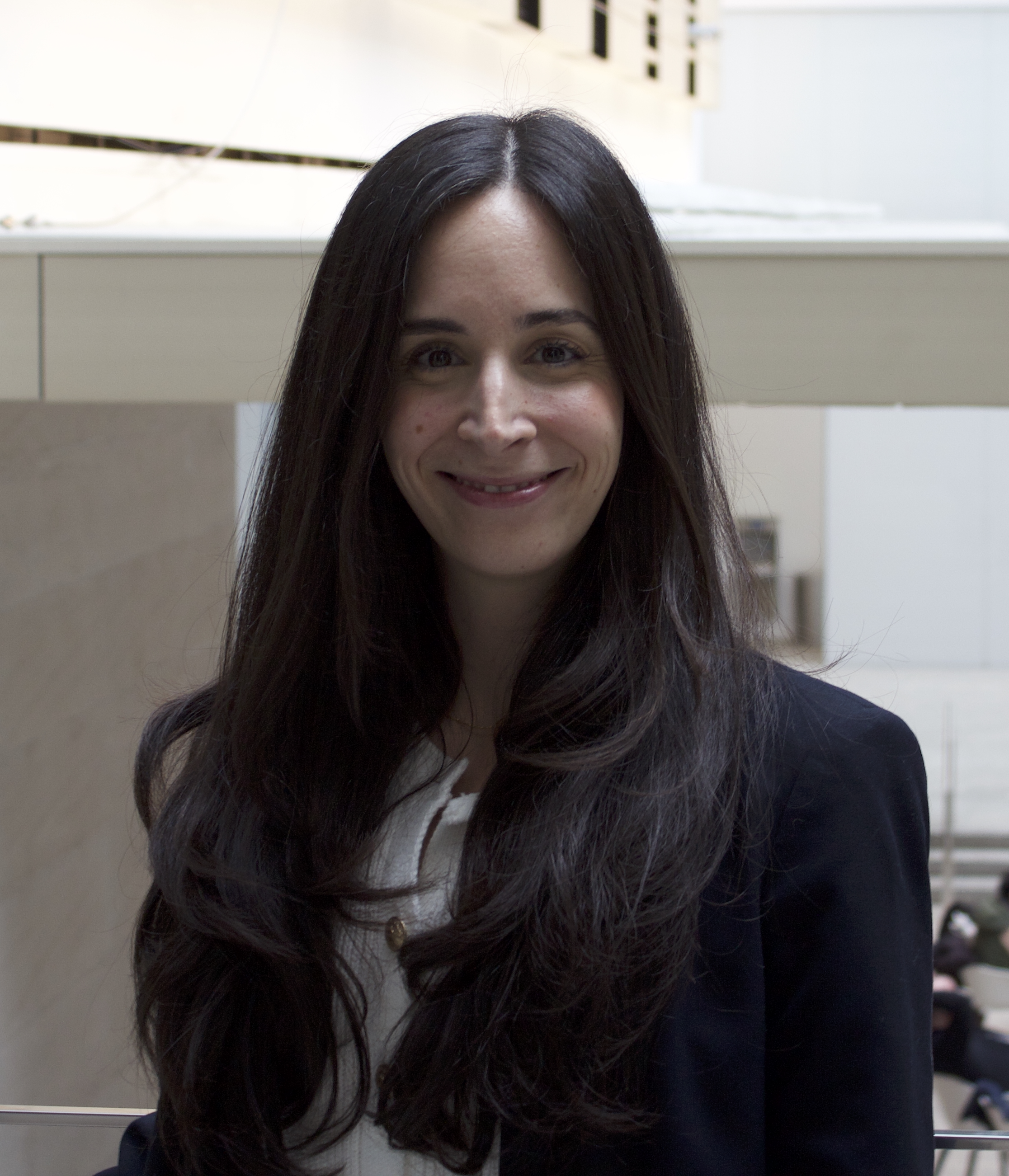
Senior Specialist, Mental Health and Addictions Centre of Excellence at Ontario Health
Photo credit: Jino Lim
Previously, in her role as a rights advisor at the Ontario Ministry of Health and Long-Term Care, Lauren helped individuals—particularly those under involuntary psychiatric care—understand and exercise their legal rights. Lauren’s undergraduate experience as a rights advisor sparked her inspiring journey into mental health and policy. While preparing for medical school, looking for research experience, Lauren decided to pursue a master’s degree at the IMS. “I’m really happy I made that choice, because I found that I loved research.”
Under Dr. Sergio Rueda’s supervision at the Institute of Mental Health Policy Research at the Centre for Addiction and Mental Health (CAMH), Lauren examined how cannabis might be used more safely for people, both psychologically and physiologically. Lauren emphasized her strong relationship with her supervisor in developing confidence as a researcher. “Dr. Rueda was a great mentor, giving me guidance and the autonomy to figure things out on my own. That really helped shape my thinking and informed my writing.”
Dr. Rueda also included Lauren in a project with the Pan American Health Organization, where she helped develop a course called ‘Update on Cannabis Uses and Its Implications for Public Health’, on cannabis use in a clinical setting. “It’s interesting to reflect on it, because it’s similar to the work I’m doing now—creating clinical expectations that will be implemented throughout the province.” Lauren’s interest in the policy side of mental health grew. “In medicine, you often see outcomes happen in real time when supporting patients. On the research side, the work is so important, but it informs change slowly. Working in policy feels like a nice middle ground.”
The IMS community also benefitted from Lauren’s active engagement. During her MSc, she served as the Director of Wellness at the IMS Students’ Association (IMSSA), contributed to a timely episode of Raw Talk focused on cannabis legalization, and helped recruit Dr. Danielle Martin to speak at UofT Talks, advocating for strengthening Canada’s public health system. Lauren is still active within the IMS community, and helped co-create the IMS Career Mentorship Program, where doctoral students are mentored by an alumni or faculty mentor in their desired career. Reflecting on these experiences, Lauren said she is still in touch with many people she met through these initiatives. “It’s so helpful to build that bigger community.”
While transitioning from graduate school into the workforce was overwhelming, Lauren was inspired by the keynote speaker at her master’s convocation ceremony, who said: “When you enter a new space, there might be a bit of an internal struggle, a learning curve. Don’t put too much pressure on yourself at that time to be perfect from day one—look at it as an opportunity for growth.” Lauren reflects that adopting this kind of growth mindset helps ease imposter syndrome.
After graduation, Lauren first contributed to a book entitled ‘Cannabinoids and Pain’, and a review article called ‘Clinical Practice Guidelines for Cannabis and Cannabinoid-Based Medicines in the Management of Chronic Pain and Co-Occurring Conditions’. She then worked at the Slaight Family Centre for Youth in Transition at CAMH as a research analyst exploring early psychosis intervention. Although she enjoyed research, Lauren remained interested in exploring jobs in policy work and kept her eye open for job postings. “I saw this posting came up for [Ontario Health’s Mental Health and Addictions Centre of Excellence], which, at the time, was being developed. I thought it was a great opportunity to join something that was being built from the ground up.”
Now, Lauren is a Senior Specialist at Ontario Health. “Ontario Health is responsible for overseeing and coordinating the quality and delivery of health services and outcomes across the province, and our department focuses on that for mental health and addictions.” Guided by examples like Cancer Care Ontario, Lauren focuses on standardizing substance use care across the province. IMS was instrumental in equipping her with critical skills in knowledge translation and evidence synthesis that she now relies on to convert dense scientific research into clear, actionable, and evidence-based care standards.
When asked about a typical workday, Lauren laughed, explaining its dynamic nature: “It changes often. Currently, it focuses on defining the clinical aspects of care.” In her role, Lauren asks important questions, such as ‘What does high quality care look like for provincial substance use programs?’ She explains, “We are privileged to collaborate with various people—clinicians, administrators, and people with lived experience. We codesign with people who have navigated the system, ensuring the work reflects those receiving care.” Lauren admitted that although hearing stories of affected individuals can be emotionally challenging, she finds it impactful to hear how they share their experiences and advocate for change.
Once the guidelines are established—such as standards for rapid-access addiction medicine clinics and bed-based withdrawal management services—Lauren transitions to implementation planning and scaling changes across the province. Then, she and her team monitor how well programs achieve the outlined expectations. Their work ensures that no matter where a person accesses a particular service throughout the province, they receive the same evidence-based, high-quality care. “It is this iterative process that has been exciting work to do. Throughout my career, I have always been drawn to the system and policy lens, so it is nice to see where I currently am.”
Lauren and her team’s work at Ontario Health resulted in the first clinical program established for substance-use disorders, called the Substance Use Disorders Integrated Care Pathway (SUD ICP). SUD ICP is a clinical pathway for people presenting to emergency departments for alcohol or opioid-related concerns, providing tailored care and guidance to the next step based on their goals, preferences, and needs. Reflecting on the development of SUD ICP, Lauren noted: “Seeing this program starting to be implemented across the province and knowing its impact on patient care and health as well as on providers and the overall system has been incredibly meaningful. It is exciting to see how far it has come.”
There are challenges that come with her job, too. Lauren explained that because her team is just beginning to standardize mental health and addictions care across the province, there is a lot of work to do, and limited resources add to the challenge. However, Lauren and her team remain dedicated and passionate towards their work. “Even though we’re small, we’re also very mighty.” Another challenge is that evidence-based care does not always align with political evidence or public opinion. “It’s hard to navigate at times, but that also drives my excitement and passion for highlighting high-quality, evidence-based care in the mental health and addictions sector.”
Considering how IMS helped shape her path, Lauren remarked: “My time at IMS taught me how to think critically, lead with purpose, and use data to drive meaningful change—all of which are lessons that continue to shape every step of my career in mental health and addictions.”


You must be logged in to post a comment.