
By Mya Chronopoulos
Graphic design by Vicky Lin
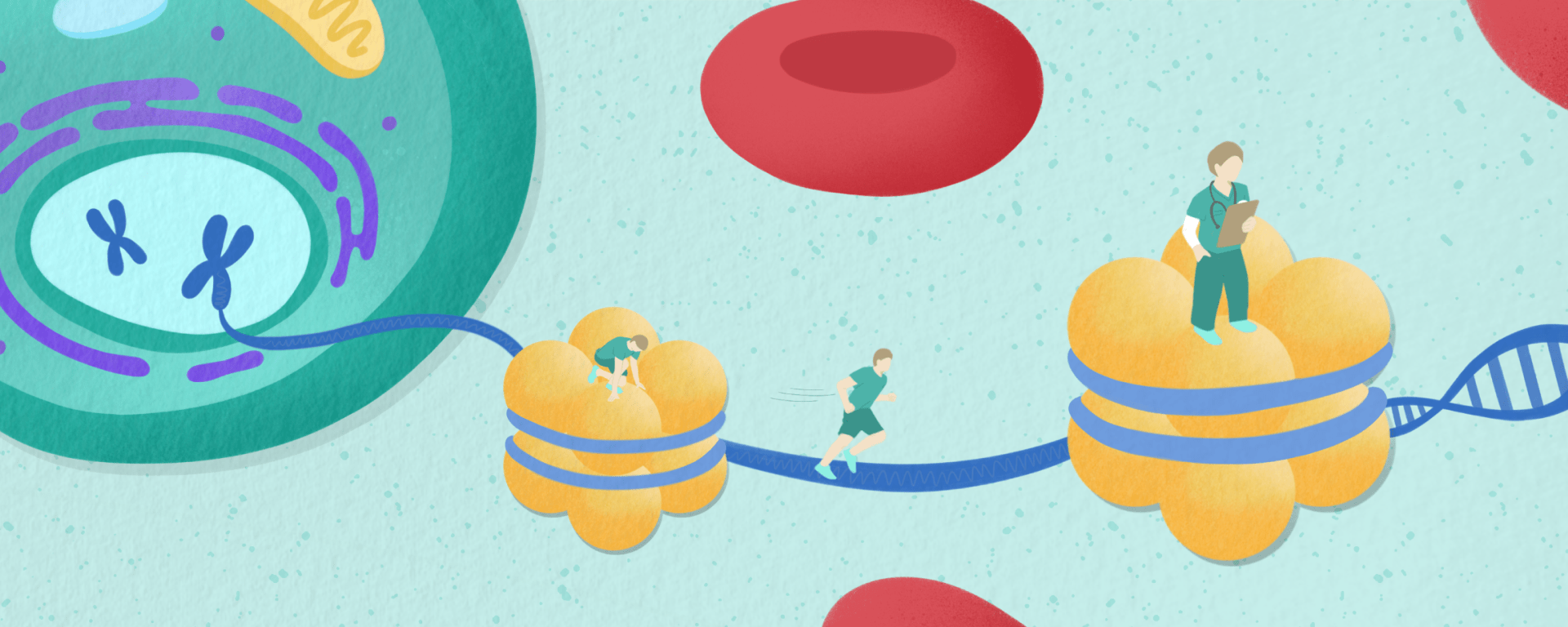
In oncology, there are moments when everything moves fast: a patient’s scan changes, a treatment stops working, a crucial decision needs to be made. Conversely, there are the long stretches of monitoring, adjusting, and patiently waiting. For Dr. Mitchell Elliott—medical oncologist and PhD research trainee at the Institute of Medical Science (IMS)—that constant shift between urgency and patience is not just the reality of his clinical practice, it also mirrors the entire journey that led him to where he is today.
Dr. Elliott’s path into medicine began at the University of Windsor, where he completed three years of undergraduate studies in Molecular and Cell Biology before being accepted into medical school at the University of Toronto—something he still describes as a “fluke”, with disbelief. “I have no idea how that happened,” he says, with a modest dismissal. Entering medical school early accelerated his career path but came with many unexpected challenges.
Following medical school, Dr. Elliott went on to complete his residency in internal medicine, and later, a Fellowship in medical oncology, all at the University of Toronto. He is now pursuing two additional educational milestones: an advanced clinical training program in drug development at Princess Margaret Cancer Centre, and a PhD candidate at the IMS under the supervision of Dr. Dave Cescon. His research focuses on liquid biopsies—specialized blood tests that can detect cancer-related changes—and on modeling how cancers develop resistance to treatment.
In short, Dr. Elliott is someone who makes you wonder when exactly he sleeps. But if you ask him about the secret to navigating a career this long and demanding, his answer is almost reflexive: “It’s a marathon, not a sprint. I tell myself that all the time. I’d almost get that tattooed on my body.”
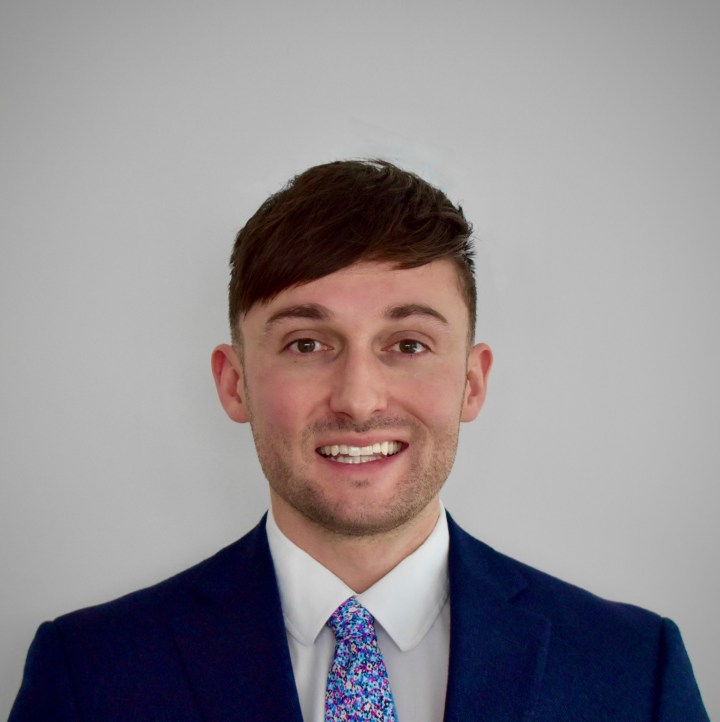
IMS PhD Candidate under the supervision of Dr. Dave Cescon at the Princess Margaret Cancer Research Centre
Photo credit: Mitchell Elliott
Dr. Elliott was careful to distinguish his path from the classical MD/PhD trajectory, where the doctoral training is completed simultaneously with medical training. His route is what he calls “circuitous”—completing all the clinical training before beginning the doctoral training. The advantage of this route, he explains, is that his research questions are shaped by the clinical problems he has already encountered in practice, allowing him to investigate issues that arise directly from patient care. However, this path was not without its hardships. One of his most unexpected challenges arose from the very thing that accelerated his pathway—getting into medical school early. Having entered medical school after three years of undergraduate studies, he technically never completed an honours bachelor’s degree. This fact nearly stopped him from pursuing a PhD, as a full 4-year bachelor’s degree is a typical requirement. “I had done 10 years of postgraduate training at the time,” he says, “and not having that one undergraduate fourth year could have prevented me from pursuing this opportunity.” The IMS, with its admissions structure, turned out to be the one doctoral program to which he could apply. “I’m really thankful that the structure exists,” he reflects. Today, he is an enthusiastic advocate for the IMS precisely because of that flexibility, and what it represents for mature students navigating unconventional paths.
Dr. Elliott’s initial pull towards research was not a sudden revelation, but rather a slow burn. During his undergraduate years, he found himself in a lab with three close friends, all of whom also went on to complete MD/PhD programs. The lab environment, he recalls fondly, “stimulated curiosity.” By the first month of medical school, he was already back in a lab, running experiments, and considering how science and clinical practice could support one another. “Medicine can be very different from laboratory science,” he explained, “and having both of them together makes you think differently, and approach problems differently.” Being equally comfortable with a patient in clinic and a dataset in the lab and being able to ask relevant scientific questions because of what he sees in practice, and to approach patient care with the rigor of the scientific method, are perspectives he has developed by joining his clinical work with being a researcher. Dr. Elliott analogized this symbiotic relationship to the advantages of being bilingual, explaining, “being able to speak both languages [clinical medicine and laboratory science], having both opportunities, has been important for my career in shaping how I practice medicine.”
That balance between science and clinical practice is something Dr. Elliott credits, in part, to the IMS. For him, the most distinctive feature of this program is its diversity—not just of students, but of ideas.
Among his most impactful experiences within IMS was a bio-startup course (MSC1121H) that introduced him to the business side of translating scientific discovery into clinical practice. Additionally, he highlighted another stand-out course, Molecular Medicine in Human Genetic Disease (MSC2010Y)—instructed by Dr. Lucy Osborne—as particularly formative. “Getting that different perspective—different ways of tackling very similar problems—has been really helpful,” he says.
Dr. Elliott is candid about the challenges he experiences in engaging fully with the IMS community as a mature student with simultaneous clinical responsibilities. Between clinic hours and lab work, the community-building aspects of the program can be harder to access. However, what he has been able to participate in, he values deeply. “The freedom to learn,” he says, contrasting with the highly prescriptive nature of medical training, “is one of the strengths of the program.”
Above all else, for Dr. Elliott, it is the IMS community that has left the deepest impression. Asked about his favourite IMS memory, he didn’t describe a single moment. “It’s the people,” he said simply. “There are some really good people in IMS, people who really care, and who really want to impact the lives of others and improve outcomes. Just being in that type of environment, which supports and prioritizes that, has been very refreshing.”
Reflecting on his academic experience, there is one piece of advice Dr. Elliott returns to repeatedly—for students, for mentees, and for himself: the marathon metaphor. He first heard it from mentors early in his training. “Everyone tells you, once you’re in medical school, then you’re good,” he recalls. “Then you match into residency, then you’re good. But it’s not like that.” He quickly learned the importance of work-life balance. He got married during his training. He has a dog. He takes vacations. He uses all his allotted time off and actively encourages others to do the same. “Your job isn’t being a student the entire time,” he says. “You are also an individual who needs to learn and develop in other ways. At the end of the day, it’s about taking care of yourself.”
His other enduring piece of advice: stay curious. In a training environment that rewards knowing the answer, he values asking why, slowing down, and taking a moment to see where a question will lead. “Being curious is where I learn the most,” he says. “You are trying to actually understand why things happen, and I think that has helped me develop as a scientist.”
It is this advice, it turns out, that Dr. Elliott also offers his patients. In oncology, he tells them, there will be moments that demand everything at once and long stretches that ask only for steadiness. “There are times where we have to sprint,” he says, “and then there are times where we’re going to slow down. I’m trying to practice what I preach.” For someone who entered medical school before most had finished an undergraduate degree, who spent over a decade in medical training, and who is still somewhere in the middle of his own marathon, that might be the most important piece of advice he gives to the IMS community. In the end, the goal is not just about how quickly you can arrive at your destination, but also about moving forward with intention and to recognize that each step along the way is part of the journey that shapes you.


You must be logged in to post a comment.