

By Rivka Zeng-van Klei & Gisany Ravichandran
Graphic design by Vicky Lin
On May 7, 2026, Manitoba officials declared a public health emergency due to a surge of 325 new human immunodeficiency virus (HIV) cases—over 3.5 times the national average.1 Dr. Sean Rourke, alarmed, immediately reached out to the chief public health officer to advise him on the next steps to mitigate the epidemic. “HIV is a solvable problem in Canada,” said Dr. Rourke.
This crisis is not the first time Dr. Rourke has been at the forefront of discussions addressing complex public health challenges through collaboration and advocacy. As a clinical neuropsychologist at St. Michael’s Hospital (SMH) MAP Centre for Urban Health Solutions, professor of psychiatry at the University of Toronto (UofT), and director of REACH Nexus, a national population health research centre funded by the Canadian Institutes of Health Research, Dr. Rourke is passionate about solving the HIV epidemic across Canada.
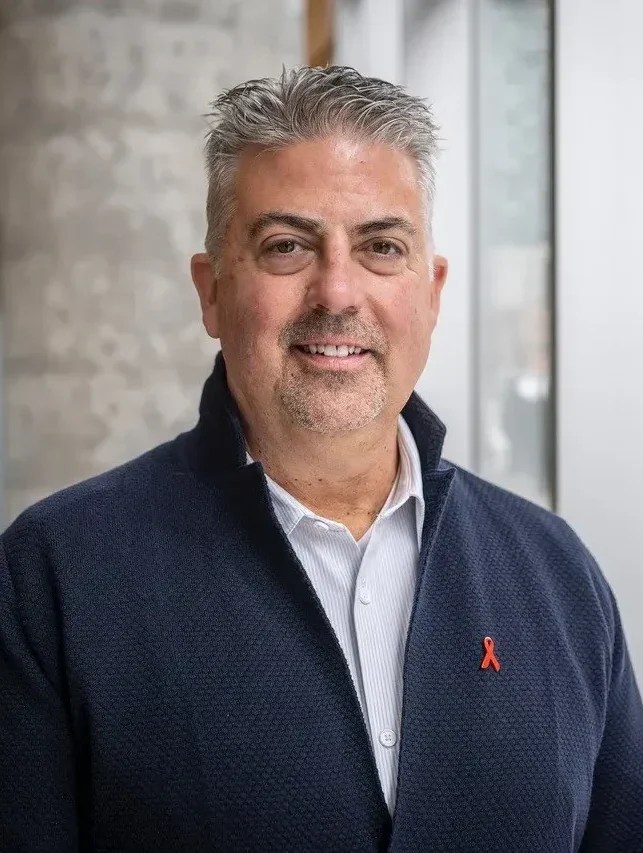
Clinical Neuropsychologist and Scientist at St. Michael’s Hospital
Professor of Psychiatry at the University of Toronto
Photo credit: Dr. Sean B. Rourke
This drive to understand problems and find solutions has been a defining theme in Dr. Rourke’s life. “I always liked how things kind of fit together; I used to take bikes apart and put them together,” said Dr. Rourke reflecting on his childhood. Taking this mindset, Dr. Rourke pursued an undergraduate degree in biology at the University of Windsor to understand more about various biological systems. Early on, he spent his summer breaks working in genetics and physiology labs, quickly developing an interest in how physiology may intersect with psychology through his exposure to clinical psychology in his childhood home. This curiosity evolved into a lifelong focus on solving problems, guided by a simple question: “When things go wrong, how do you make them better?”
Dr. Rourke decided to pursue a career that allowed him to further explore this intersection between the brain and human behaviour. He followed in his father’s footsteps into clinical neuropsychology and attended the University of California San Diego (UCSD). At UCSD, Dr. Rourke was trained as a clinician, but he remained passionate about research, noting, “I love being a part of that space [in academia] where you are always learning from others and teaching others.” His PhD graduate thesis examined how increasing age and other factors impacted brain recovery after periods of substantial alcohol abuse, which helped him better understand disease trajectories and how they can be changed. Through this research, he recognized the importance of translating knowledge into meaningful interventions that improve patients’ lives.
After completing his final internship for his PhD at UCSD, Dr. Rourke explored potential career opportunities. There was a job opening at SMH, an epicenter for research on HIV and newly emerging combination therapies that were transforming care at the time in the mid-90s.2 Drawn by the opportunity and missing his life in Canada, Dr. Rourke turned down a job offer from the UCSD Faculty of Medicine, packed his bags, and moved to Toronto to start Canada’s first clinic for HIV-related cognitive concerns. At SMH, he connected with UofT through the Department of Psychiatry, and from there, with the Institute of Medical Science (IMS), where he found his academic home. He expresses, “I love IMS because I can have a place in the IMS community.” Through his connections with IMS faculty and students, he found a community that fosters collaboration, learning, and mentorship.
From his research on alcohol substance use recovery, Dr. Rourke then applied this knowledge to his new role in HIV care. In his clinical practice, Dr. Rourke saw first-hand the long-standing barriers to accessible healthcare many of his patients living with HIV encountered, including access to testing, housing instability, economic insecurity, and social stigmatization. He realized that clinical care alone could not address many of these factors affecting HIV prevention and treatment. “We have therapeutic cures to stop the HIV epidemic, we just need the resources and efforts,” Dr. Rourke mentioned, highlighting the need for more public health supports.
Driven by this idea, Dr. Rourke decided to devote his efforts to developing public health initiatives that directly improve access to HIV care and support. In the early 2000s, Dr. Rourke extended his work beyond hospital settings, engaging directly with the HIV-affected community.
In 2004, he was appointed as the first Scientific and Executive Director of the Ontario HIV Treatment Network (OHTN) that is funded by the Ontario Ministry of Health. In this role, he launched the Positive Spaces, Healthy Spaces study that reframed stable housing as a necessity for healthcare rather than just a social issue, driving significant changes to rental housing policies that helped people with HIV overcome housing challenges. “It is the most underserved that have the most disadvantage,” Dr. Rourke explains, “and when you solve those problems, you raise up the levels for everyone else.” Under Dr. Rourke’s leadership, the OHTN became internationally recognized for its community-driven, evidence-based impact on health care policies in HIV. These accomplishments underscore the power of challenging long-standing policies to improve the lives of communities most underserved by the healthcare system.
When the COVID-19 pandemic emerged, Dr. Rourke decided to shut down his clinic after 25 years of practice. The pandemic had exacerbated barriers to HIV healthcare. Thus, it was important, now more than ever, to focus his efforts on HIV testing accessibility. Dr. Rourke focused more exclusively on his role of director of REACH Nexus, where he has led clinical trials that have secured Health Canada approval for five HIV and syphilis rapid tests in five years, including Canada’s first HIV self-test (2020) and first oral swab HIV self-test (2025). When the COVID-19 pandemic disrupted in-person testing services, he launched I’m Ready, Canada’s first national HIV self-testing initiative, which has distributed close to 40 000 HIV self-tests. Additionally, he drove efforts for dual HIV and syphilis testing in response to Canada’s congenital syphilis crisis in 2023. These initiatives saved the lives of thousands of undiagnosed people with HIV and sexually transmitted and blood-borne infections (STBBI) by giving them access to the care they needed, when they needed it.
In recognition of his efforts, Dr. Rourke was awarded the 2026 President’s Impact Award by UofT. This award acknowledged his transformative, equity-driven contributions towards advancing accessibility to HIV/STBBI testing for communities most affected by traditional and structural barriers.
HIV testing, however, is just the first step towards solving the HIV epidemic. People living with HIV often experience a delay between the time of diagnosis and when they receive treatment—a critical period for HIV prevention. In response, Dr. Rourke recently launched Rapid Testing and Linkage to Care (Rapid TLC), a national initiative focused on his next goal: reducing the gap between testing, diagnosis, and HIV and/or other STBBI treatments. By integrating polymerase chain reaction (PCR) testing into community-based settings, this program will reach communities that have been undiagnosed and historically ignored by the healthcare system.
When asked if he encountered resistance when challenging the government to prioritize addressing these issues, Dr. Rourke notes, “None of [the challenges] are insurmountable. It’s really the mindset of not settling for them, and you just find a way.” Dr. Rourke is an exemplary role model who actively works within government spaces to implement solutions and influence health care policies. He continues to redefine Canada’s healthcare system and push beyond human-made barriers. To young researchers aspiring to make an impact in the world, Dr. Rourke encourages them to follow their hearts and not to take “no” for an answer. He emphasizes, “Do [science] for a reason that will improve humanity.”
References
1. Province of Manitoba. Province Declares a Public Health Emergency to Combat the Spread of HIV [Internet]. Manitoba: 2026, May [cited 2026 May 28]. Available from: https://news.gov.mb.ca/news/index.html?item=73717&posted=2026-05-07
2. Shyr ZA, Cheng YS, Lo DC, et al. Drug combination therapy for emerging viral diseases. Drug Discov Today. 2021;26(10):2367–76. doi:10.1016/j.drudis.2021.05.008


You must be logged in to post a comment.