
By Melina Alborzi
Graphic design by Qigyue Guo
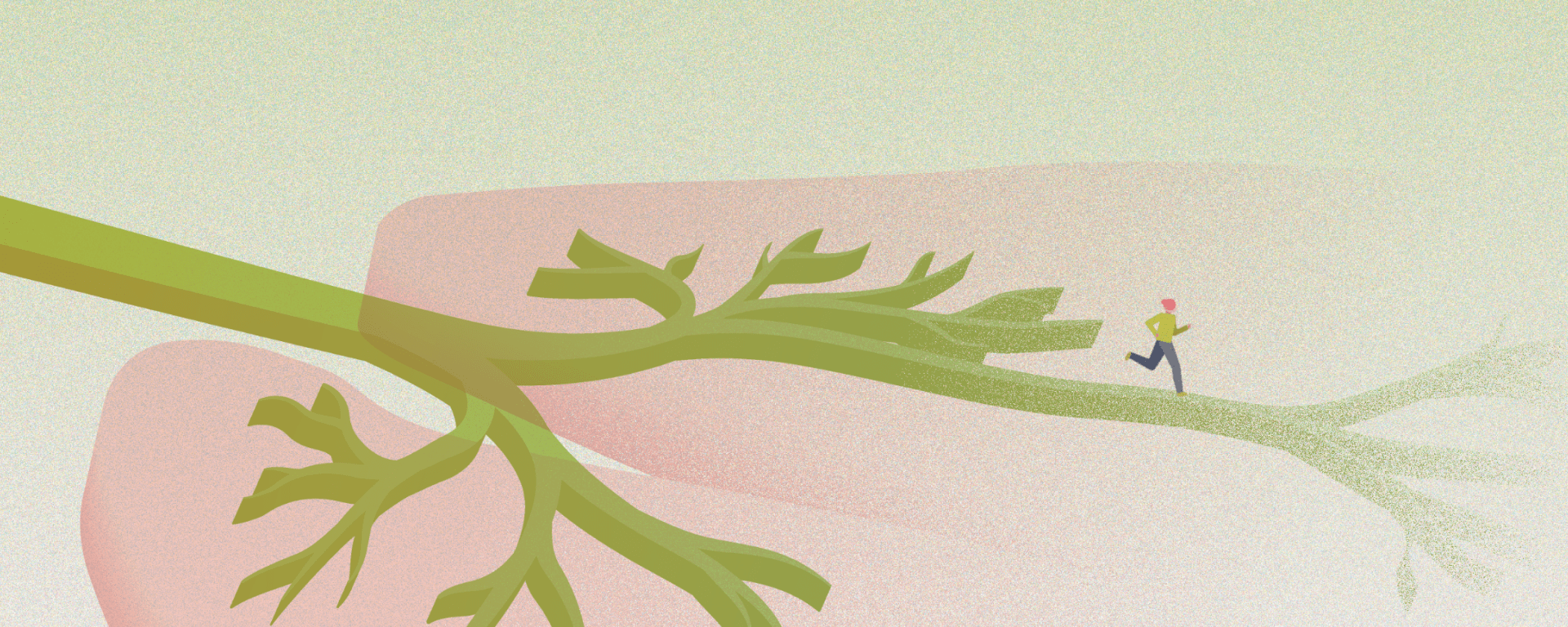
For people with chronic lung disease, breathlessness can make even simple daily movements exhausting. Remarkably, one of the most powerful treatments is not medication but exercise, which improves symptoms, daily function, and quality of life. Dr. Dmitry Rozenberg, a respirologist and clinician-scientist at University Health Network and an associate professor at the University of Toronto, studies how exercise can help people with chronic lung disease regain function and independence.
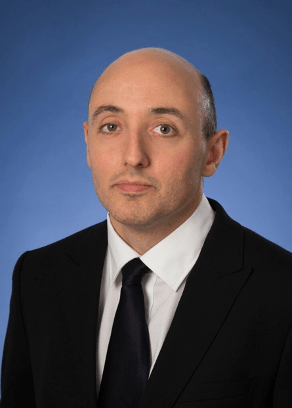
Respirologist and Clinician-Scientist
University Health Network, Associate
Professor, Department of Medicine,
University of Toronto, National Sanatorium Association Chair in Respiratory Rehabilitation, West Park Healthcare Centre.
Photo credit: Dr. Dmitry Rozenberg
He began his training in kinesiology at York University and went on to complete medical school at the University of Ottawa, followed by internal medicine and respirology training in Toronto. His education in exercise and fitness assessment provided the foundation for a pivotal three-month rotation at West Park Healthcare Centre, where, under the mentorship of Dr. Roger Goldstein and team, he discovered the transformative effects that exercise can have on advanced lung disease. Patients were able to walk a greater distance and manage their daily activities easier post-rehabilitation. This early experience shaped the trajectory for his career.
The principles of exercise training have similar applications to patients and athletes: muscles and the heart adapt to demands placed on them, building muscle strength with increasing demand.1 Like medications, exercise can be prescribed at a defined dose, frequency, and intensity. In chronic lung disease, however, dose and frequency depend heavily on the patient’s starting point: how much breathlessness they feel and how low their blood oxygen drops during activity.1
These features of breathlessness are especially pronounced in advanced lung diseases, such as chronic obstructive pulmonary disease (COPD) and interstitial lung disease, promoting a self-perpetuating cycle of inactivity. Breathlessness can discourage movement, which can contribute to muscle weakness and earlier fatigue, limiting activity.2 Symptoms often extend beyond the lungs; patients may experience anxiety, poor sleep, and weight loss, as the extra effort of breathing requires more calories than most patients can replace.2
Exercise directly addresses loss of strength and stamina. Dr. Rozenberg’s research evaluates how exercise can be prescribed most effectively for individuals with chronic lung disease. In a study of lung transplant candidates, Dr. Rozenberg and colleagues measured muscle mass and physical function. Low body muscle mass was observed in 16 percent of patients, but strength deficits were far more prevalent: half of the study group had low quadriceps strength and nearly half performed poorly on physical function tests, even when muscle mass was normal.3 The findings suggest that skeletal muscle strength and function may be important prognostic markers, as quadriceps strength was associated with post-transplant hospital length of stay.3 Physical inactivity, low oxygen, and inflammation can all reduce muscle strength and endurance, which exercise training can help offset.
To assess whether targeted training restores muscle function, Dr. Rozenberg’s team enrolled transplant candidates with advanced lung disease in an aerobic exercise and resistance training program, measuring performance through simple tasks like rising from a chair five times, balance, and 4-meter walk test. Participants demonstrated meaningful improvement in physical performance, with the greatest benefit seen in those who were frail, or physiologically vulnerable, at the start of the program.4 These findings challenge the notion that frailty is an inevitable consequence of advanced lung disease and demonstrate that even patients needing transplant can regain strength and function through exercise.
Frailty, however, can be difficult to measure consistently in the clinical setting, and its utility for predicting transplant outcomes is evolving. In a study led by Dr. Rozenberg, frail patients had worse physical function before lung transplant than non-frail patients. However, after transplant, they showed greater improvement, gaining about 191 metres in six-minute walk distance compared to 129 metres in the non-frail group, with greater quality of life gains and no increase in hospital stay or one-year mortality.5 This suggests that frailty alone should not exclude a patient from transplant and may even identify those who stand to benefit the most.
Delivering exercise to patients with advanced lung disease poses a particular challenge. Patients with interstitial lung disease, who make up about 60% of lung transplant candidates, often have significant oxygen desaturation as diseased lungs may be unable to transfer oxygen efficiently into the bloodstream due to thickened lung tissue or decreased oxygen delivery.6 In collaboration with Dr. Lisa Wickerson, Dr. Rozenberg has explored ways to adapt exercise for these patients: cycling in intervals, rather than continuously, resulted in smaller drops in blood oxygen levels and less leg fatigue for the same total workload, as rest periods allowed for recovery.7
These studies focused on making exercise safer for patients with advanced lung disease, but the COVID-19 pandemic introduced a new challenge: delivering care outside of the clinic. Until 2020, much of Dr. Rozenberg’s research took place in the clinic, but the pandemic shifted it into patients’ homes. He recently completed a pilot randomized controlled trial testing a home-based program for patients with COPD that goes beyond standard rehabilitation. The program pairs physical exercise with cognitive training, delivered entirely through videoconference, to target the cognitive and multitasking challenges that often accompany COPD alongside its physical symptoms.8
Dr. Rozenberg has also turned his focus to informal caregivers, who often neglect their own health while managing patients’ oxygen, medications, transportation, and appointments. He is co-leading a feasibility trial combining exercise, nutrition counselling, and stress management for caregivers, exploring how improving their wellbeing may, in turn, benefit the patients they support.
Access remains a central concern throughout Dr. Rozenberg’s work. COPD is a leading cause of hospital admission in Canada; however, most patients who could benefit from pulmonary rehabilitation may not attend. Dr. Rozenberg asks, “Why are individuals with lung disease not coming to these centres?” His solutions are practical: telerehabilitation and home-based assessments for those unable to travel and more accessible patient resources. One ongoing project is a national pulmonary rehabilitation portal, which lists over 200 pulmonary rehabilitation programs across Canada for patients and providers.9
When asked what sustains and fuels him, Dr. Rozenberg does not point to a result. He has a focused goal: making exercise a routine, accessible part of care for the many patients with chronic lung disease who may otherwise not receive it.
References
- Gloeckl R, Zwick RH, Fürlinger U, et al. Prescribing and adjusting exercise training in chronic respiratory diseases – expert-based practical recommendations. Pulmonology. 2023;29(4):306-314. doi:10.1016/j.pulmoe.2022.09.004
- Soriano J, Kendrick P, Paulson K et al. Prevalence and attributable health burden of chronic respiratory diseases, 1990–2017: a systematic analysis for the Global Burden of Disease Study 2017. The Lancet Respiratory Medicine. 2027; 8: 585-596.
- Rozenberg D, Singer LG, Herridge M, et al. Evaluation of skeletal muscle function in lung transplant candidates. Transplantation. 2017;101(9):2183-2191.
- Wickerson L, Rozenberg D, Gottesman C, et al. Pre-transplant short physical performance battery: response to pre-habilitation and relationship to pre- and early post-lung-transplant outcomes. Clin Transplant. 2020; 34(12):e14095.
- Rozenberg D, Mathur S, Wickerson L, et al. Frailty and clinical benefits with lung transplantation. J Heart Lung Transplant. 2018;37(10):1245-1253.
- Valapour M, Lehr CJ, Skeans MA, et al. OPTN/SRTR 2018 annual data report: lung. Am J Transplant. 2020;20(Suppl s1):427-508. doi:10.1111/ajt.15677
- Wickerson L, Brooks D, Granton J, et al. Interval aerobic exercise in individuals with advanced interstitial lung disease: a feasibility study. Physiother Theory Pract. 2021;37(9):1034-1042.
- Rozenberg D, Shore J, Camacho Perez E, et al. Feasibility of a home-based cognitive-physical exercise program in patients with chronic obstructive pulmonary disease: protocol for a feasibility and pilot randomized controlled trial. JMIR Res Protoc. 2023;12:e48666. doi:10.2196/48666.PMID: 37436794.
- Lung Health Foundation, UHN West Park Healthcare Centre. Canadian Pulmonary Rehabilitation Portal [Internet]. [cited 2026 Jul 14]. Available from: https://www.canadianpulmonaryrehab.com/en/index.html


You must be logged in to post a comment.