

By Jino Lim
Graphic design by Raymond Zhang
Injury is an inherent part of sport at every level of competition, and knee injuries are among the most common injuries sustained by athletes.1 Beyond their physical impact, these injuries often require expensive surgery and rehabilitation.1,2 The knee is a hinge-like joint connecting the femur, tibia, and patella, and its stability depends on ligaments, such as the anterior cruciate ligament (ACL), which is particularly vulnerable to rupture.3 Despite advances in treatment, fundamental questions remain about how the joint changes after injury, which factors influence long-term outcomes, and what defines a successful recovery beyond a patient’s return to sport. Dr. David Wasserstein, assistant professor at the University of Toronto and an orthopaedic surgeon at Sunnybrook Health Sciences Centre, hopes to answer some of these questions through a better understanding of the factors that shape recovery after injury. As part of the Schatzker Joint Preservation Initiative, Dr. Wasserstein is focused on a surprisingly simple goal: “We want to help people keep moving,” he says.
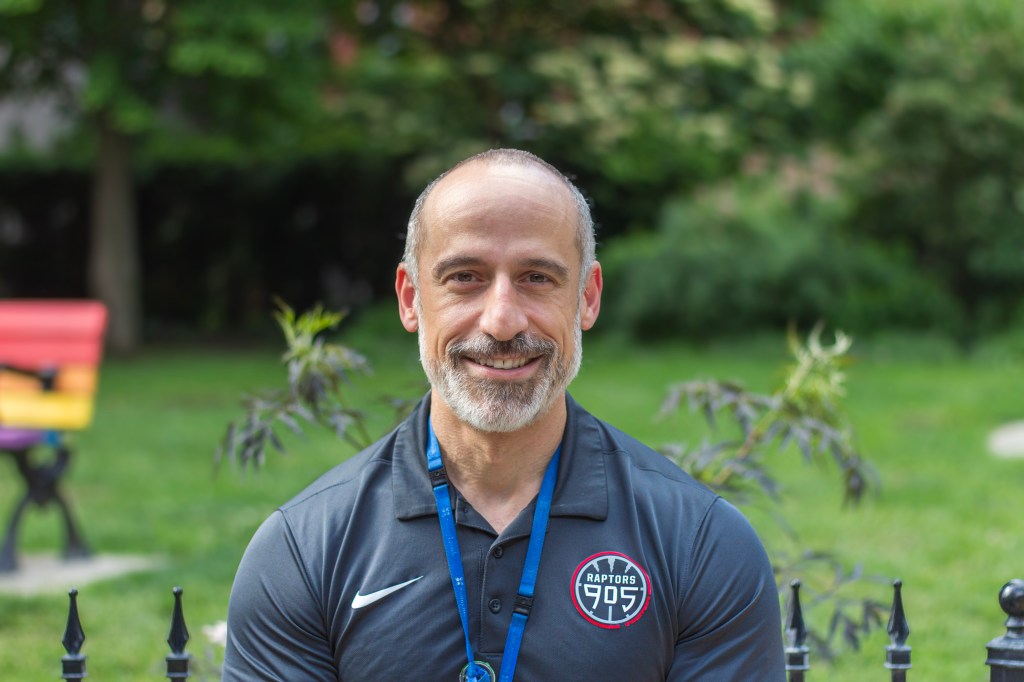
Schatzker Joint Preservation Initiative at the Holland Bone & Joint Program, Sunnybrook Health Sciences Centre
Photo credit: Jino Lim
His path to the operating room was anything but direct. Dr. Wasserstein studied environmental toxicology at Western University, and air pollution research introduced him to clinical studies and population-level questions. This exposure to epidemiology—the study of patterns, risks, and outcomes across populations—shaped his approach to medicine. Dr. Wasserstein believes that before developing solutions, clinicians must understand the problem they are trying to solve.
That same curiosity led him toward a field where clinical decision-making, biomechanics, and patient outcomes intersect. Following his undergraduate and master’s degrees in toxicology, he completed medical school and a residency in orthopaedic surgery at the University of Toronto, a fellowship in sports medicine in Toronto and at Vanderbilt University, and a Master of Public Health at the University of Waterloo.
Now, in his clinical practice, Dr. Wasserstein combines clinical assessment with objective measures of function to understand recovery after knee injury. The knee is a “joint that makes sense,” he says. Symptoms, physical examination, and imaging often point to the same diagnosis, which in turn guides treatment. Because the joint’s mechanics can be quantified, recovery can be captured in objective measures—including strength, joint mechanics, and time to return to activity.
Despite the knee’s suitability for objective measurement, not every injury follows a direct path to treatment. Acute anterior cruciate ligament (ACL) tears are frequently missed at the initial presentation, particularly in emergency rooms or primary care settings, where diagnostic accuracy among initial treating physicians can be as low as 9.8%.4 Delayed diagnosis may result in secondary structural changes that complicate subsequent treatment and increase the risk of chronic ACL deficiency.5,6 Despite their clinical significance, these secondary changes remain poorly understood.
This gap in understanding motivates one of Dr. Wasserstein’s current research projects. Many patients with chronic ACL deficiency are encouraged to strengthen the surrounding muscles, but a chronically injured knee is difficult to treat with rehabilitation alone. He explains that clinicians still do not fully understand how prolonged instability alters the mechanics of the joint, or which reconstructive approach will yield the best outcomes. Dr. Wasserstein explains, “We don’t actually know, as an orthopaedic sports medicine community, what’s the best thing to do for them. We don’t have a model to study that.” To address this, his team is developing a cadaveric model of the chronic ACL-deficient knee to test how changes in bone morphology, contact pressure, and reconstructive choices affect mechanics. The model will enable his team to compare reconstructive approaches directly, as well as to test novel treatment approaches.
Dr. Wasserstein is also transforming recovery of ACL tears through markerless motion capture, a method of measuring knee function after injury. The technique combines standard video cameras with computer algorithms that track the body’s joints frame by frame, reconstructing how the knee moves without any sensors attached to the patient. Traditional gait laboratories provide detailed biomechanical data, but require specialized facilities, reflective markers, and lengthy testing sessions that can take one to two hours to complete, limiting their use in routine clinical care.7 Markerless motion capture produces gait analyses with accuracy comparable to conventional marker-based systems.8 “Now we can acquire pretty good quality data in five minutes or less,” he says.
This technology makes objective biomechanical assessment feasible during routine clinic visits, reduces patient burden and dropout rates, increases participation in research studies, and lowers barriers to multicentre collaborations. By combining these advances with imaging and patient-reported outcome measures, Dr. Wasserstein aims to better understand which patients with a chronically deficient ACL injury benefit most from surgery.
Dr. Wasserstein applies the same patient-centred perspective to recovery across a range of knee conditions. Another current project focuses on osteotomy, a joint preserving realignment procedure used in active patients with medial knee osteoarthritis and varus alignment.9 In these patients, the knee is angled inward, concentrating body weight on the damaged inner compartment.5 During surgery, the bone is cut and realigned to shift load toward healthier cartilage. An effective osteotomy can improve function, reduce pain, and redistribute load across the knee–and is the only surgery we have proven to delay arthritis progression. Success after surgery is typically evaluated through measures of bone healing or surgical complications, but Dr. Wasserstein asks a different question: how do patients really function after surgery?
“The classic surgical outcomes are probably insufficient,” he says. Imaging may show a technically successful operation, but that does not necessarily mean patients return to the activities that matter most to them. By integrating imaging, gait biomechanics, and patient-reported outcomes, Dr. Wasserstein hopes to identify why some patients recover exceptionally well, while others struggle despite an apparently successful surgery. Movement data and patient experience can offer complementary—not interchangeable—views of recovery.
Sports medicine, he emphasizes, is “not just about young athletes.” It is about helping people of all ages remain active throughout their lives—including those who are, as Dr. Wasserstein puts it, “a young person at heart, but with a bit of an older person’s knee.” Through better models and a deeper understanding of the knee, Dr. Wasserstein hopes to preserve what matters most to patients: the ability to keep moving. For Dr. Wasserstein, it all comes back to a single question: “How do we keep [people] active? That’s the main goal.”
References
- Joseph AM, Collins CL, Henke NM, et al. A Multisport Epidemiologic Comparison of Anterior Cruciate Ligament Injuries in High School Athletics. J Athl Train. 2013 Dec 1;48(6):810–7. doi:10.4085/1062-6050-48.6.03
- M de L, LJ D, R T. A 7-year study on risks and costs of knee injuries in male and female youth participants in 12 sports. Scand J Med Sci Sports. 2000 Apr;10(2). doi:10.1034/j.1600-0838.2000.010002090.x PubMed PMID: 10755279.
- Sanders TL, Maradit Kremers H, Bryan AJ, et al. Incidence of Anterior Cruciate Ligament Tears and Reconstruction: A 21-Year Population-Based Study. Am J Sports Med. 2016 Jun 1;44(6):1502–7. doi:10.1177/0363546516629944
- Bollen SR, Scott BW. Rupture of the anterior cruciate ligament — a quiet epidemic? Injury. 1996 Jul;27(6):407–9. doi:10.1016/0020-1383(96)00033-2
- Noyes FR, Schipplein OD, Andriacchi TP, et al. The anterior cruciate ligament-deficient knee with varus alignment: An analysis of gait adaptations and dynamic joint loadings. Am J Sports Med. 1992 Nov 1;20(6):707–16. doi:10.1177/036354659202000612
- Lohmander LS, Englund PM, Dahl LL, et al. The Long-term Consequence of Anterior Cruciate Ligament and Meniscus Injuries: Osteoarthritis. Am J Sports Med. 2007 Oct 1;35(10):1756–69. doi:10.1177/0363546507307396
- Simon SR. Quantification of human motion: gait analysis—benefits and limitations to its application to clinical problems. J Biomech. 2004 Dec 1;37(12):1869–80. doi:10.1016/j.jbiomech.2004.02.047
- Kanko RM, Laende EK, Davis EM, et al. Concurrent assessment of gait kinematics using marker-based and markerless motion capture. J Biomech. 2021 Oct 11;127:110665. doi:10.1016/j.jbiomech.2021.110665
- Brouwer RW, Huizinga MR, Duivenvoorden T, et al. Osteotomy for treating knee osteoarthritis. Cochrane Database Syst Rev. 2014 Dec 13;2014(12):CD004019. doi:10.1002/14651858.CD004019.pub4 PubMed PMID: 25503775; PubMed Central PMCID: PMC7173694.


You must be logged in to post a comment.