

By Karen Fang
Graphic design by Sarah Kung
In Canada, newly diagnosed cancer cases most commonly occur in older adults between 70 and 74 years of age.1 This disproportionate disease burden underscores the importance of geriatric oncology, which is a specialized branch of medicine focused on diagnosing and treating older adults with cancer. Despite an aging population and higher cancer mortality in older adults, geriatric oncology clinics are limited by a shortage of trained personnel and funding. Further, older adults have been historically underrepresented in cancer clinical trials.2
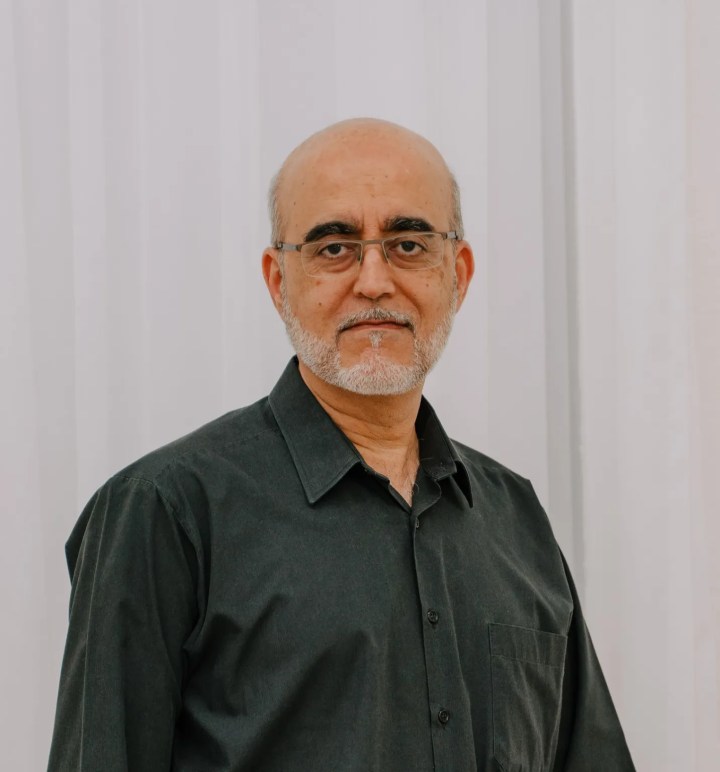
Staff Geriatrician at University Health Network, Medical Director of Older Adults with Cancer Clinic at the Princess Margaret Cancer Centre, and Professor in the Department of Medicine, Institute of Health Policy, Management, and Evaluation (IHPME) and Institute of Medical Science (IMS), University of Toronto
Photo credit: Dr. Shabbir Alibhai
Dr. Shabbir Alibhai is a geriatrician and the medical director of the Older Adults with Cancer Clinic at the Princess Margaret Cancer Centre (PM), as well as a professor and the Hunt Family Chair in Geriatric Research at the University of Toronto (UofT). Dr. Alibhai obtained his medical degree, residency training, and subspecialty certification in geriatric medicine and a Master of Science through the Clinical Epidemiology and Health Care Research Program at UofT.
Dr. Alibhai highlights systematic differences in how cancer care is provided to older and younger adults. “Across the cancer spectrum from screening to diagnosis to treatment to palliation, we find that older adults systematically are getting less therapy or less intensive intervention compared to younger adults,” he explains. Older adults tend to have more comorbid medical illnesses, along with functional and cognitive impairments, which may warrant less intense treatment given the higher risks and potentially lower benefits. However, studies have shown that such risk-benefit assessments are often not done in a scientifically valid manner. Instead, older people are often treated less aggressively due to their age when they could have benefited from intensive treatments. This necessitates unbiased assessments and analytical decision models to optimize treatment strategies for older patients, which has been the focus of Dr. Alibhai’s research over the past 25 years.
Notably, geriatric assessment, a major area of Dr. Alibhai’s ongoing research, utilizes standardized questionnaires and tools to cover eight major domains of health that are relevant to older adults. These include an assessment of co-morbid medical illnesses, medications, day-to-day functioning, nutrition, mobility, cognition, mood, and social support. Based on these assessments, established algorithms and expert guidance can help identify areas requiring further assessment and inform management strategies, including physiotherapy and medication discontinuation. Over the past few decades, growing evidence has shown that geriatric assessment prior to the start of chemotherapy is associated with multiple benefits, though these had not been rigorously assessed in randomized controlled trials (RCTs).
In the late 2010s, several large international RCTs were conducted to examine the benefit of geriatric assessments. This included a Canadian multi-center trial called the 5C Study led by Dr. Alibhai and Dr. Martine Puts (Faculty of Nursing, UofT) at PM.3 In this trial, individuals preparing to start systemic therapy for cancer—including chemotherapy, immunotherapy, or targeted therapy—were randomized to either standard care by their oncology team or standard care plus a geriatric assessment and co-management, with participants monitored for six months. To evaluate the intervention’s impact, researchers tracked quality of life and daily functioning as primary outcomes, along with treatment toxicity and unplanned healthcare use—such as emergency room visits and hospitalizations—as additional outcomes. Although the trial did not demonstrate statistically significant improvements in quality of life and daily functioning, the findings suggest a potential reduction in treatment toxicity and unplanned healthcare use.
In addition to the 5C Study, there were other RCTs around the world that compared standard care with co-management with geriatric assessments across different cancer populations and care settings. Several trials demonstrated significant benefits, including reductions in treatment toxicity, improved quality of life, less functional decline, and fewer unplanned health visits.4 When combining the 5C trial with other trials in a systematic review and meta-analysis, the evidence provided robust support for the benefits of geriatric assessment and co-management in cancer care.4 Interestingly, timing made a real difference across these trials: one of the key predictors of a trial’s positive effects was whether geriatric assessments were conducted before the start of cancer therapy, allowing them to influence treatment decisions. In the 5C Study, most patients were assessed only after systemic therapy had already begun, so the assessment did not impact treatment selection. This underscores the importance of appropriately timing geriatric assessments to support effective care management for older cancer patients.
Building on the results of the 5C Study, Dr. Alibhai is currently conducting a supportive care RCT called the TOPCOP3 trial, which involves having men with advanced prostate cancer undergo treatment with a new class of advanced hormonal agents called androgen receptor pathway inhibitors (ARPIs).5 ARPIs have been shown to have multiple benefits in late-stage prostate cancer, including prolonging survival and reducing pain. 25-40% of men, however, will experience severe treatment-related toxicity, with a higher risk of toxicity with increased age.5 To address this issue, the TOPCOP3 trial evaluated whether supportive care could reduce treatment-related toxicities following ARPIs in older adults. The two interventions of interest were geriatric assessment and remote symptom monitoring, where patients are monitored for symptoms twice a week by an oncology nurse and received proactive symptom management. This is an ongoing Phase II RCT with completed recruitment, and patients are monitored for six months. As the study is expected to be completed over the next several months, Dr. Alibhai is eager to see the results and expects remote symptom monitoring will prove effective at detecting symptoms earlier and reducing toxicity rates.
Dr. Alibhai’s research speaks to a larger idea: geriatric oncology is a young and rapidly evolving field that demands both biological and societal perspectives. Due to the benefits of geriatric assessments, the American Society of Clinical Oncology has recommended that every older adult receive a geriatric assessment and co-management prior to starting cancer therapy.6 However, there are still a lot of unanswered questions, such as a limited understanding of the biology of aging, as well as the lack of trained personnel and funding to implement geriatric assessments routinely in oncology. While these are definite obstacles, they also present opportunities for clinicians, researchers, and trainees to contribute to the field. Dr. Alibhai predicts that the use of artificial intelligence for more efficient geriatric care, the development of biomarkers of aging, and additional clinical trials focused on older adults will be imperative to advance geriatric oncology.
“There is a lot of enthusiasm and increasing awareness of the importance of the field,” Dr. Alibhai says, “It demands patience and embracing the complexity of older adults.” Overall, Dr. Alibhai’s research provides direct evidence supporting the benefits of geriatric assessment in improving cancer management and compels us to rethink our societal preconception towards healthcare for older adults.
References
- Canadian Cancer Society. Cancer statistics at a glance. Retrieved from: https://cancer.ca/en/research/cancer-statistics/cancer-statistics-at-a-glance.
- Sedrak MS, Freedman RA, Cohen HJ, et al. Older adult participation in cancer clinical trials: A systematic review of barriers and interventions. CA Cancer J Clin. 2020;71(1):78-92.
- Puts M, Alqurini N, Strohschein F, et al. Impact of Geriatric Assessment and Management on Quality of Life, Unplanned Hospitalizations, Toxicity, and Survival for Older Adults With Cancer: The Randomized 5C Trial. J Clin Oncol. 2023;41(4):847-858.
- Anwar MR, Yeretzian ST, Ayala AP, et al. Effectiveness of geriatric assessment and management in older cancer patients: a systematic review and meta-analysis. J Natl Cancer Inst. 2023;115(12):1483-1496.
- Alibhai SMH, Puts M, Jin R, et al. TOward a comPrehensive supportive Care intervention for Older men with metastatic Prostate cancer (TOPCOP3): A pilot randomized controlled trial and process evaluation. J Geriatr Oncol. 2024;15(6):101759.
- Dale W, Klepin HD, Williams GR, et al. Practical Assessment and Management of Vulnerabilities in Older Patients Receiving Systemic Cancer Therapy: ASCO Guideline Update. J Clin Oncol. 2023;41:4293-4312.


You must be logged in to post a comment.